wintersbones

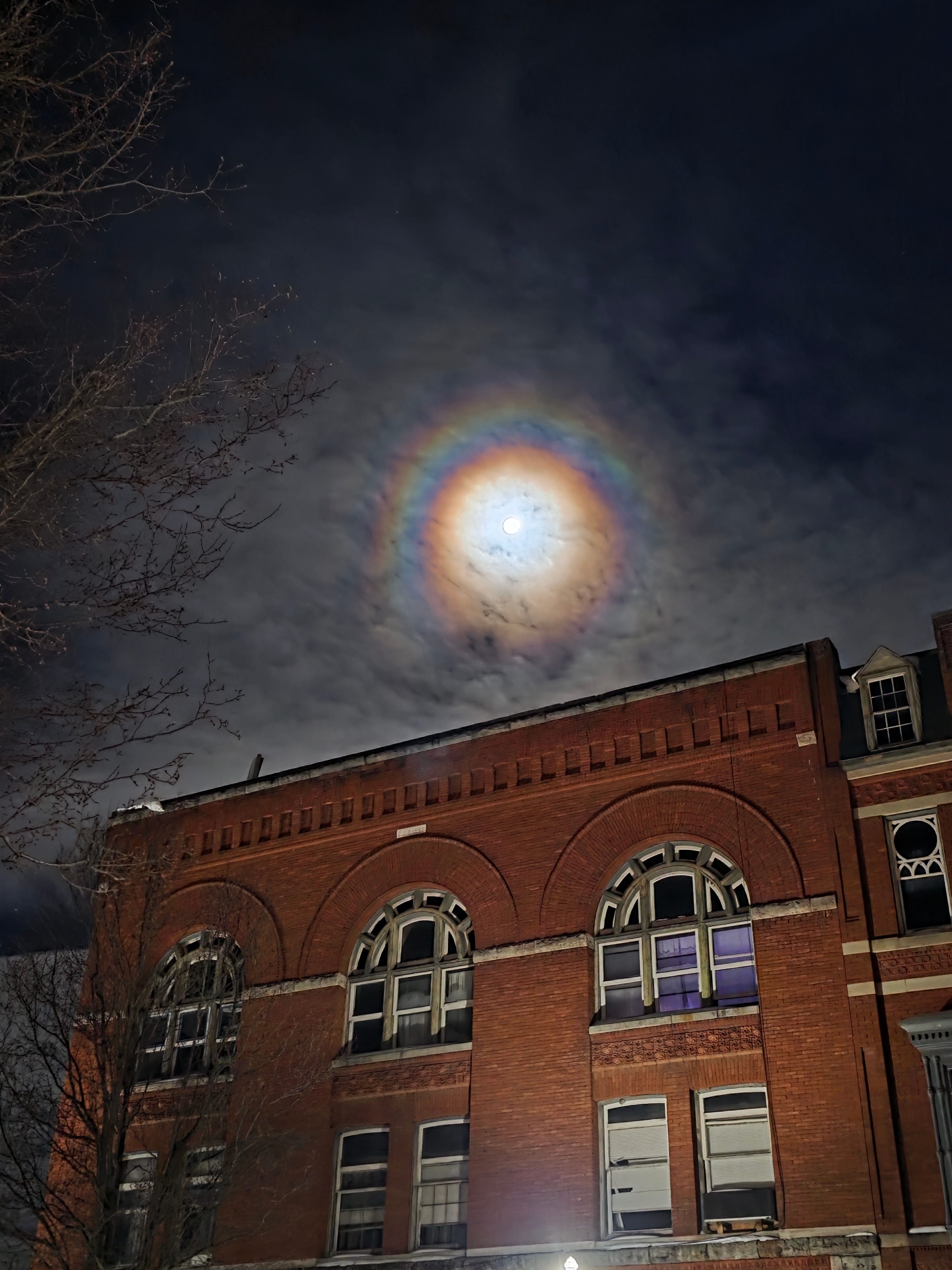
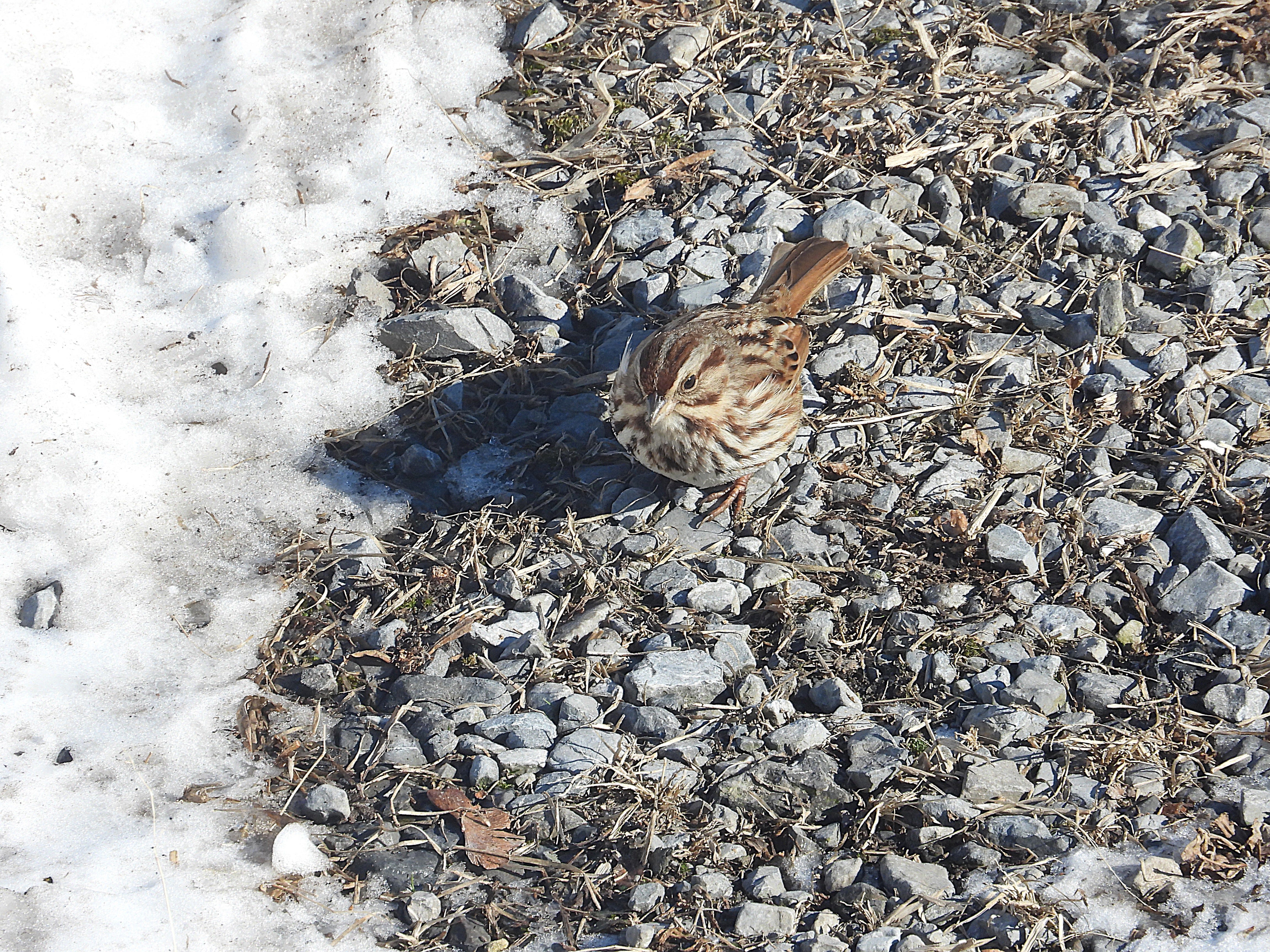
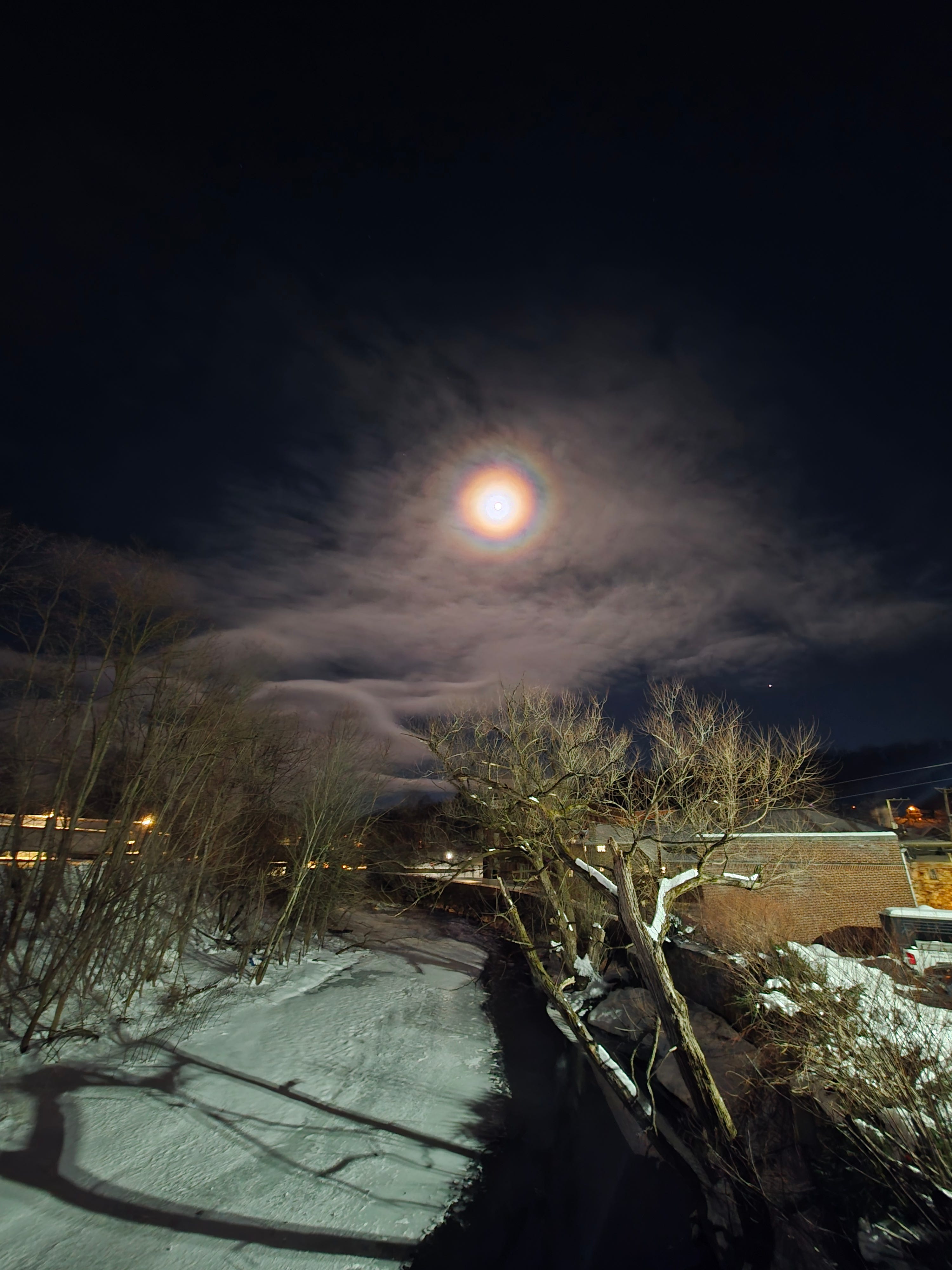
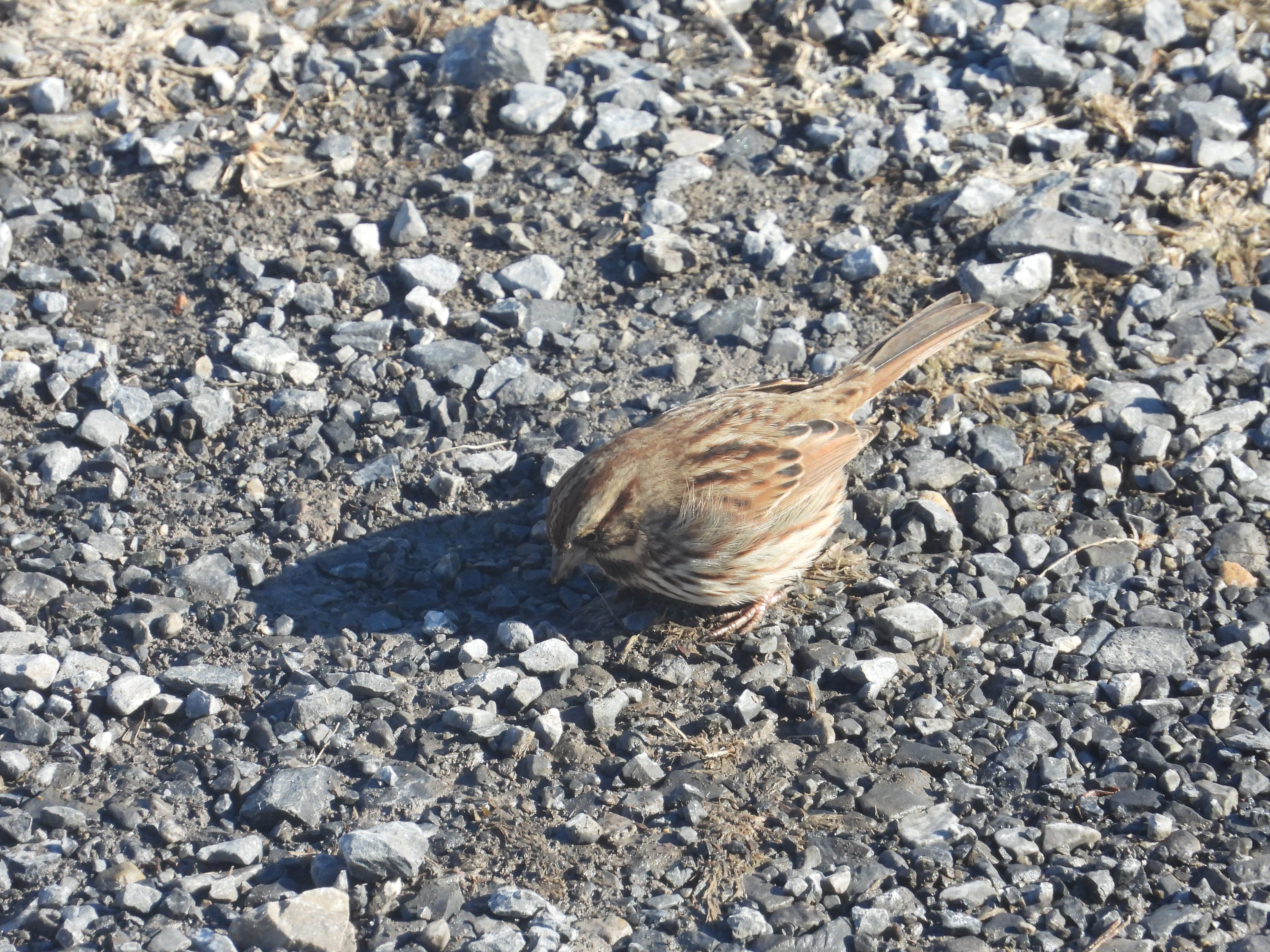
Groundhog Day sees a brilliant 4:30 AM lunar halo and bright afternoon sun, bright enough to melt the salty parking lot gravel. Shade temperatures stay in the teens, too cold for any early reappearance of vultures over the top of the ridge. The open gravel, however, brings a pair of Song Sparrows pecking for grit or lost seeds. They’re the consolation prize.
precocious phoebe
The river remains mostly frozen. On Tuesday the 3rd, it’s in the 20s at dawn, warm enough to expect some movement. Sure enough, in between the incessant chirping of House Sparrows and the cheering of European Starlings gathering about the taller trees, I hear the unmistakable chipping of an Eastern Phoebe along Bald Eagle Creek. It takes a while to sort out the call from the cacophony of Eastern Meadowlark-Eastern Towhee-Cedar Waxwing-Gray Catbird-Killdeer giving false positives to Merlin and all generated by the starlings. I suspect the phoebe is one of the local individuals that winters, on the move from some other patch of open water and perhaps thinking that spring is nigh, which it definitely isn’t (we’re in for at least another week of deep freeze).
For their part, the sparrows and starlings are more active than they’ve been in months, creating the impression of a sky filled with birds. There’s not much else happening, though it’s nice to see Common Mergansers on the regular again, if only in rapid flight overhead. As for the Mallards, they’ve all but disappeared; today, just two pairs show up at the confluence.
feeder folks
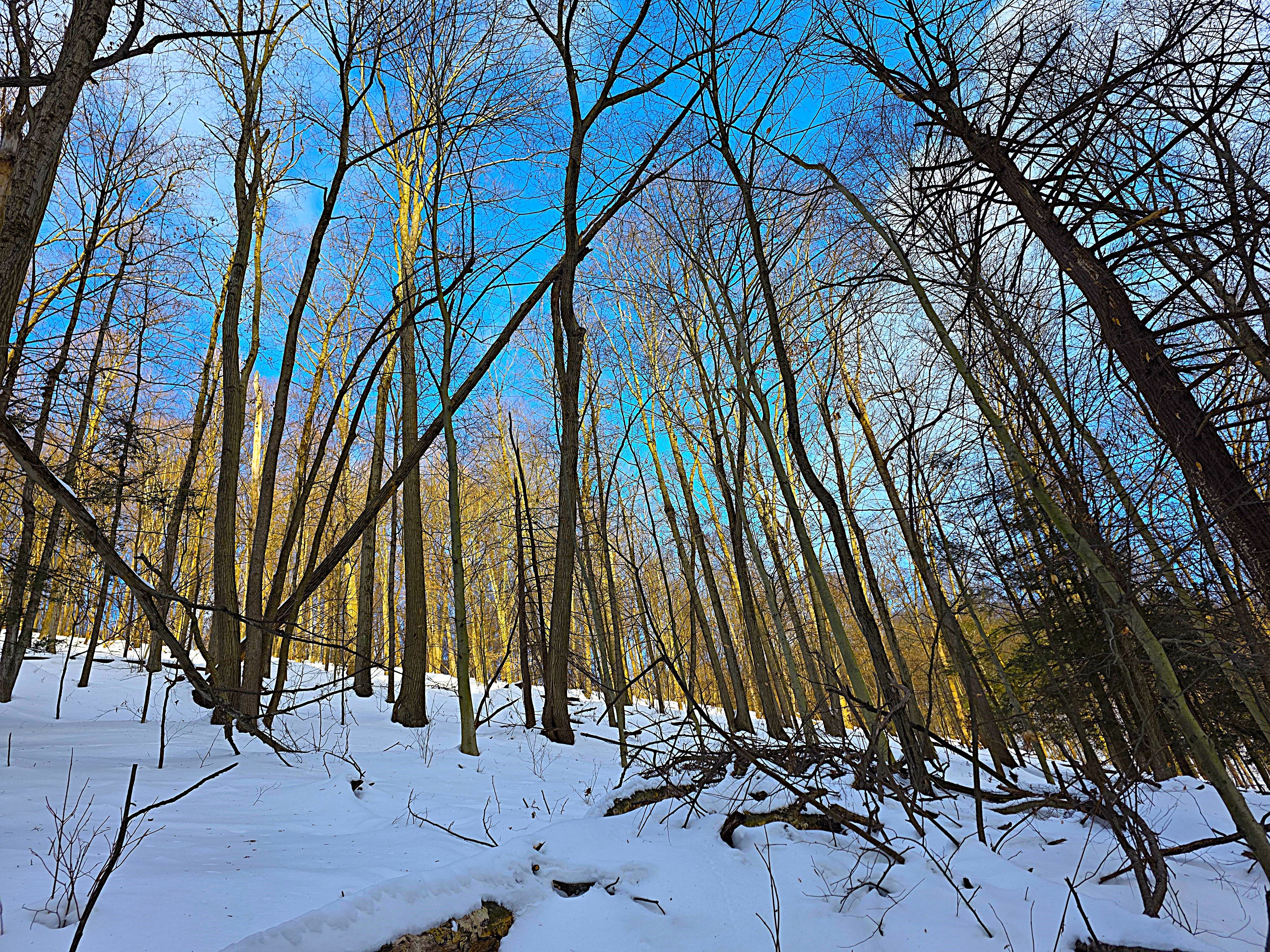
The following Sunday, I take a quick walk in the only place I can, up the plowed road. The woods are still a foot deep in snow and off-limits to no-snowshoes me, and from what I can tell, they’re largely drained of birds anyway, save the same mixed flocks of regulars hanging about in the canopy. Most of the action is at Mom’s feeders, where a large crowd gathers and flushes, gathers and flushes. Most notable so far are up to seven American Tree Sparrows feeding on the ground among the scores of Dark-eyed Juncos and White-throated Sparrows, and a couple Song Sparrows. Other species come and go at the feeders, following the pecking order that seems to start with House Finches. Even the lone Blue Jay keeps a safe distance out in the snow.
The tree sparrows are in slightly higher numbers than usual, and their gorgeous songs can occasionally be heard, but otherwise, the winter hasn’t brought any far northern specialties south, at least not to our patch of the cosmos. There’s still time, though.
Back along the river, stepping out of the way of a train, I spot two female Common Mergansers in the water, diving along the ice jam that’s built up around the confluence.
just the right winds
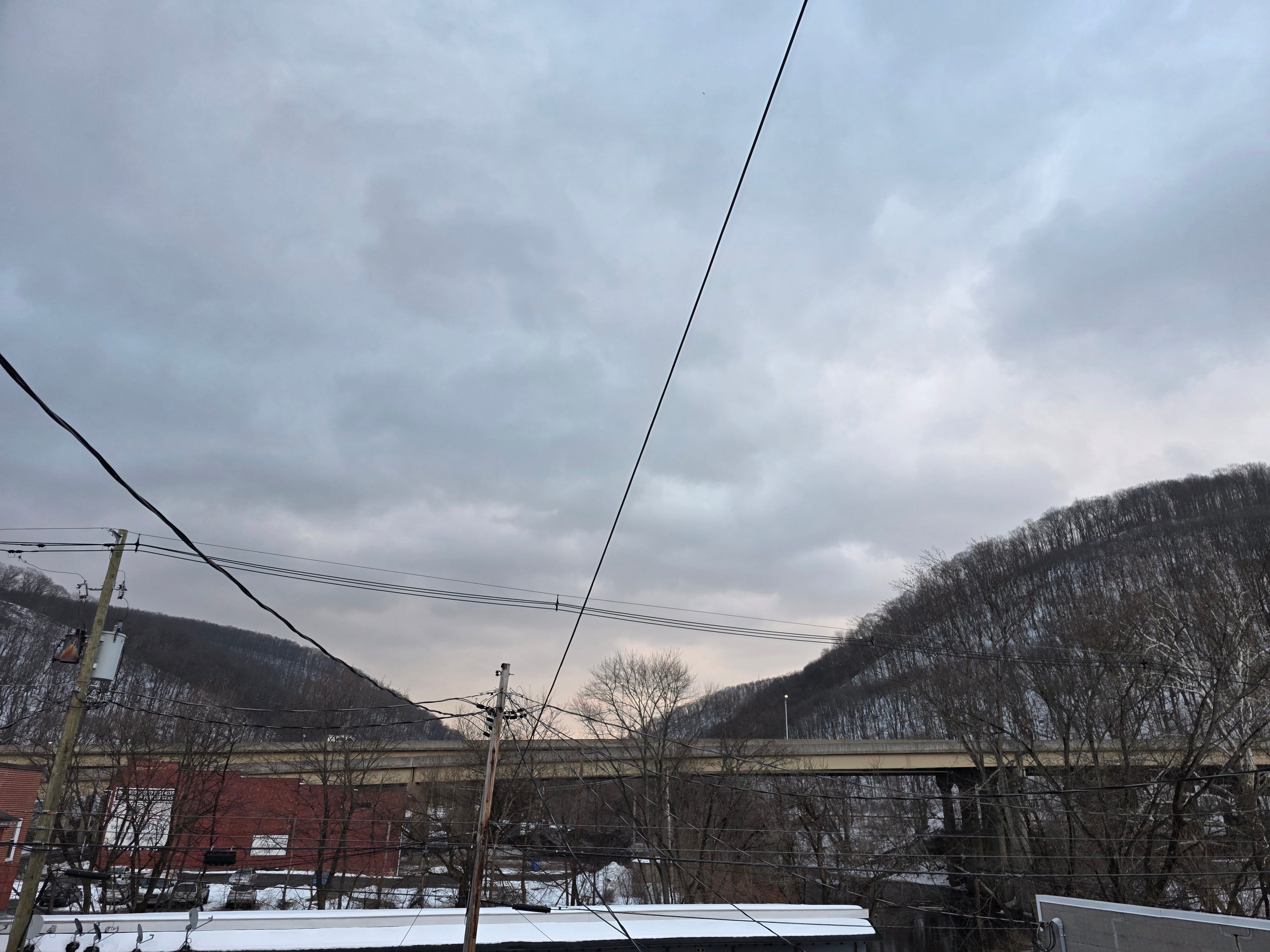
Real winter final gives way around the 10th, with the last of the sub-zero mornings and promise of a progressive warm-up. I’ve barely been out on the balcony this month, but the 11th looks quite promising. It’s 37 and cloudy at dawn, a full 40 degrees warmer than a couple days ago! A brisk west-southwestern wind could be enough to spur some movement from the local or even regional bird population that has seemingly been frozen in place for the month.
At first, nothing. If any brushy bird, any cardinal or Song Sparrow called early, I missed it. Seven passes, and the most that appear are starlings, the usual Rock Pigeon commuters spiraling up and then speeding east over the mountain, and some House Sparrows. A Common Raven flies in under the interstate to its nest, but it is uncharacteristically silent. Maybe the winds are too strong.
Then, at 7:22 AM, the spell is broken. As American Crows caw overhead, an adult Golden Eagle flies directly over my head from west of town, circling a couple of times over the Gap and heading on. I would not be surprised if it’s the same individual that’s been spotted out in Sinking Valley in recent days. I can’t imagine it’s on the move north yet; probably just a stray from the south that’s found a good roost and some worthy feed.
A couple minutes later, a House Finch goes over, singing in flight, always a joyful sign no matter how horrible the world becomes. At 7:26, a Song Sparrow flies in under a car and then emerges to peck at the gravel. I’ll be interested to see if it takes a liking to a slice of pizza laying incongruously on the snow (it doesn’t).
Just past the half hour, five strange waterfowl come out of the east from downstream somewhere, whitish but wrong-looking for the expected mergansers. They’re Common Goldeneyes, on the way from who knows where to where, and they seem to settle on some pond toward the north of town, but I lose them to the rooftops. Seconds later, six Common Mergansers also emerge from the east, but they turn south to follow the Little Juniata upstream.
Minute after, about 120 starlings settle into the nearby treetops along the confluence, drowning out everything else. They’re the tail end of a large flock that’s been gorging on the street-side dried fruit buffet these last few days.
The surprises aren’t over yet. At 7:37, under a sky that looks perfect for fast-flying gulls, a longish-winged raptor with mostly whitish underwings appears from the south, heading north along the ridge. Not a harrier and definitely not one of our resident red-tails; too small for eagle. It’s a Rough-legged Hawk, for all I know the first and last of the year, and a species I missed entirely in 2025. This one may very well be starting to move northward after spending time in some valley to the south or east. If I were a rough-leg, I’d definitely be on the move on a day like today.
The raptor parade continues. As the rough-leg disappears from sight, a Cooper’s Hawk in full-on hunt mode dives in to the nearest sycamore tree just the other side of the river from me, scattering all the starlings. I look up to see a pair of Bald Eagles, one full adult and one juvenile coming from the west, wings touching as they appear to play or communicate in some way. They head north, and when I look back to the earth, the Cooper’s is already gone.
The first interesting show of 2025 isn’t over yet. At 7:51, four more Common Mergansers go over from then east, and then a third Bald Eagle comes in over town and heads up and along Sapsucker Ridge, disappearing south. Finally, as the winds die down, what I would guess are the same two mergansers from Sunday float into the confluence and commence diving along the ice edge.
an influx of ravens
All winter, a pair of ravens has been hanging about, and in January they began building or repairing a nest under the interstate. Another pair is up on the mountain somewhere, and another one or two also show up, but that’s about it. They’re out in the harshest weather, like the pigeons, seemingly oblivious to cold, wind, and snow, and getting more vocal by the day.
On the early morning of the 13th, a whole new group shows up. I count at least 15, with seven at a time, mostly paired up, tossing and turning in the high air above the ridges; they also skim and chase a few feet above the tree line down the 30-degree angles out of sight, and then tumble about the towers.
House Finch song is constant now. Only one merganser shows up at the confluence today, in addition to seven overhead, and I realize I haven’t actually seen a Mallard this whole month.
proto-spring dawn
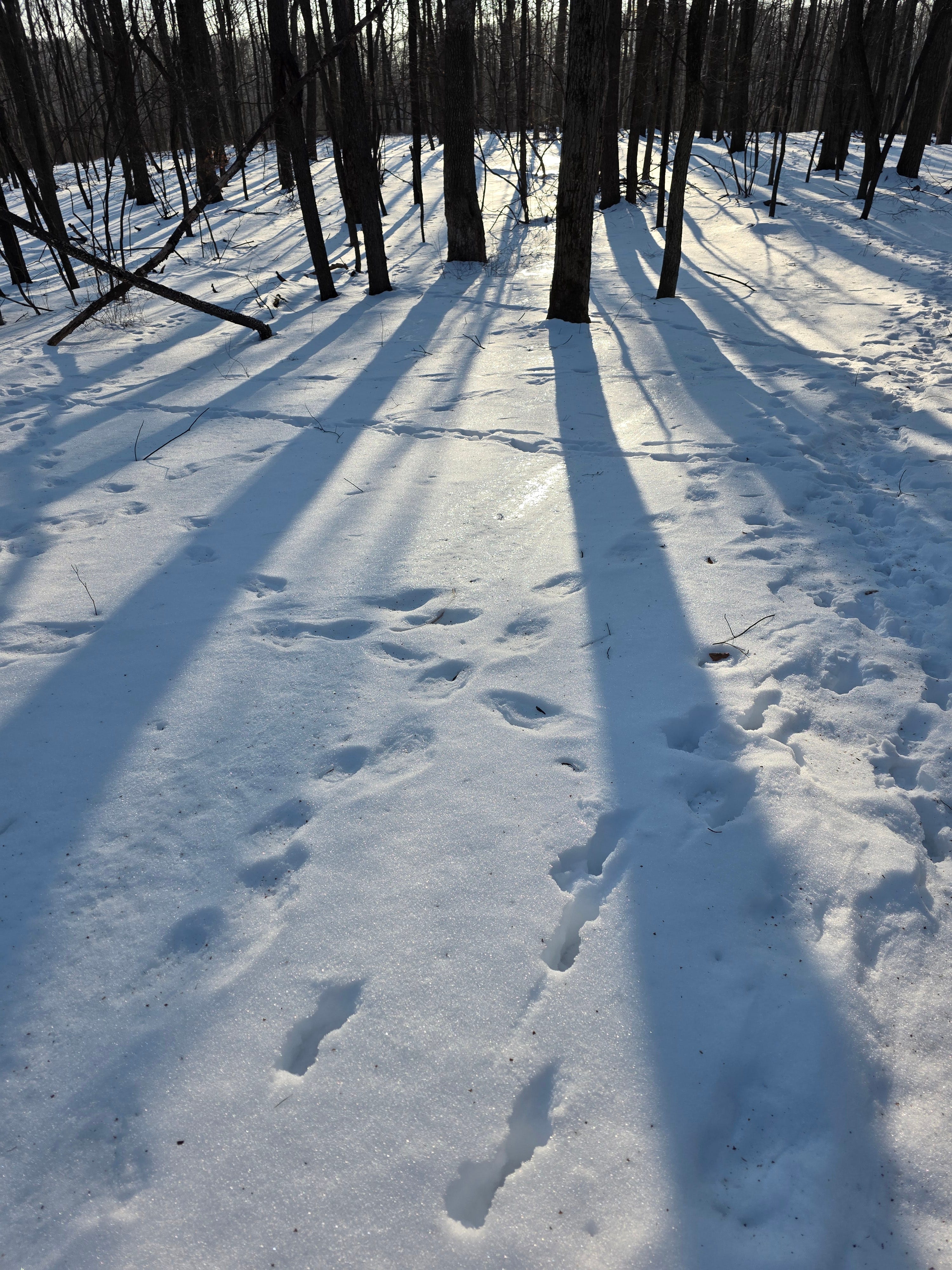
In these colder winters, late winter seems to arrive by mid-February, and is most easily detectable by an increase in breeding-season songs. Today, I trek in the darkness to the Plummer’s Hollow crossing on a rare, crystal-clear day that promises to hit 50. There’s a south-southwest breeze at 6mph, probably not enough for a repeat of Wednesday’s show, but enough to keep me out in the open and not under the trees until the show’s over.
Out here, Northern Cardinals are the first up. On Eric’s microphone, I see that they’re starting to make noise not long after 6:30 AM, and are holding on until slightly after 6 PM, almost a 12-hour shift already. Today, the tracks population—multiple pairs—starts softly chew-chew-chewing at 6:43, and a couple males eventually launch into full-fledged songs, the first I’ve heard in many, many months. Proto-Spring indeed!
As I guessed, nothing new or spectacular shows up, though nine ravens from a poorer vantage point than my balcony suggests that the influx is still about. Right at 7:01, a Brown Creeper and a Golden-crowned Kinglet greet the dawn from the woods right behind the gate, and not long thereafter, both Tufted Titmice and Black-capped Chickadees sing from across the tracks. A Winter Wren and a Hermit Thrush sound off, a loud Hairy Woodpecker and a softer Downy call, and at 7:27 a slow-flying pair of Red-tailed Hawks drift across from Bald Eagle Mountain to Laurel Ridge, off to scope out a nest site, maybe.
The walk up the road is uneventful, and with enough snowshoe tracks available, I can access Dogwood Knoll and the other trails to the heart of bird country while mostly staying on the barely-frozen surface. There’s not much up here now; the main mass of remaining birds is around the powerline, and I think it comprises some of the same birds that visit the feeders. The thick brush has definitely thinned out, with eight inches of pack still making feeding difficult.
Back in town, I finally see Mallards, but only a pair below the bridge. The local crowd has definitely moved off somewhere, at least temporarily
In the afternoon, the temperature reaches into the low fifties in the shade. The vultures aren’t around yet, though, but I think they’ll appear sometime next week, as it’s projected to get in to the 50s most days. Maybe a grackle will return as well. Hell, at this point I’ll set for a few robins—I’ve seen a total of one this whole year so far.
a suffering of crows
Not far below the forks, I come upon two crows up in the trees, flying about in an agitated fashion, and appearing to scold me. This is unusual they usually pay humans no heed. I quickly find out the reason, following the sound of a third crow to its source on the snowy bank below the road. It’s seriously wounded, apparently with a broken wing from who knows what attack of accident. Despite that, and with the constant criticism of the two others, it waddles and hops away from me down the bank, across the stream, and rapidly up the other side through the laurel in less than a minute. I can’t imagine it will survive, and I imagine I can even feel the anguish of the other two. It’s not a sign, but it might as well be.
the song sparrow sings again and again
The erstwhile Great Backyard Bird Count continues on Sunday, and it’s just below freezing, a boring, cloudy balcony morning, with incoming rain. Nevertheless, it’s finally time for the Song Sparrow to sing, not once or twice but over and over, already started when I go out at 6:45, and not wrapping up until a few minutes after 7, with intermittent snatches later in the hour.
It’s on!