

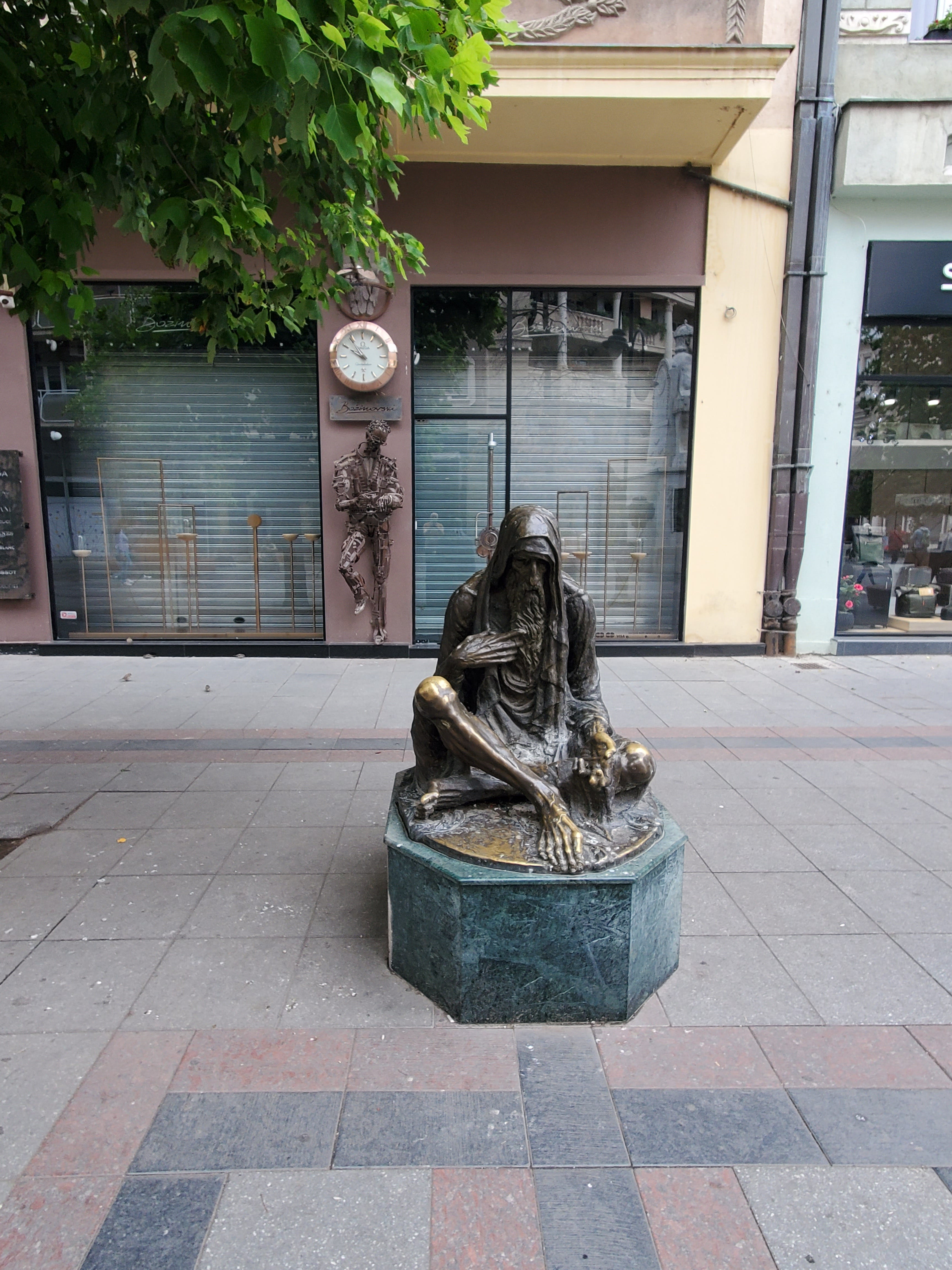
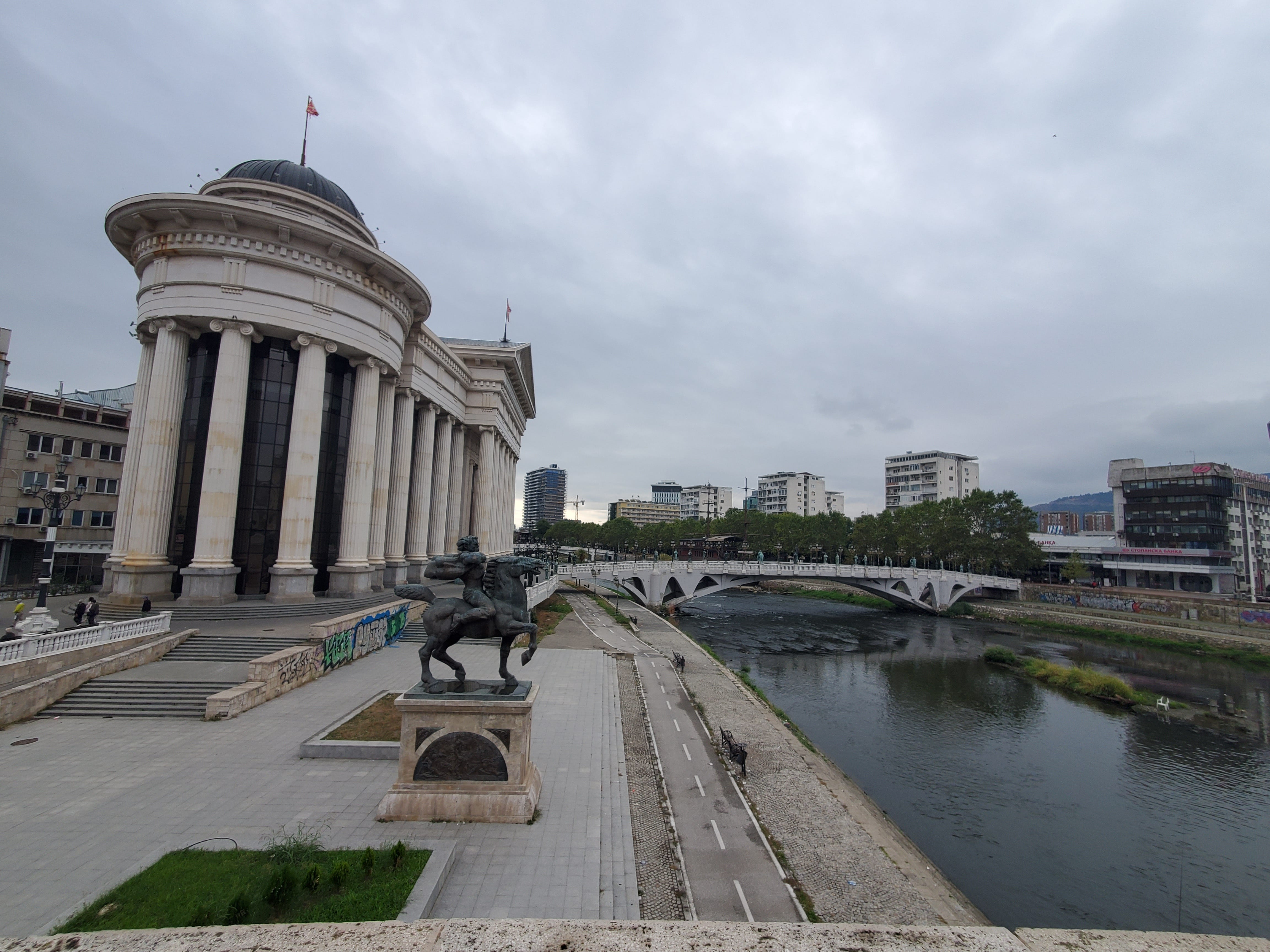
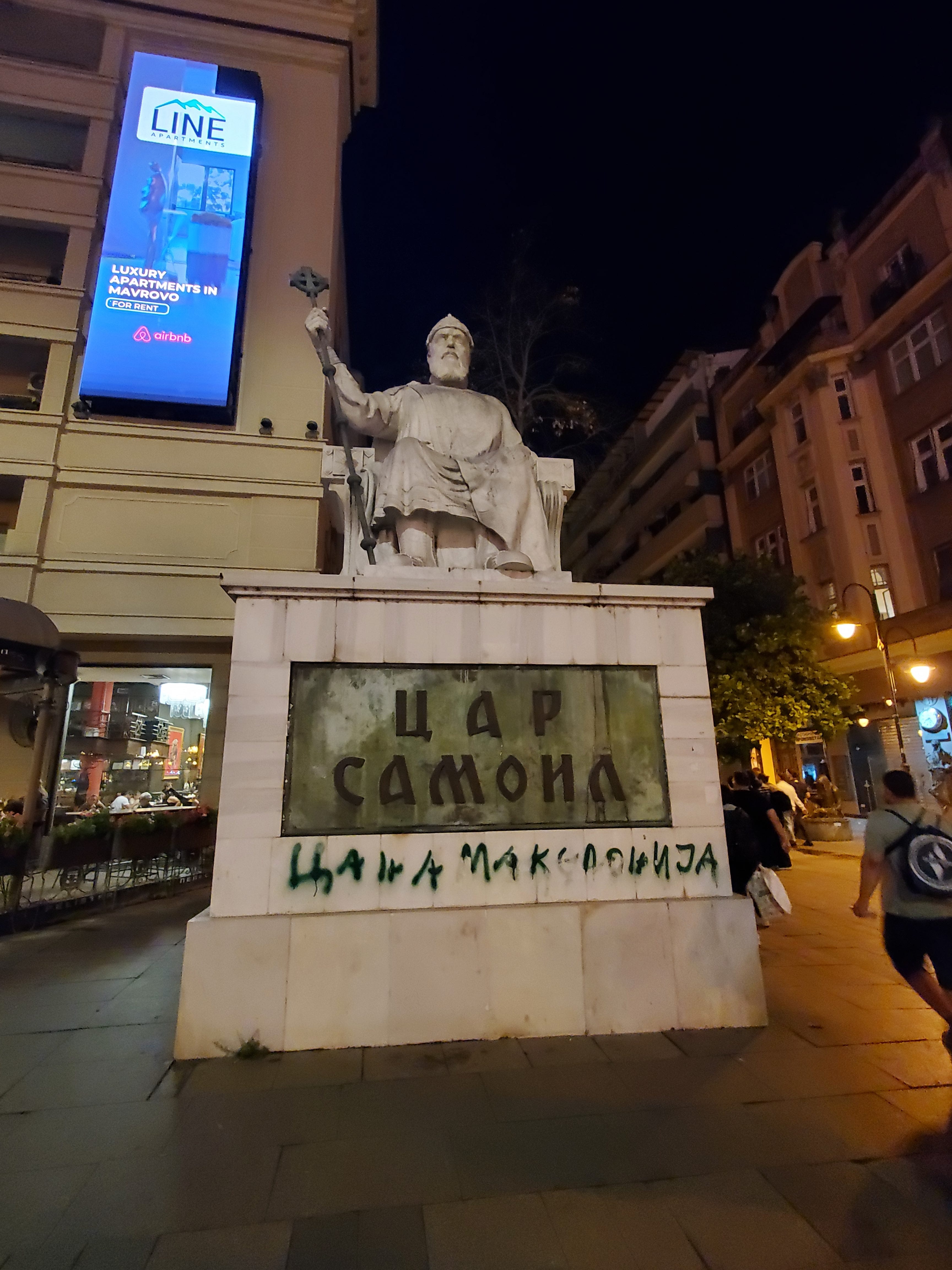
Skopje sometimes gets a bad rap, but we found it one of the most delightful cities any of us had ever been, not least because of the apparently peaceful co-existence of multiple faith traditions, befitting its geographically central location. Sure, it’s clogged with garish monuments to millennia of Macedonian heritage, its walls and even statues are marred by thick layers of graffiti, and every sidewalk café seems wreathed in a cloud of cigarette smoke, that terrifying western Balkans addiction. But these are passing phases in a place literally at the crossroads of the planet, nearly continuously inhabited in one form or another, by virtue of its location along the Vardar, since the Chalcolithic, some 5,000 years ago.
During Roman times it was founded as Scupi during the reign of Domitian, not long before the turn of the first century CE. Scupi was destroyed in 518 by an earthquake, then rebuilt, to be occupied by a plethora of empires: the 1st Bulgarian Empire (briefly the capital), the Byzantine Empire, the Normans, the Serbian Empire (also a short-term capital), the 2nd Bulgarian Empire, the Empire of Nicaea, and back and forth between Bulgarians and Serbs until 1392, when it fell to the Turks. After 520 years under the Ottomans, which included the Great Fire of 1689, Skopje became part of the Kingdom of Serbia in the 20th century, then Yugoslavia in various forms. It was smashed by another huge earthquake in 1963, but rebounded to become the capital of Macedonia, finally an independent state, in 1991.
As the Vardar corridor was the main and most feasible communication artery between the Danube Valley of central Europe (and thus from western and northern Europe) to the Aegean Sea at Salonika and Byzantium/Constantinople/Istanbul beyond that, its control was critical to military and commercial strategy at least since the time of the Romans. Skopje itself benefited by becoming a crossroads of culture, something much in evidence today. Besides Macedonians themselves, the majority, who form several ethnicities and belong to various religions, Greater Skopje, with up to a million people, has over 100,000 Albanians (Muslims but also Catholics), Roma, Serbs, Turks, Bosniaks, and even a few thousand Vlachs (“Wallachians” or Aromanians, who speak a Romance language). While we saw a vibrant mixture of young and old, veiled and unveiled, traditional and modern looking people, and seemingly little to no social tension, there is reportedly (and understandably) some tension between Albanians and Macedonians, though not to the level of neighboring Kosovo. Macedonia, ethnically and religiously more complex even than Bosnia, largely managed to escape the 1990s violence, but had a brief conflict, the Macedonian civil war, in 2001, where a few hundred people perished. Nevertheless, the country held it together, with an amended constitution recognizing rights for 14 ethnic groups. Tensions are kept in check perhaps also due to the position of the country firmly ensconced in the NATO-US geopolitical orbit, like all its neighbors save Serbia.
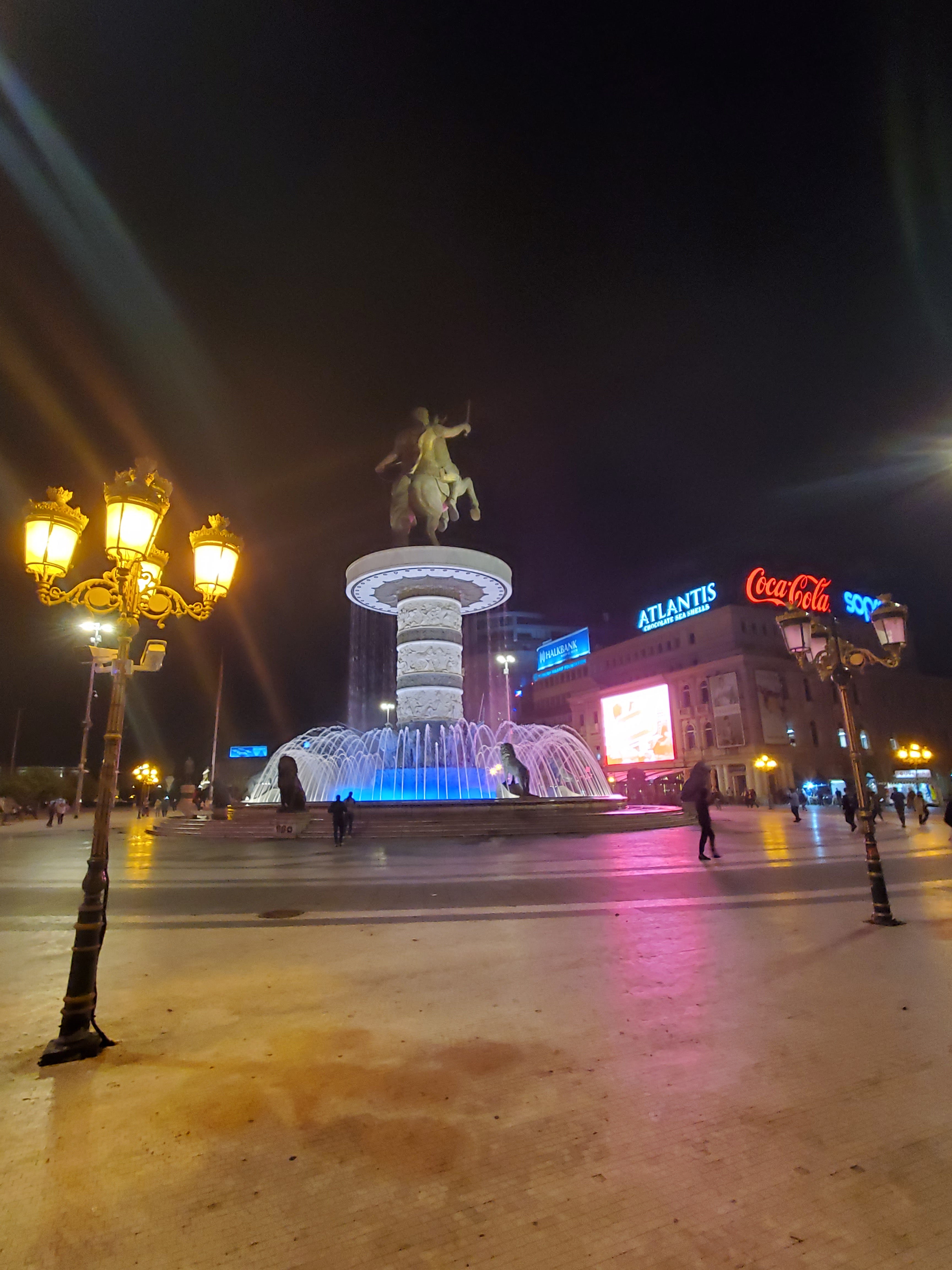
The prominent statuary of Philip of Macedon is a reminder that Skopje has also had to deal with neighboring Greece’s jealousies regarding the right to claim the heritage of ancient Macedonia, which includes far more land than present-day Macedonia-the-country. Skopje, under some pressure, finally conceded a few years back to Greece’s demands that it not usurp the toponym that also describes a large part of modern-day Greece, including Thessaloniki (previously Salonika). Historically, this has been a major part of the Balkans puzzle, the Macedonian Question over where and what would constitute Greater Macedonia and which currently-existing countries could lay claim to which parts. Thence, Macedonia became North Macedonia alongside its nervous Grecian neighbor and annoyed Bulgarian neighbor (but due to poverty and corruption it is still thwarted from a longtime goal of membership in the European Union). Only, I suppose, in a chokepoint town that governs a country less than a quarter the size of Pennsylvania, could the use of “Macedonia” by nationalist politicians, rather than the newly proper “North Macedonia,” spark international outrage.
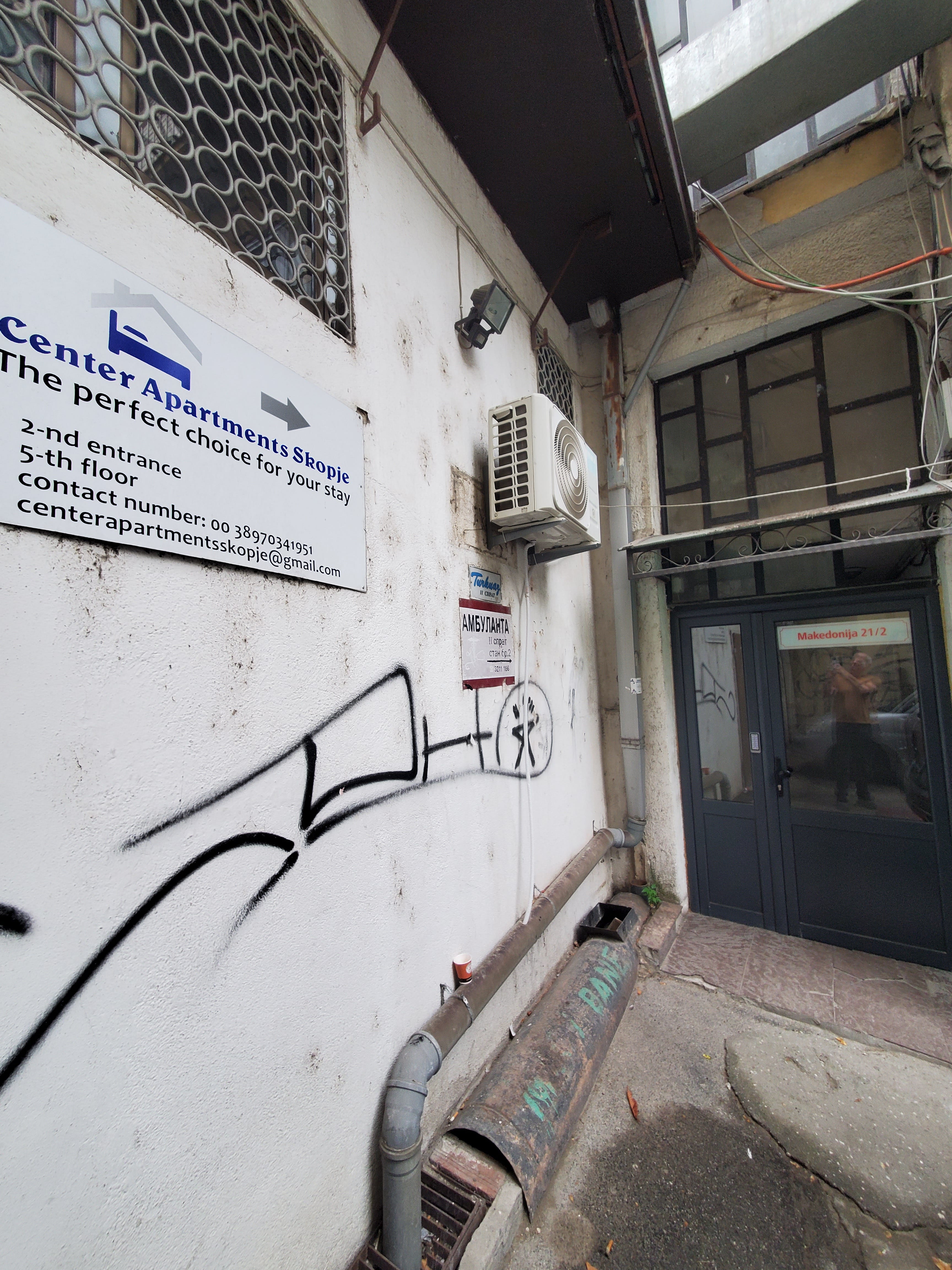
Our brief time in Skopje began the way Balkans apartment rentals often seem to begin, with a series of photos and videos sent from the owners via Whatsapp. On our third try, we were able to find the one-way cul-de-sac off a main downtown artery, and thanks to Paola’s superb parking skills, honed in Mexico City, we were somehow able to get the car back into its niche. A frighteningly tiny and rickety elevator from Communist times got our belongings up the inevitable several stories to what was likely the most centrally-located place to sleep in Skopje.
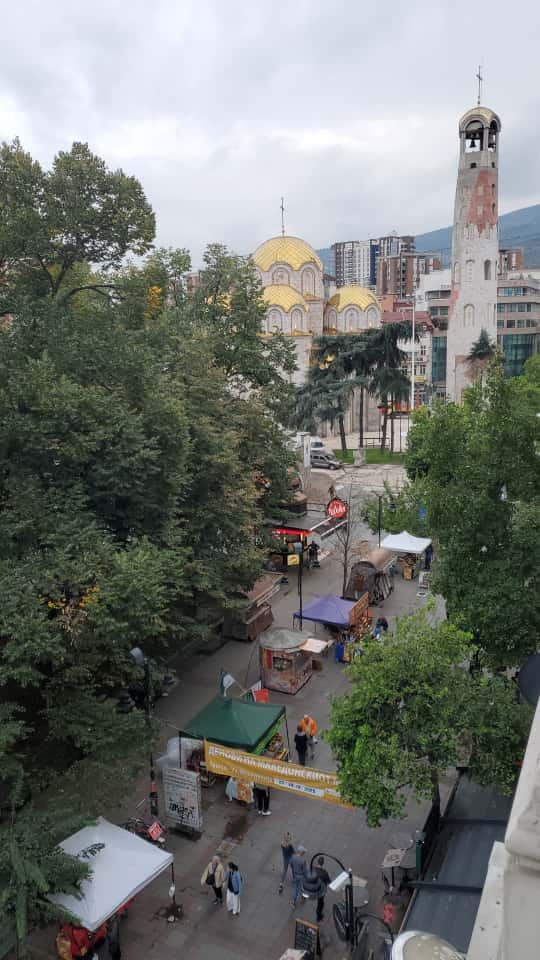
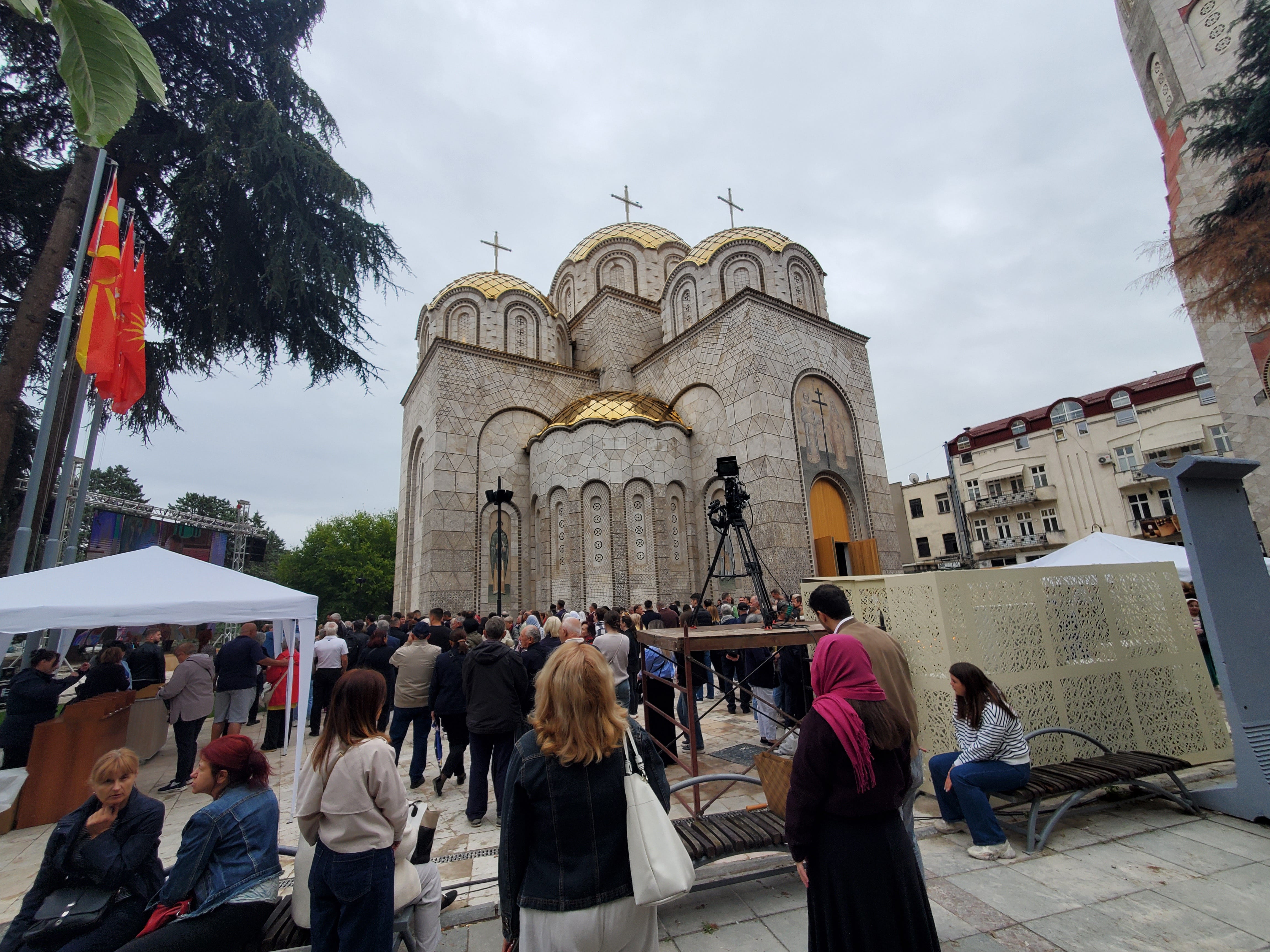
Out one side of the spacious (more accurately, gigantic, but hugely inexpensive) apartment, we gazed at a giant banner advertising either Beyonce or Taylor Swift overhanging one of the avenues, while out another window we looked across Macedonia Street a few meters to the Mother Teresa Memorial House, plunked down incongruously next to the brand-new Church of Saints Constantine and Helena, one of the larger Macedonian Orthodox worship sites.
Macedonia Street had been converted into a walking mall, currently hosting a honey festival. The street led into other pedestrian thoroughfares that mixed the most glitzy icons of Western consumerism with a mish-mash of sculptures and fountains from Skopje 2014 (an oft-maligned public monuments project), government buildings, museums, and hotels leading to the bridges over the Vardar. On the north side of the river, other monuments and religious sites led to the old bazaar.
We explored what we could, naturally stopping at some of the more garish examples of West-meets-East-meets…something, brushing up against local people as well as tourists of all possible descriptions from all corners of the planet.


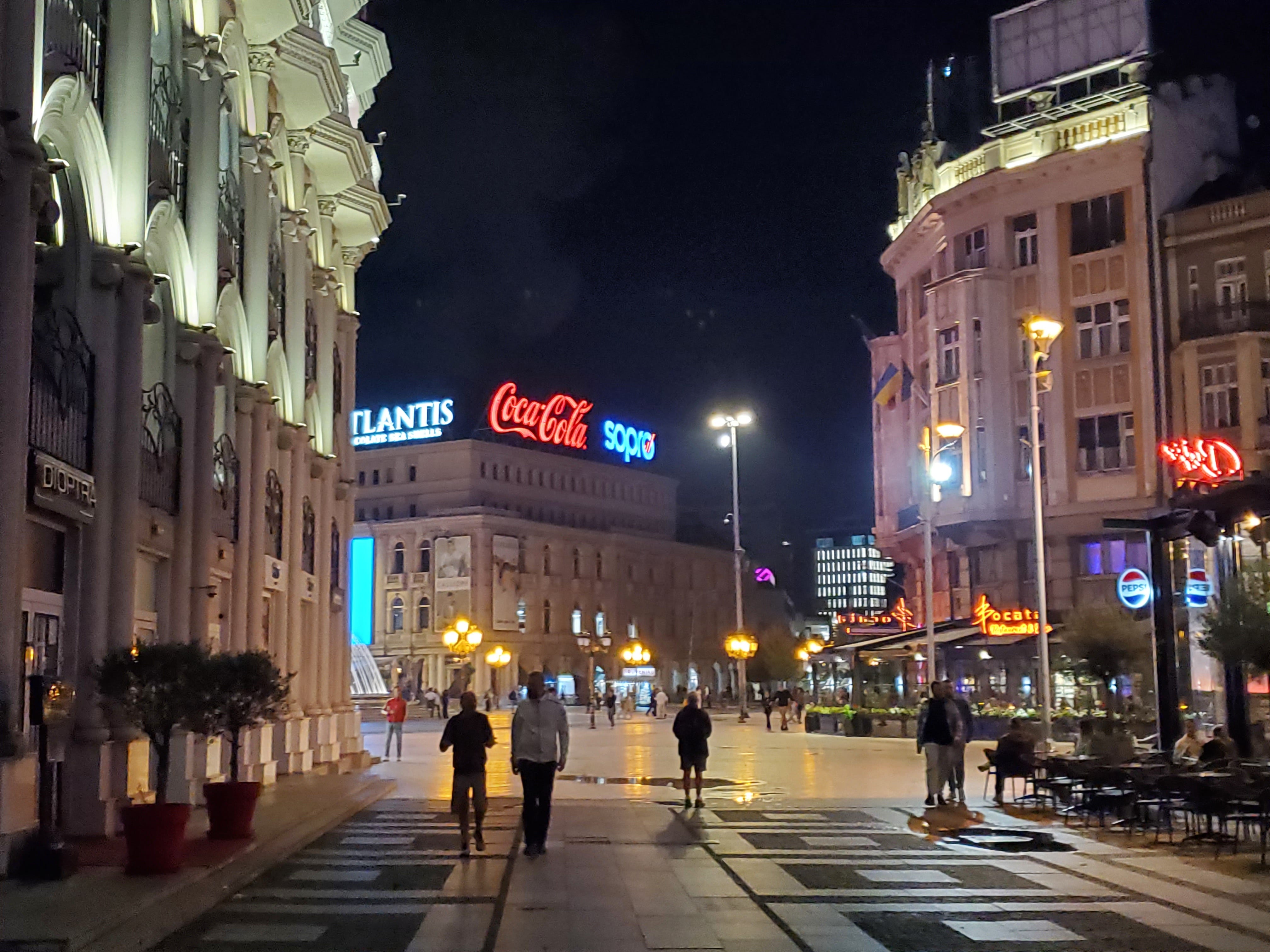


One street musician was playing mournful Macedonian folk music, with Burger King as his backdrop. Closer to the river, a puppeteer was doing a more modern act in front of possibly the most Macedonian setting in all of Skopje.
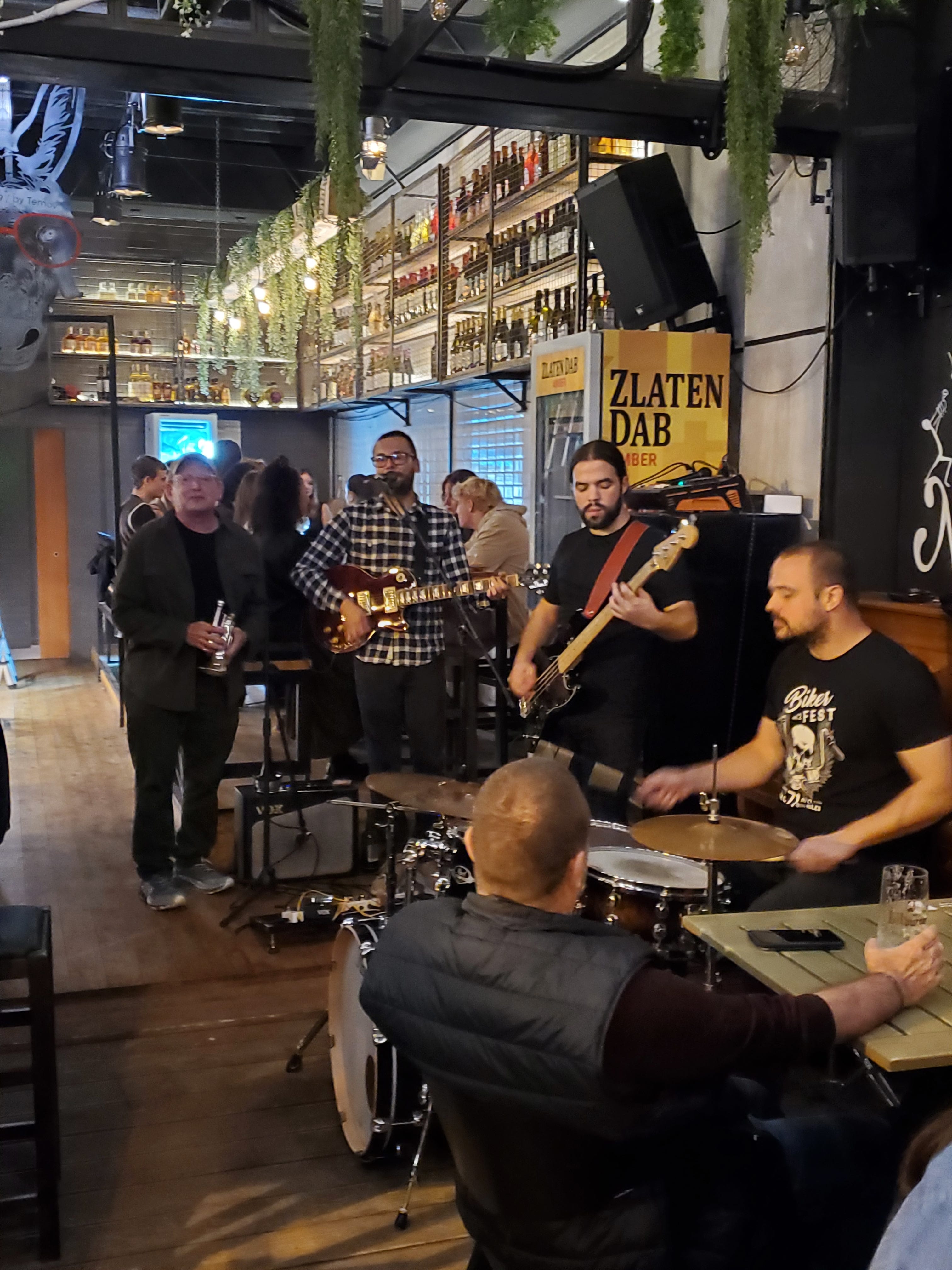
Eventually, we settled in at a bar directly below our apartment, and Jeff was finally able to jam with his pocket trumpet. To the bemusement and then delight of the crowd, he joined up with a very talented local Macedonian rock band who mixed their own hits with covers, including Country Roads, if I recall correctly. A somewhat intense and tipsy pair of Germans at the next table were quite fascinated with Jeff; I got the distinct impression that for them, Macedonia was a sort of fairytale location, a world away from whatever hyper-modern city they came from, made all the more bizarre by a white, blues-and-rock-playing dude from Ohio.
Mother Teresa, the geographer
The next morning, we scooted over to the bazaar for coffee, then visited the architecturally out-of-place Mother Teresa House, nowhere near where she was born in 1910, as Anjezë Gonxhe Bojaxhiu, to a Catholic family in a humble Kosovar Albanian neighborhood.
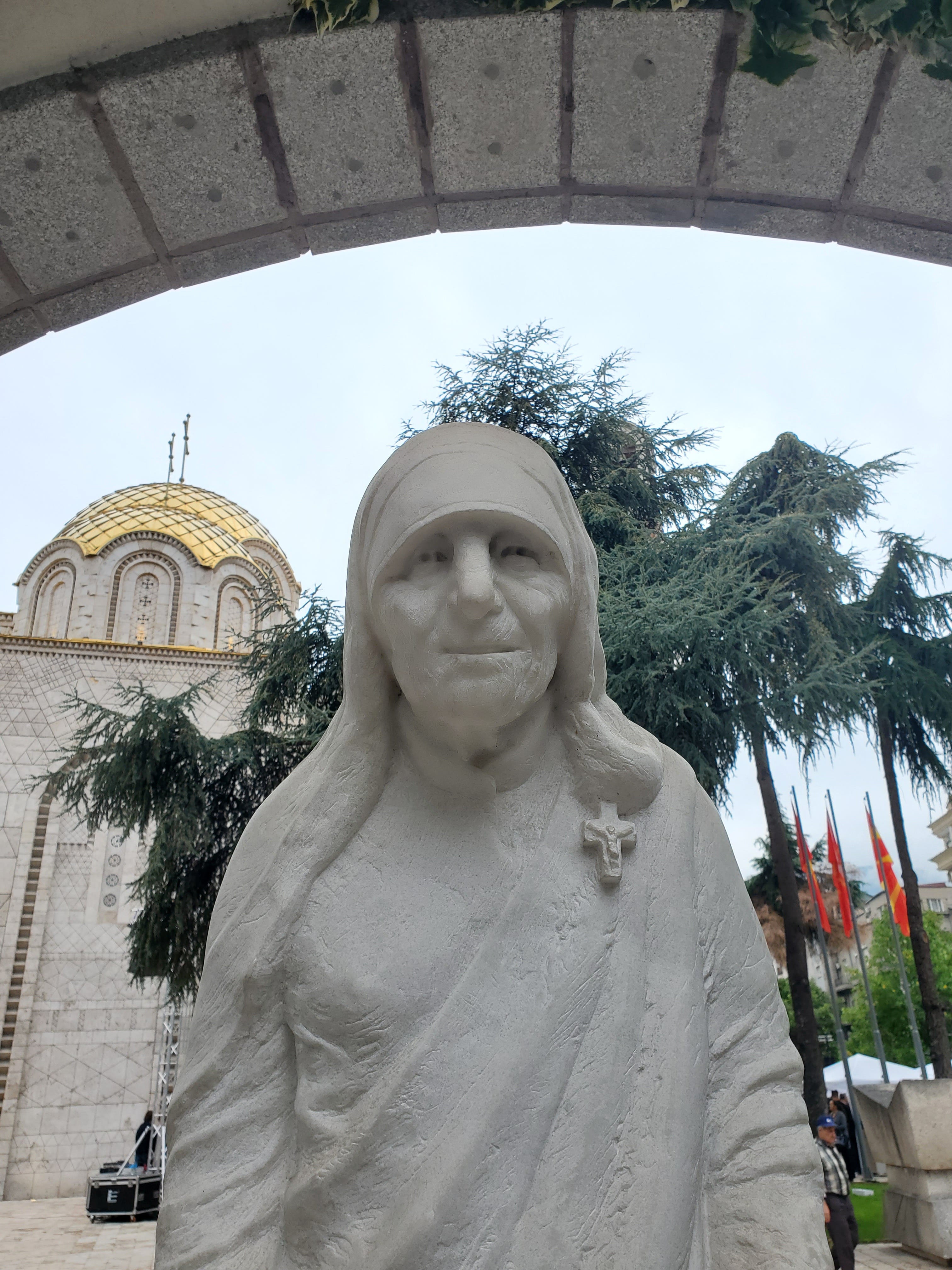
The museum contained the predictable hagiographic icons of global superstardom, including photos of her youth all the way to the final years. There was her Nobel Peace Prize, her notebooks, her photos with the Dalai Lama and every leader big and small, peaceful and bloody, that the 20th century sent her way. I am in no way a Catholic and by no means a fan of her controversial methods, but I was duly impressed by the fact that one of the main subjects she taught when she first went to India was geography.


The museum was overshadowed by the Orthodox church next door, which was holding a service also shown on large screens so the hundreds of attendees outside could see what was going on. They stood around, chatting and smoking, as the festival crowd flowed past. We didn’t make it anywhere near the door, but it was nevertheless our first Orthodox Divine Liturgy.
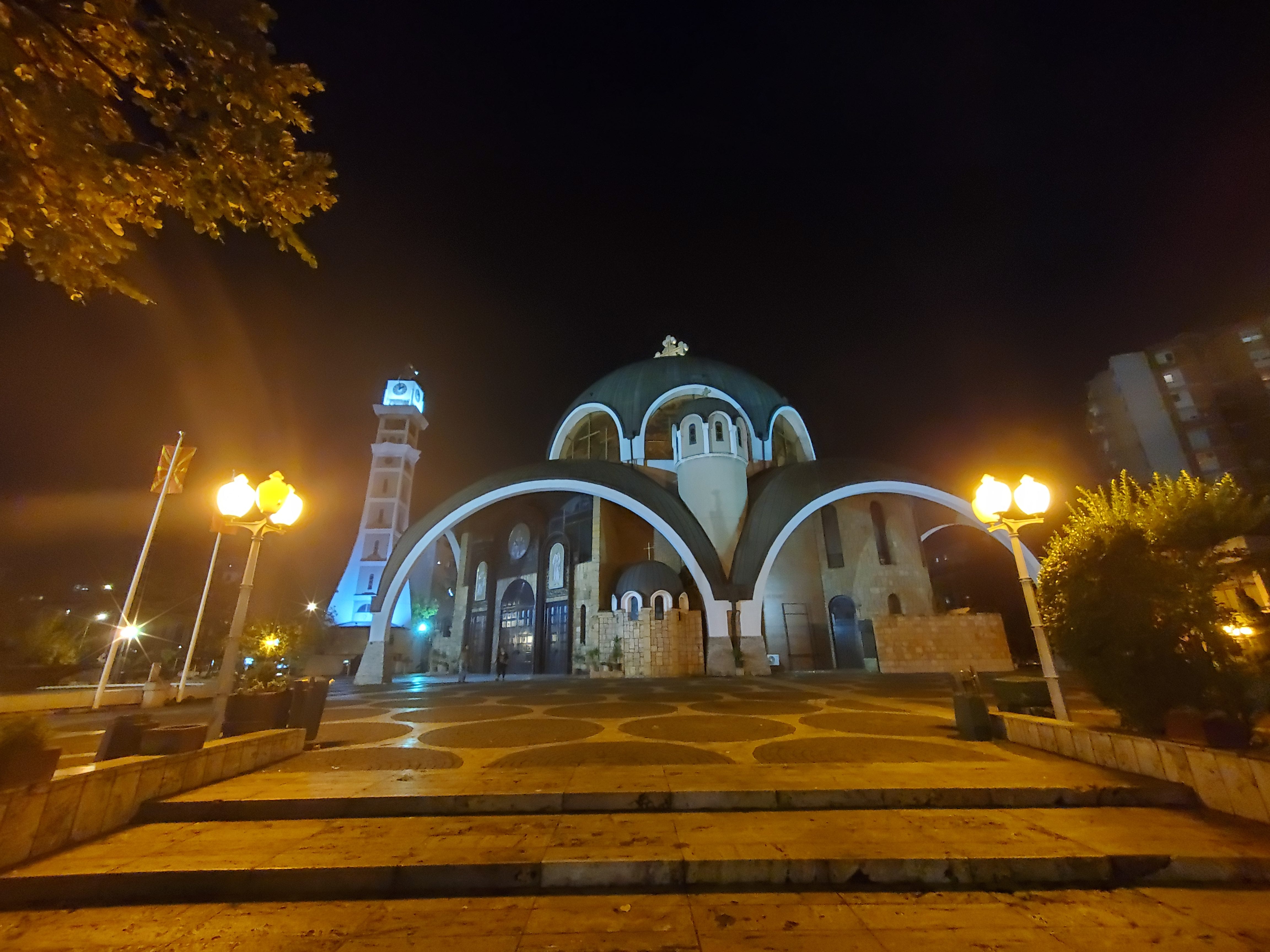
A few streets away was the slightly-less-modern Church of Saint Clement of Ohrid, the largest Macedonian Orthodox church in existence, which we had briefly visited the previous night. A 1970s construction, it includes a fountain donated by the local Muslim community.
After a stop by the local branch of an Istanbul confectionary shop for the obligatory box of Turkish delights, and a festival purchase of fine Macedonian honey, we were on our way again, north over an atrociously potholed road to the nearby Kosovo border.


Postscript: The Turkish delights got us into trouble at the end of our trip when we had to jump lines in Frankfurt to make it in time for our flight from Albania back to Chicago. We weren’t entering the European Union, mind you, just briefly transferring terminals, but it was enough to spark a lengthy investigation of the sealed box of candies. While Jeff and Graciela hung out at the gate, Paola and I waited in suspense as the tight-lipped security folks stood around Paola’s open luggage. We didn’t want to betray much anxiety, but we did ask what the holdup was—politely, mind you—and were told that the candy box would have to be inspected by a police officer, for whom they were waiting. When we told them it was from Macedonia one of the personnel brightened up and mentioned that she was from there, but it didn’t really score us any points. Rules were rules.
As our flight got close to boarding on another side of the airport, the police officer finally showed up, barely glancing at the box before dismissing us with an “it’s OK” or words to that effect. We ran, of course, only to wait who knows how much longer until the flight actually boarded. Thus the only truly unpleasant experience of the entire trip (save, maybe, the utter chaos at the Tirana airport when we left) was in Frankfurt.
PREVIOUS:
NEXT: