
Pipe dream?

On April 22 at dawn, between rain showers, three bulky duck silhouettes skim Bald Eagle ridge and then veer east out of sight. They’re almost certainly scoters of some type, but it’s too far and dark to tell. Later in the day it warms, and a newly arrived Eastern Warbling Vireo starts up in the trees along the river. A Nashville Warbler and a furiously reep-ing Great-crested Flycatcher both show up at Eric’s place where the PUC grabs them. Around dinner, a text from Dave—the year’s first Rose-breasted Grosbeak has appeared, of all places, at Mom’s feeder!
I’m now in the habit of checking Birdcast during the night to see if a big enough migrant pulse warrants an early up-mountain hike. On the 23rd, 750k pass over the county, enough to get me at the gate by 5:40 AM. After two Louisiana Waterthrushes, a Blue Jay, some Eastern Towhees, and a Northern Cardinal, I start up the knife-edge to intercept the next phase of the chorus. I scrape through a patch of invasives, flushing White-throated and Song sparrows, then a Black-capped Chickadee and a Tufted Titmouse sing, one from the main hollow side to my left and the other from the Railroad Hollow to my right.
Smaller chasing larger
A Worm-eating Warbler is buzzing by the time I reach the left-hand turn-off to Grosbeak Trail, with an American Redstart toward the top of the ridge and then a Yellow-throated Vireo farther in, with the sunrise. A Blue-gray Gnatcatcher does a reedy imitation of a Blackburnian Warbler, interspersed with the song of the real thing. A few grosbeaks are about, and later, the first Ovenbird and Black-throated Blue Warbler. I make it all the way to the garage to get the tape (Sora last night!), and catch a few more FOYs—Indigo Bunting somewhere in the field, and Prairie Warbler along the edge. Back in town, some shy notes along the river resolve themselves into the first Baltimore Oriole.
Later in the day, I watch a Common Raven spiral up to chase a cruising Red-tailed Hawk over the Gap, grappling with it. The hawk, in conflict-avoidance mode, quickly makes off down Sapsucker Ridge. Not much after that, a raven, perhaps the same one, is besieged by an American Crow that dives at it again and again. I can imagine the crow then getting attacked by grackles and the grackles by swifts or a hummer, or this might need to wait a couple more weeks until additional tasty fledglings are available.
Quickening
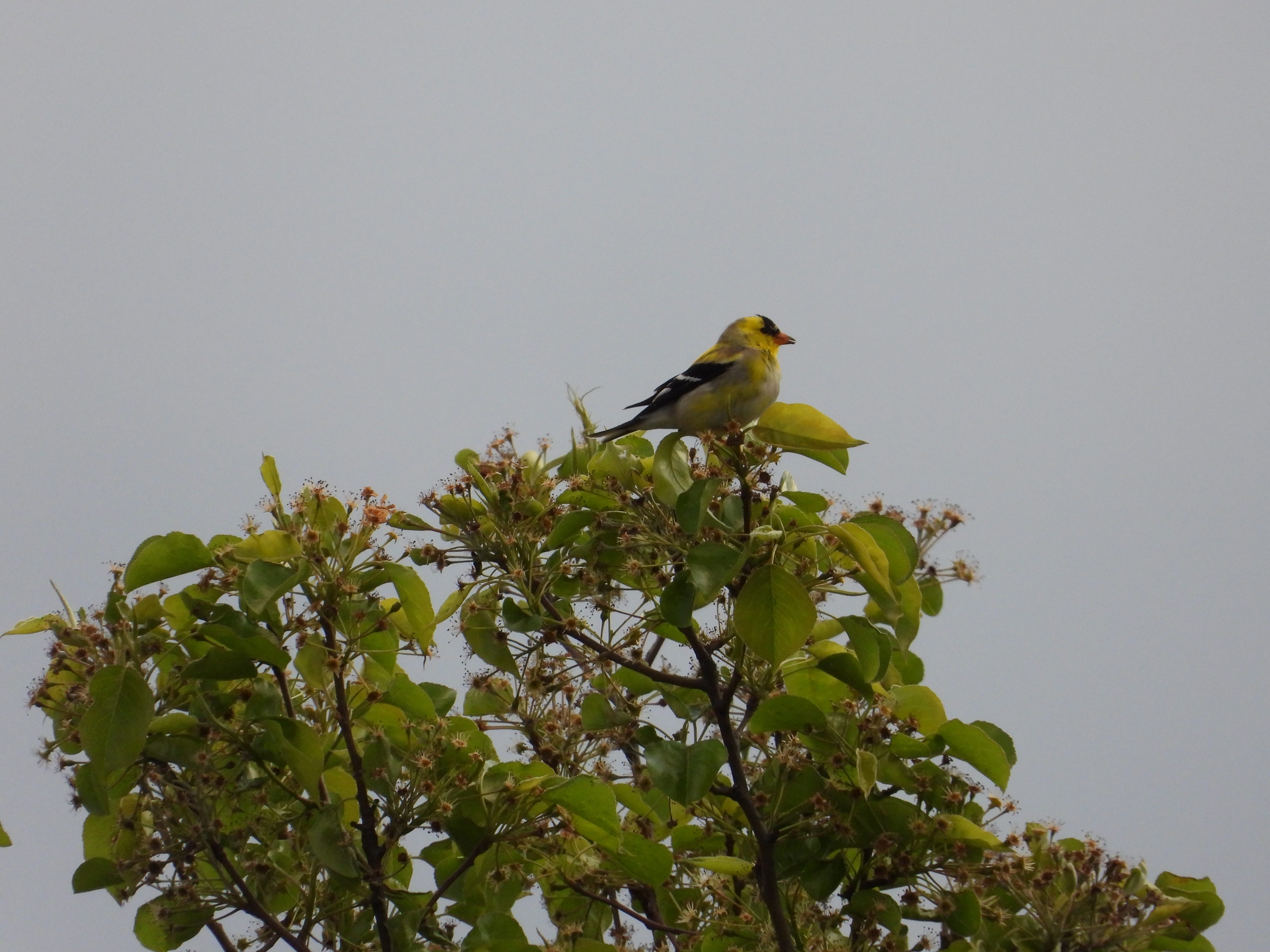
The next day is Friday, 48, breezy, and clear on the balcony after 5 AM, but clouding up fast. Things start slow, with an Osprey and then a Bald Eagle cruising north over town with single purpose, perhaps toward a fish hatchery or sportsman’s club for early and easy snacks. Then, mixed in with the regulars, a few oriole notes that evolve into the full song. The first Northern Yellow Warbler progresses the same way, so that it’s several minutes until I’m sure what’s behind the notes. Out of sight along the river or creek, a Spotted Sandpiper peeps. The list blows by 30 and then reaches 40 with a Green Heron high up, east to west at 7:19 AM, well after the time when most of my April dawn counts wind down. A Red-eyed Vireo sings in the background as the new warbling vireo goes on and on and on in the foreground, intermittently scolding who knows what. A Song Sparrow plucks at wispy old twigs by our car, then flies directly into a small but thick hedge patch flush up against the red apartment building across the alley. American Goldfinches rule the canopy, more this year than I can ever remember.
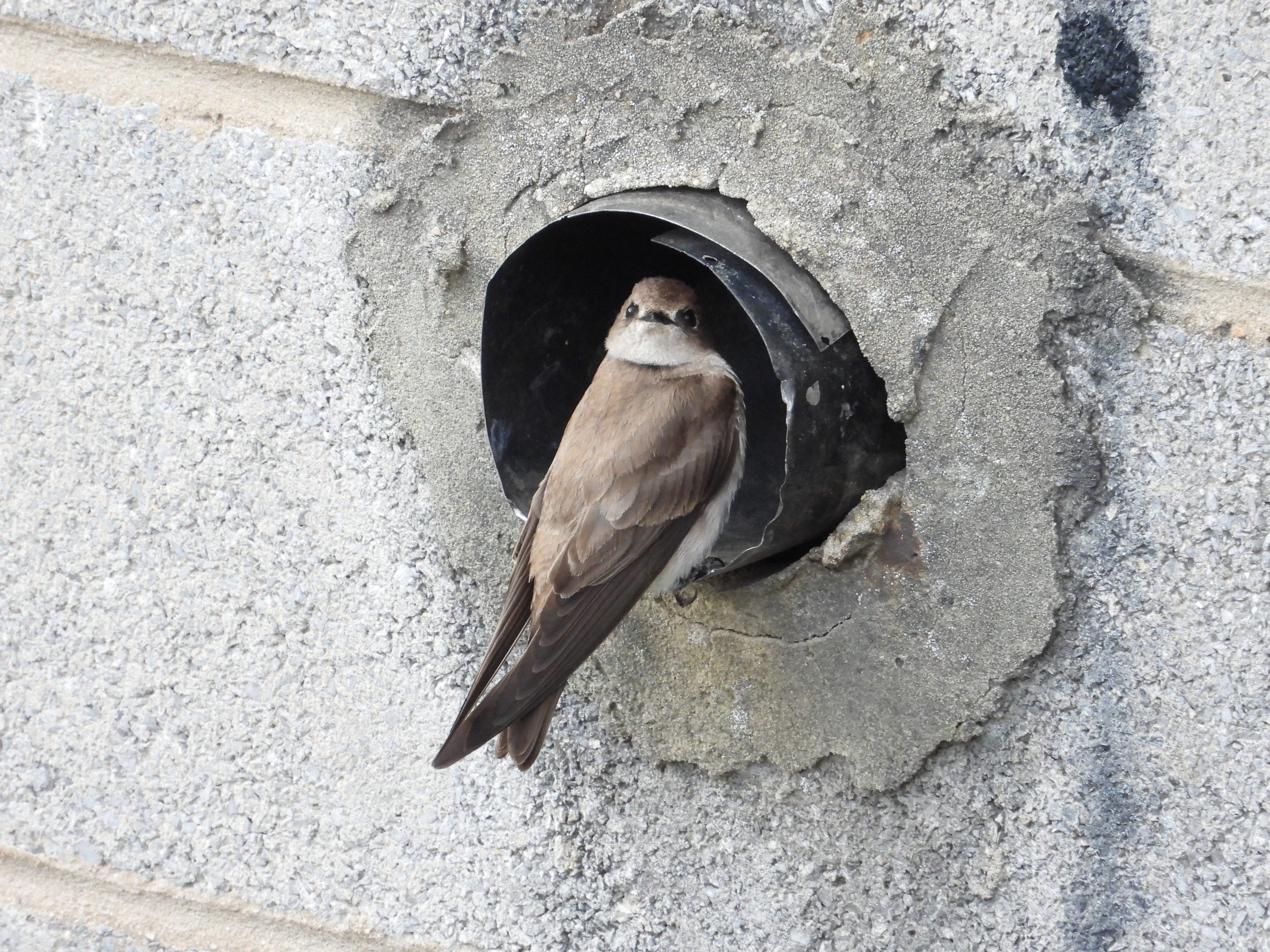
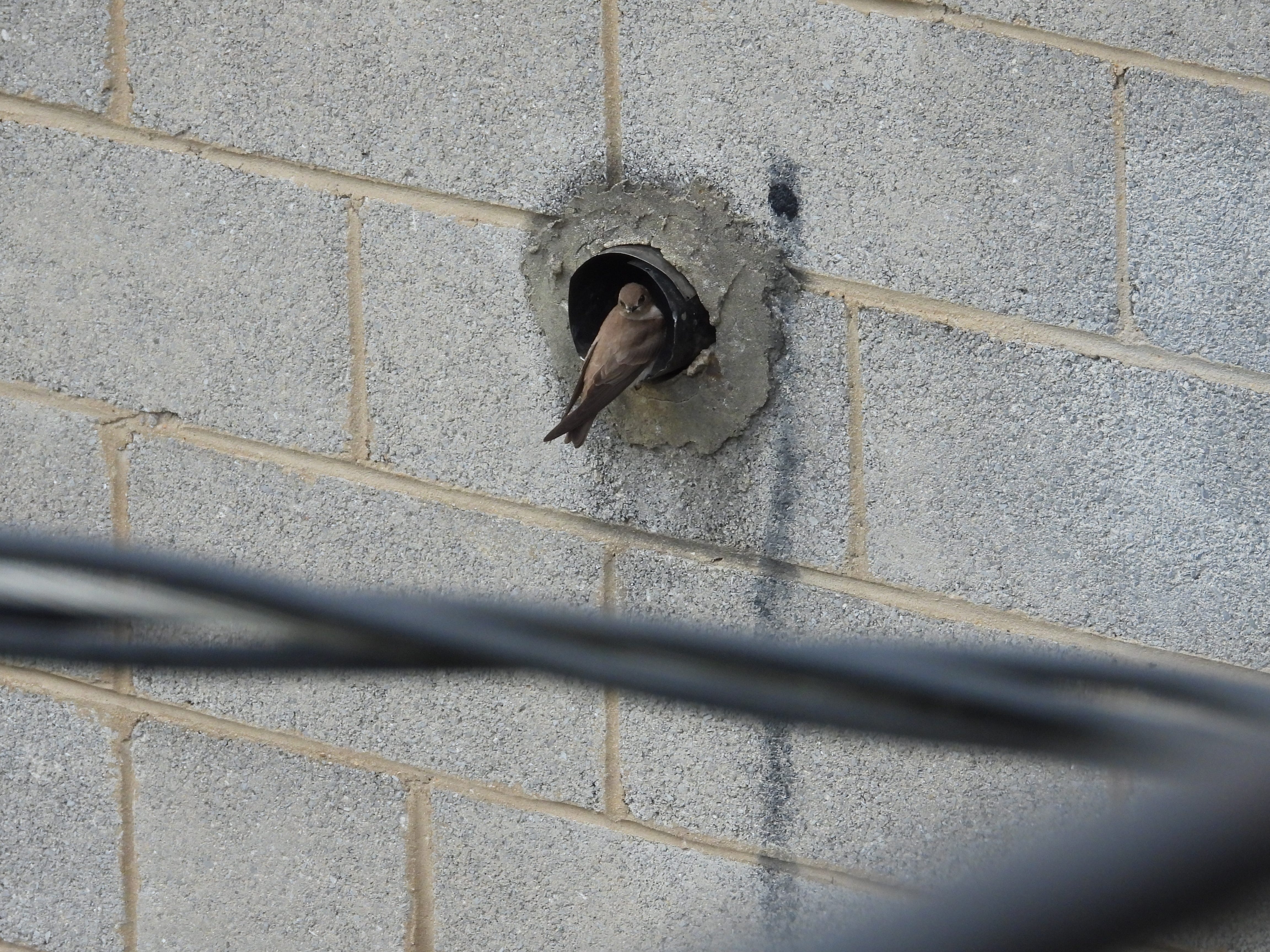
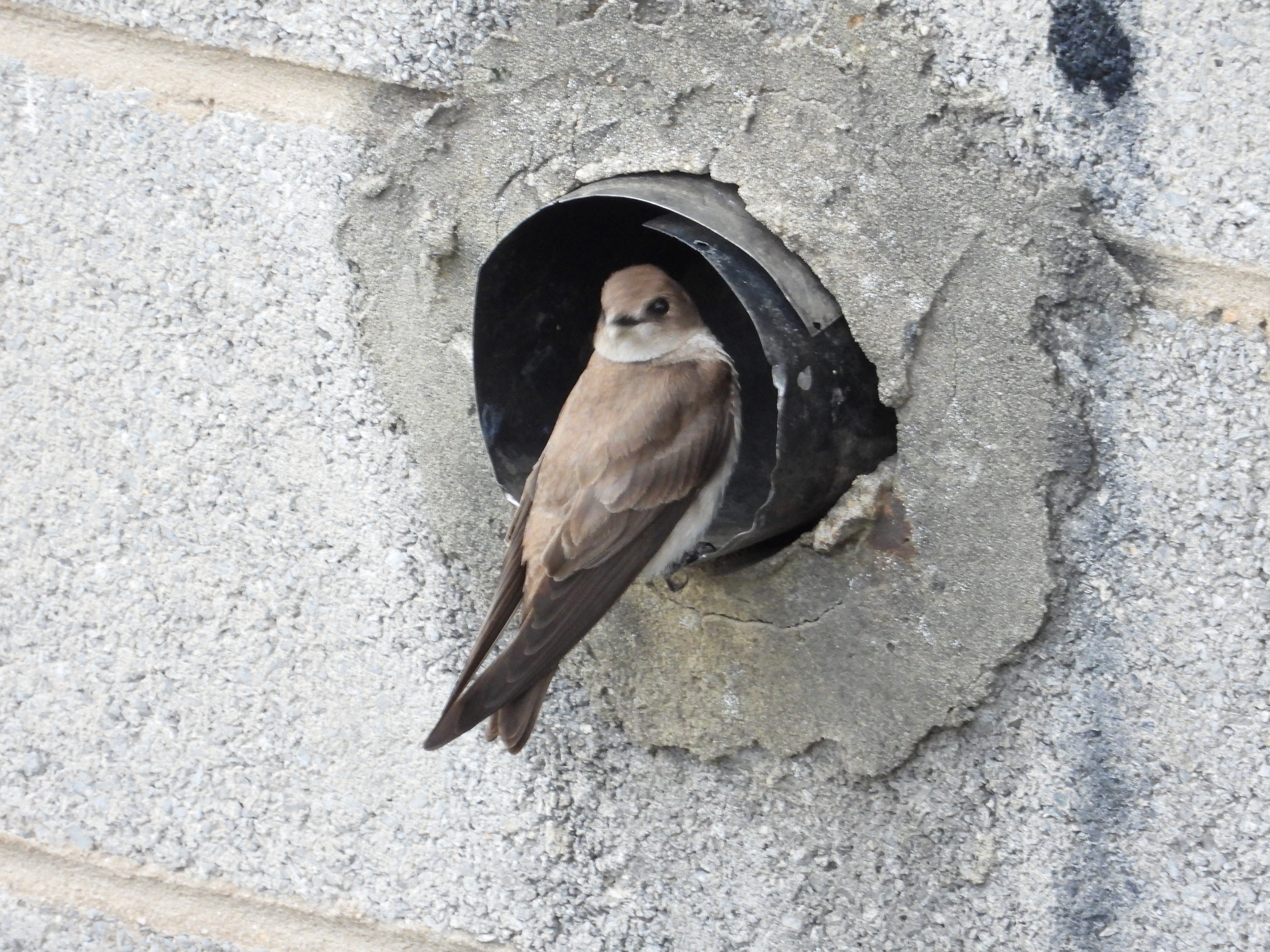
The 44 species I can see or hear this dawn are one of the biggest ever balcony totals, and I don’t throw in the towel until close to 8 when 11 Blue Jays straggle-stream over town, high up, migrants off Brush Mountain heading north. But it’s not just the exaggerated species count; activity and interaction today are somehow heightened as well. American Robins and European Starlings are both rushing about everywhere, grabbing then carrying nesting materials. A pair of Northern Rough-winged Swallows lingers for close to half an hour around a mysterious metal hole in a nearby wall, but I know better than to get my hopes up. Swallows are very particular about where they nest, and it’s hard to imagine they would pick a spot right next to two motorcycles in a busy parking lot.
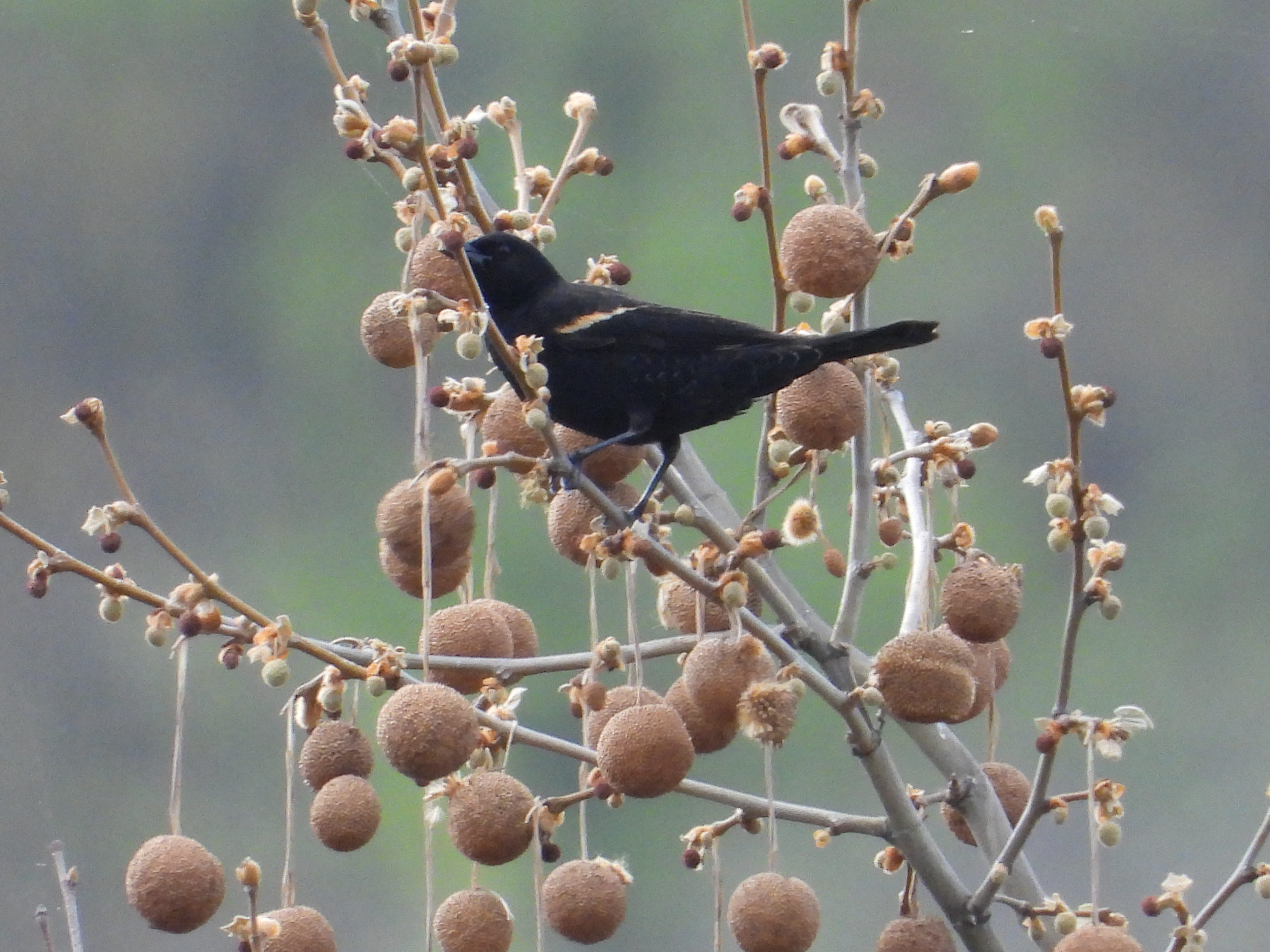
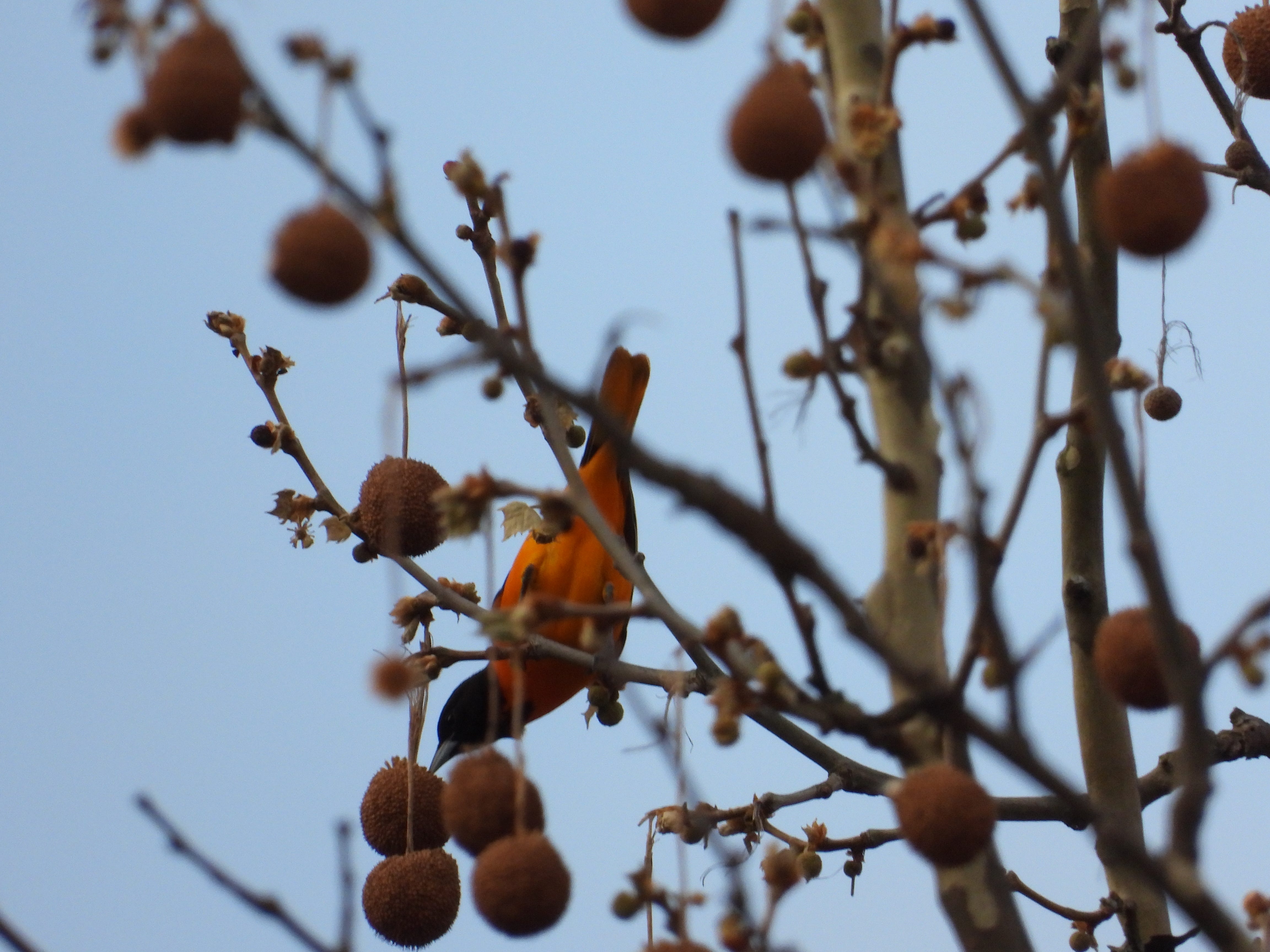
Meanwhile, the tallest sycamore top just in front of the interstate attracts a Red-winged Blackbird who feeds and sings as he clambers around, behavior I’ve never seen before. A Baltimore Oriole does the same, closer to hand, grabbing territory.
The least of the mimics
During the day, a scan of Eric’s PUC microphone reveals a “Least Flycatcher” (way too early) that is actually a Blue-gray Gnatcatcher. Later, a gnatcatcher, perhaps the same one, does the Blackburnian-ish song I heard live yesterday. The PUC is helplessly confused—its A.I. regularly inserts one false positive Tennessee Warbler into every 100-straight Blackburnian songs (they nest in the spruce above Eric’s house), then confuses the Gnatcatcher’s Blackburnian attempt for a Tennessee as well.
(I’m also growing increasingly convinced that goldfinches are mimics as well, and they do it even worse than gnatcatchers. They seem to sound most like what is right around them singing at the same time—yellow and other warblers, sparrows, flycatchers, etc. ad nauseum. I’m not knocking goldfinches, mind you, but spring arrival season would go a lot more smoothly without this constant confusion.)
Late April nights
Back to back nights on the NFC start to pull in an array of interesting species. After 9:30 PM on the 23rd, an Indigo Bunting buzzes by along with the Sora and then, not long after midnight, both Greater and Lesser yellowlegs cry, the latter emitting one of its flight songs. A Savannah Sparrow also reveals itself with its classic harmonized downward call, always far commoner in the sky then in the field. The next night, the first Black-billed Cuckoo calls in flight at 10:36 PM, with many more to follow. An American Bittern grunts once. Most intriguing is a lengthy series of flight calls from a Grasshopper Sparrow, most likely emitted by a stationary bird off in the field somewhere (I hear one singing nearby the following morning). This is part of the biggest Grasshopper year since NFC recordings began here five years ago.
In the wee hours of Saturday the 25th, a Spotted Sandpiper and several Virginia Rails doing their trills as well as their kek-kek-keks, and then the first Veery of 2026, at 3:14 AM. The biggest thrushes are still Hermits, with hundreds of detections throughout the night, but Wood Thrushes are picking up as well, along with White-throated Sparrows and the occasional Red-breasted Nuthatch.
Saturday’s morning count starts at the narrow neck of First Field, with a minimal sunrise, rain to come. The list breaks 50 before 7 AM, signaling the next phase of migrant madness. In addition to the Grasshopper Sparrow, this includes a singing Blackburnian Warbler along the powerline cut, and a fast-moving Cape May Warbler in the spruce tops. Down beyond Eric’s on the flat and open bench before Bird Count Trail, a Cooper’s Hawk crouches 30 feet above me in inspection mode. On Greenbriar, a crowd of Ruby-crowned Kinglets harass me, bringing in a silent, early Chestnut-sided Warbler. Later, the first Cerulean Warblers trill from high in the towering tulip poplars along Grosbeak, and a Broad-winged Hawk swoops down past me and then up. It perches 50 feet away, watching, through the first shower.
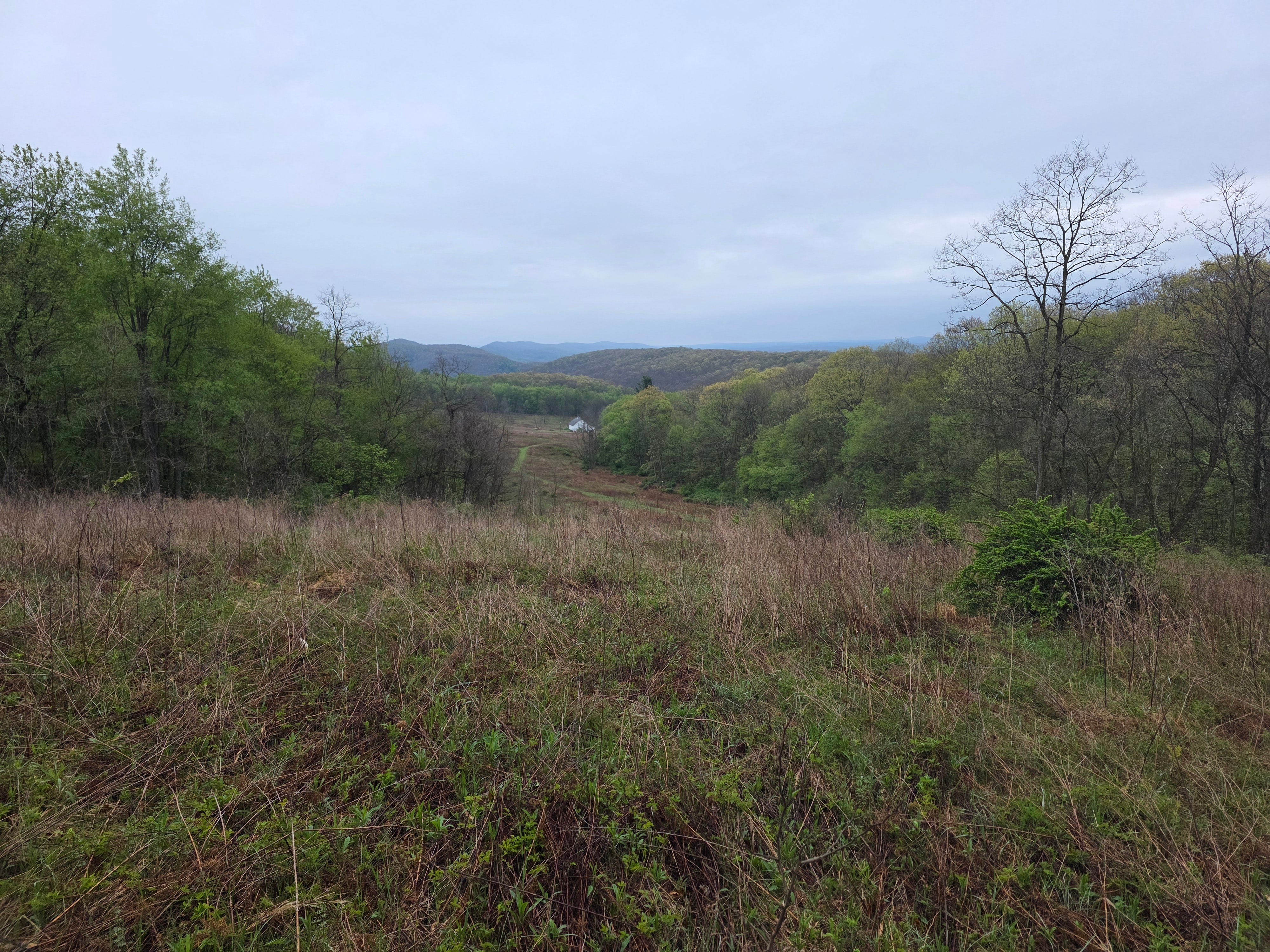
As I reach the knife-edge a steady rain sets in, not deterring a gorgeous trio of Scarlet Tanager, Rose-breasted Grosbeak, and Baltimore Oriole. The list tops out at 78 by the time I make it back to town.
River of swallows
Sunday’s quiet lures me from the balcony to the tracks, where I get a close-up of a female American Redstart singing. The Juniata just upstream of the Pennsylvania Avenue bridge is thick with swallows that I can almost touch from the stone retaining wall next to my gym. I can find a single Cliff Swallow, a species that has nearly vanished from the northern fringe of the hotspot. The cloud of hundreds is mostly Barn and Rough-wings, with a half-dozen Trees. The chittering Barns take frequent breaks to perch on overhanging limbs and converse.
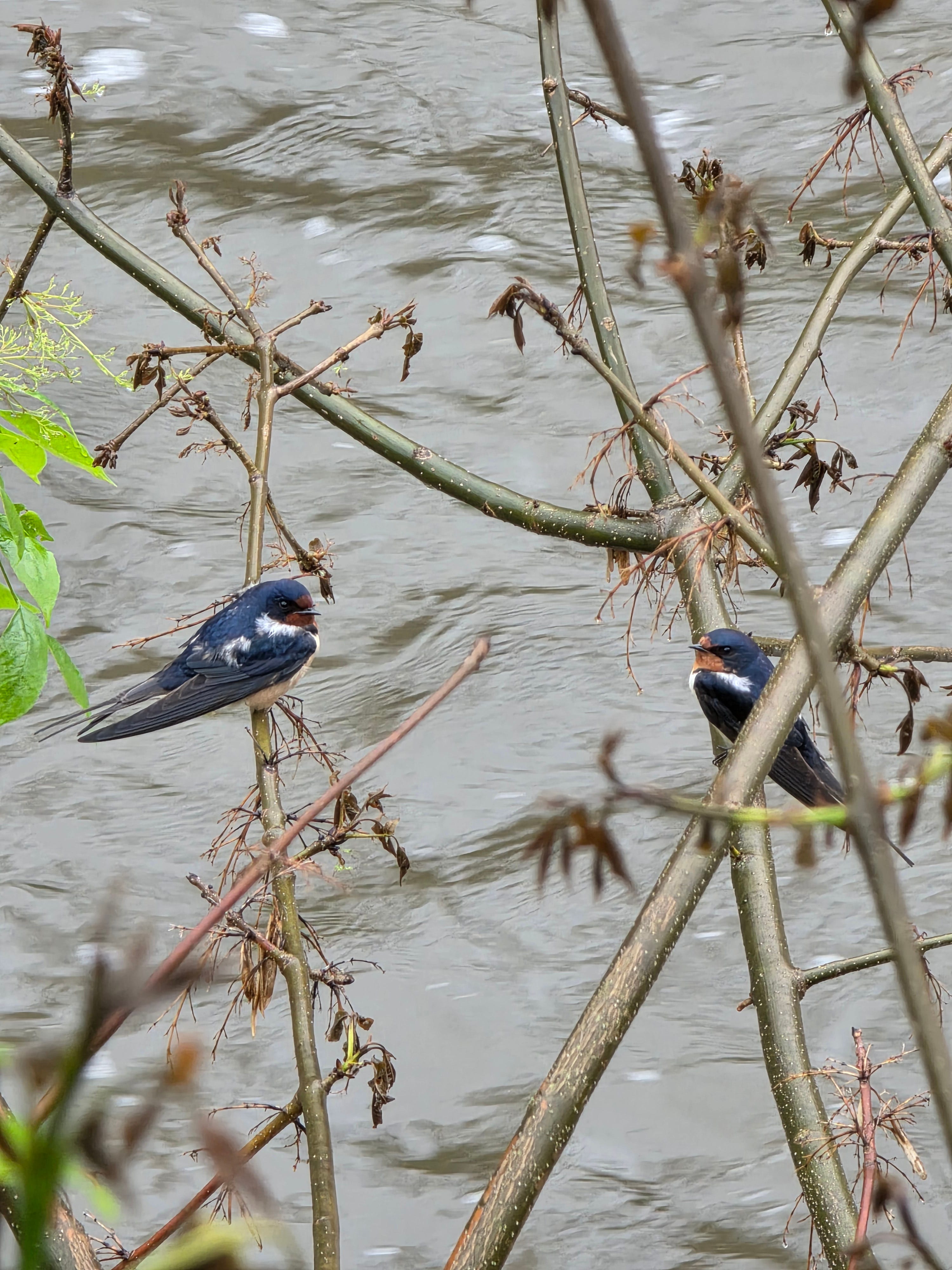
Back on the balcony, I glimpse a Chimney Swift settling rump-first into a nearby chimney, behavior I usually see in the evening. The Red-winged Blackbird dives in from the north at 6:42 and settles in to feed and sing in the sycamore top again.
Mad rush
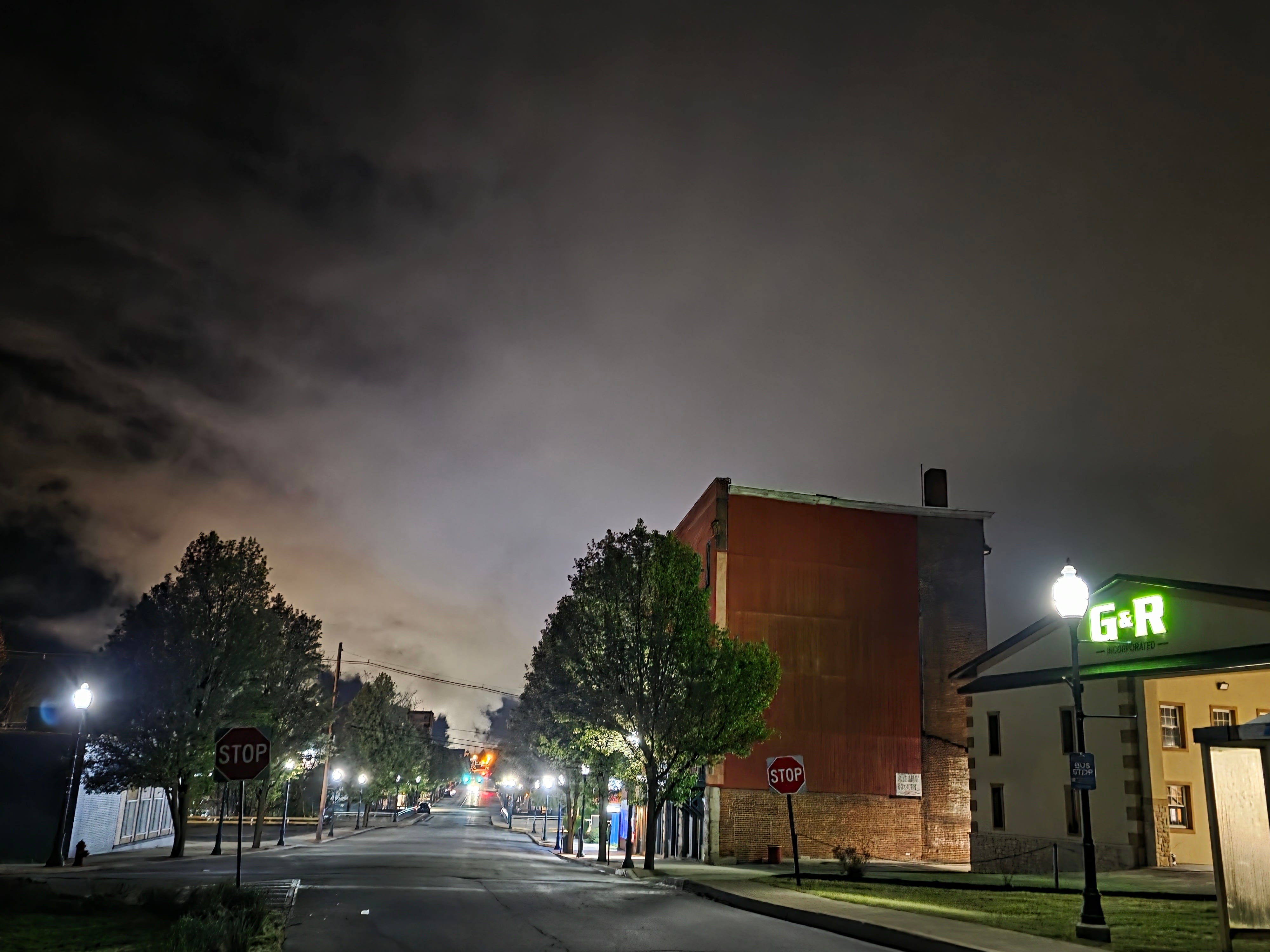
Monday begins a week that will end with the Shaver’s Creek Birding Cup, a competitive conservation fundraiser that usually sees teams in the Hollow. Strange but welcome names start to pop up in the hotspot “Recent Checklists” section as our collection of scarce spring arrivals starts to garner attention. Someone gets an early Eastern Wood-Pewee, while I stick in town, watching a thick fog layer form. Today, I can clearly see the source—steam from the paper mill squashed by an inversion layer, proceeding directly up the avenue and then sending fingers out into the Gap and up along the ridges. I wonder how many of the seemingly natural fogs up top also result from this point source?
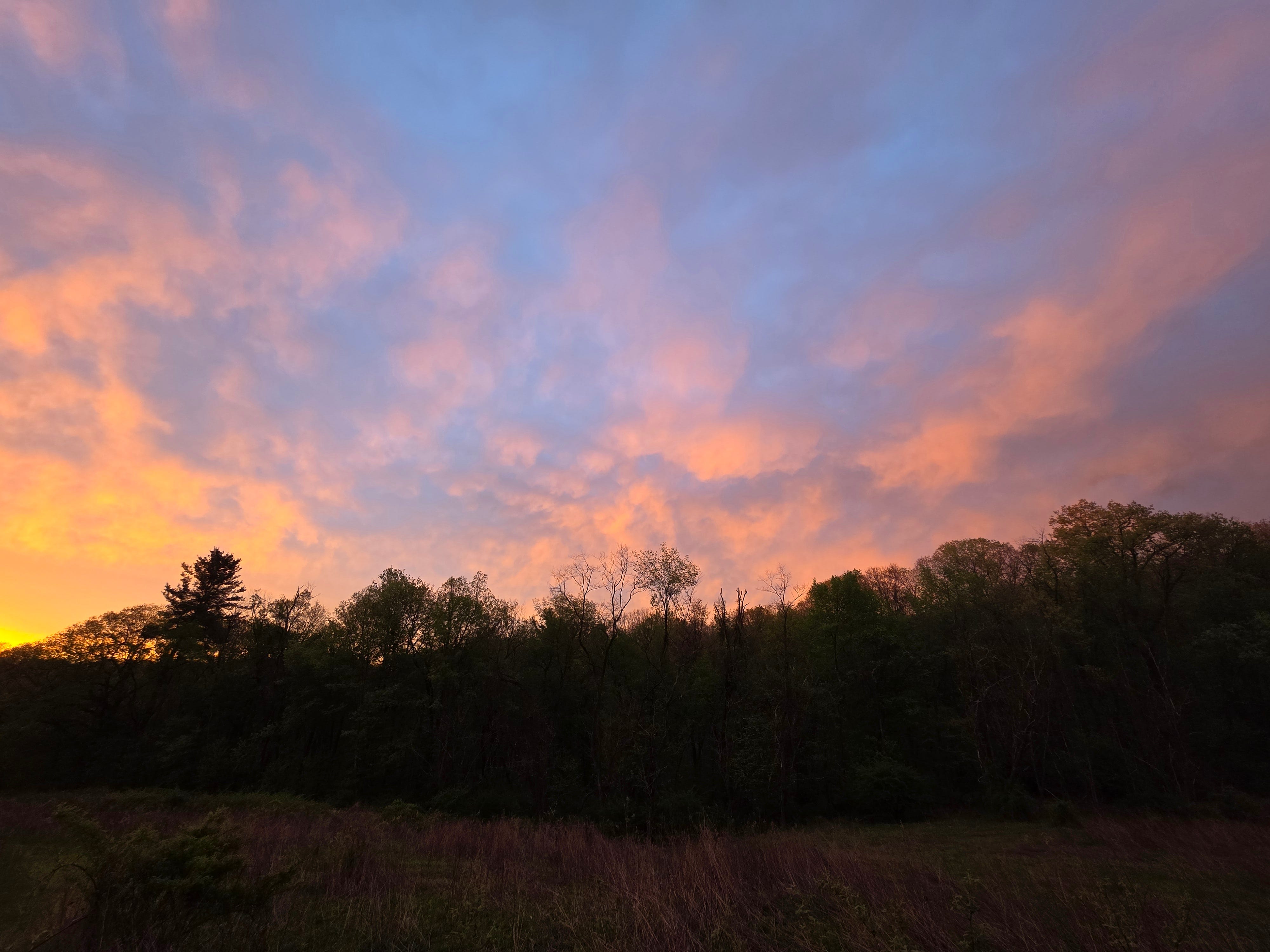
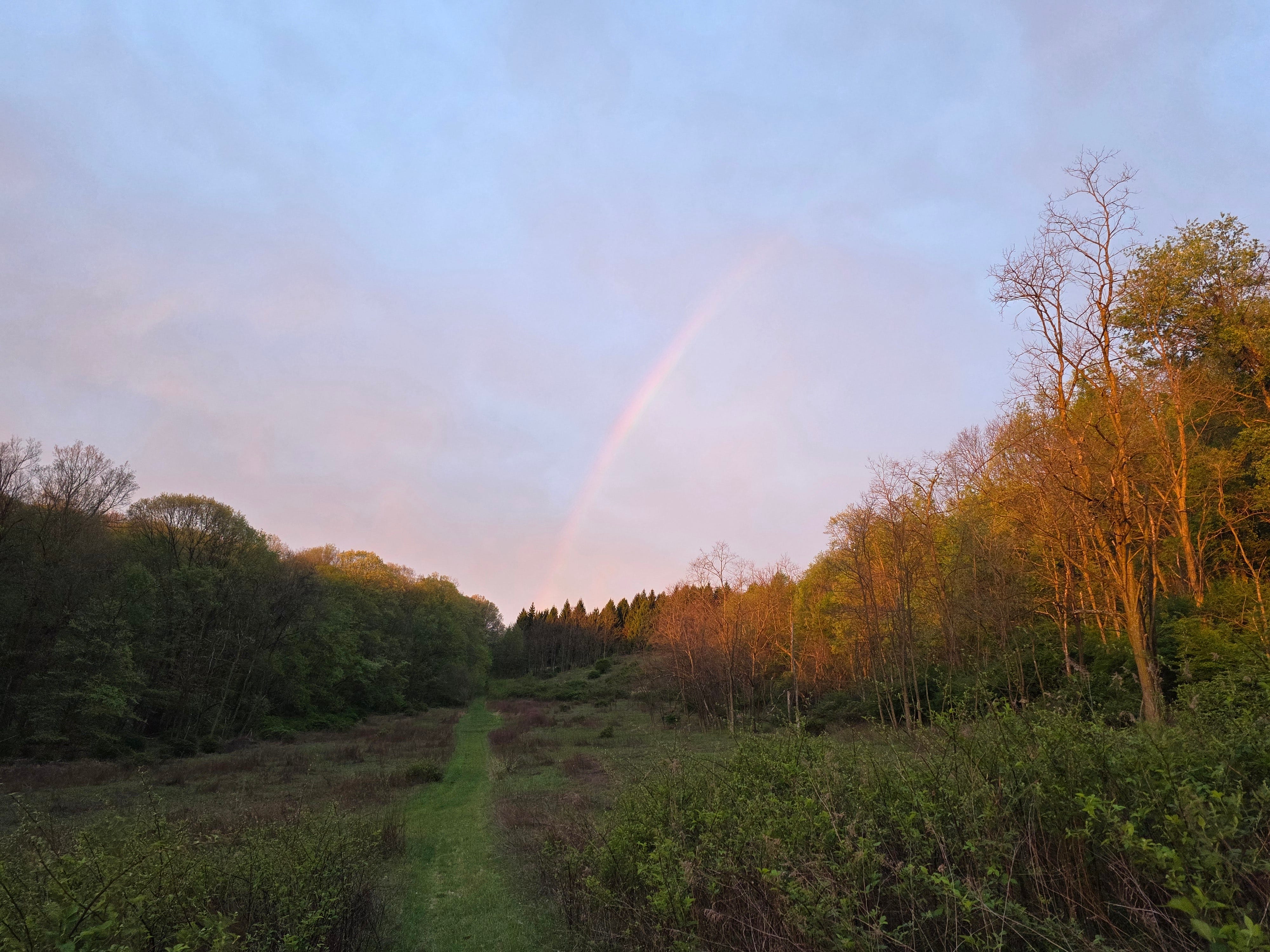
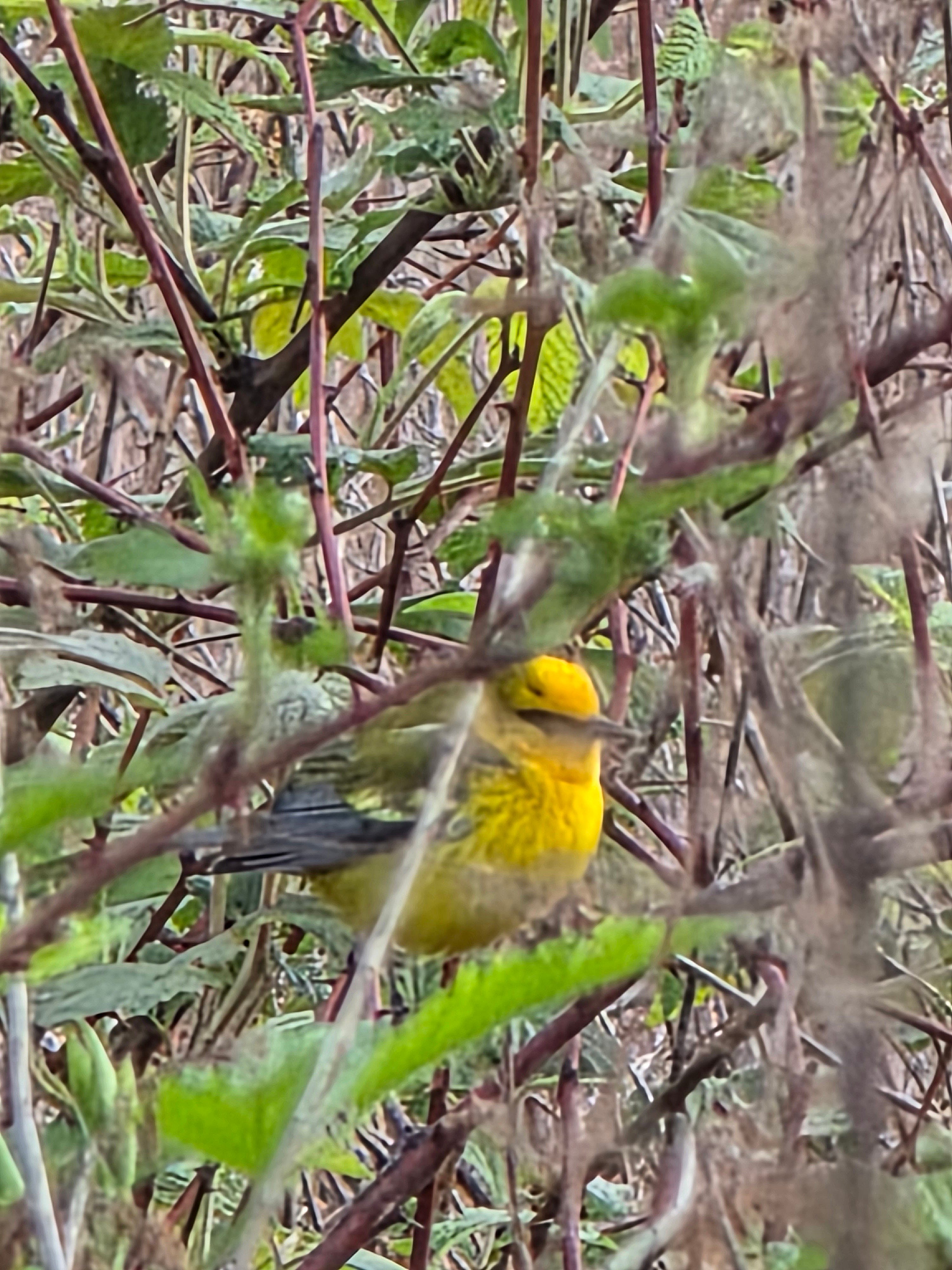
Spring bird season kicks into high gear on Tuesday with a rapid, song-saturated, pre-work hike where I have to be all the way up at the narrow neck before 6 AM and back to town by 8:30. My eBird can’t quite handle the sheer volume of early Worm-eating Warblers, Wood Thrushes, and RB Grosbeaks (11 each), but nevertheless, the weather is no longer bringing much new stuff, and May looks like it’s going to be cold, a recipe for migration stagnation. The best thing about this morning other than the extraordinary sunrise with rainbow is the Blue-winged Warbler tumbling about the field, singing its heart out and not shy at all. It’s close enough for some middling phone captures.
Wednesday is a tracks day in hopes of an itinerary night-heron returning to roost, but no such luck. The consolation prize is an Eastern Whip-poor-will calling below the tracks off Plummer’s Hollow Road, the first time I’ve ever heard one down here. Around 5:37 AM, a Killdeer cries close overheard, again and again as it flies west, perhaps to alight in one of the broad fields that wrap around the I-99 access areas. Otherwise, it’s quite out here beyond the light-triggered chaos of Tyrone, where robins, Song Sparrows, catbirds, rough-winged swallows, and titmice have been vying for attention since 5 AM.
After a respectable 54 species, I run into a trio of 20-something birders who arrive at 7 AM. Unsurprisingly, they’re a scouting contingent of Saturday’s Cup contestants. They’ve already been into the Hollow this week, but haven’t had access to the good parts up on the ridges, key to getting a respectable list.
That night, not long before 12, the first Yellow-billed Cuckoo pops up on the tape, four days behind its close cousin. Otherwise, the cold weather has kept any new real migrant wave from getting north.
The last day of April sends me up the Hollow and to Dogwood Knoll by first light. At 5:29 AM an Ovenbird nightsong, that rollicking imitation, explodes from next to me and makes me jump; then cardinals and towhees by 5:38. Nothing really new in here until the happiest song of all, the annual Kentucky Warbler, loud and fearless from the same bushes as every year, in the three-way concourse between Ten Springs, Greenbriar, and Bird Count, a new attempt to find a mate. Later, the Cup birders text me—a choice species, where exactly was it?…hope it sticks around… Other FOYs today are a Bank Swallow in among another river of swallows, and a Magnolia Warbler.
And that’s a wrap! At 163 species for the year, Plummer’s Hollow is around number 3 or 4 for the state; 48 of these have arrived since April 22nd.