

After the crowded bustle of Tushemisht, we crossed a quiet section of the Albanian/North Macedonia border, entering the former Yugoslavia along the wooded western edge of Galičica National Park. The park is named after Galičica Mountain, a massif that towers almost a mile above Lake Ohrid.
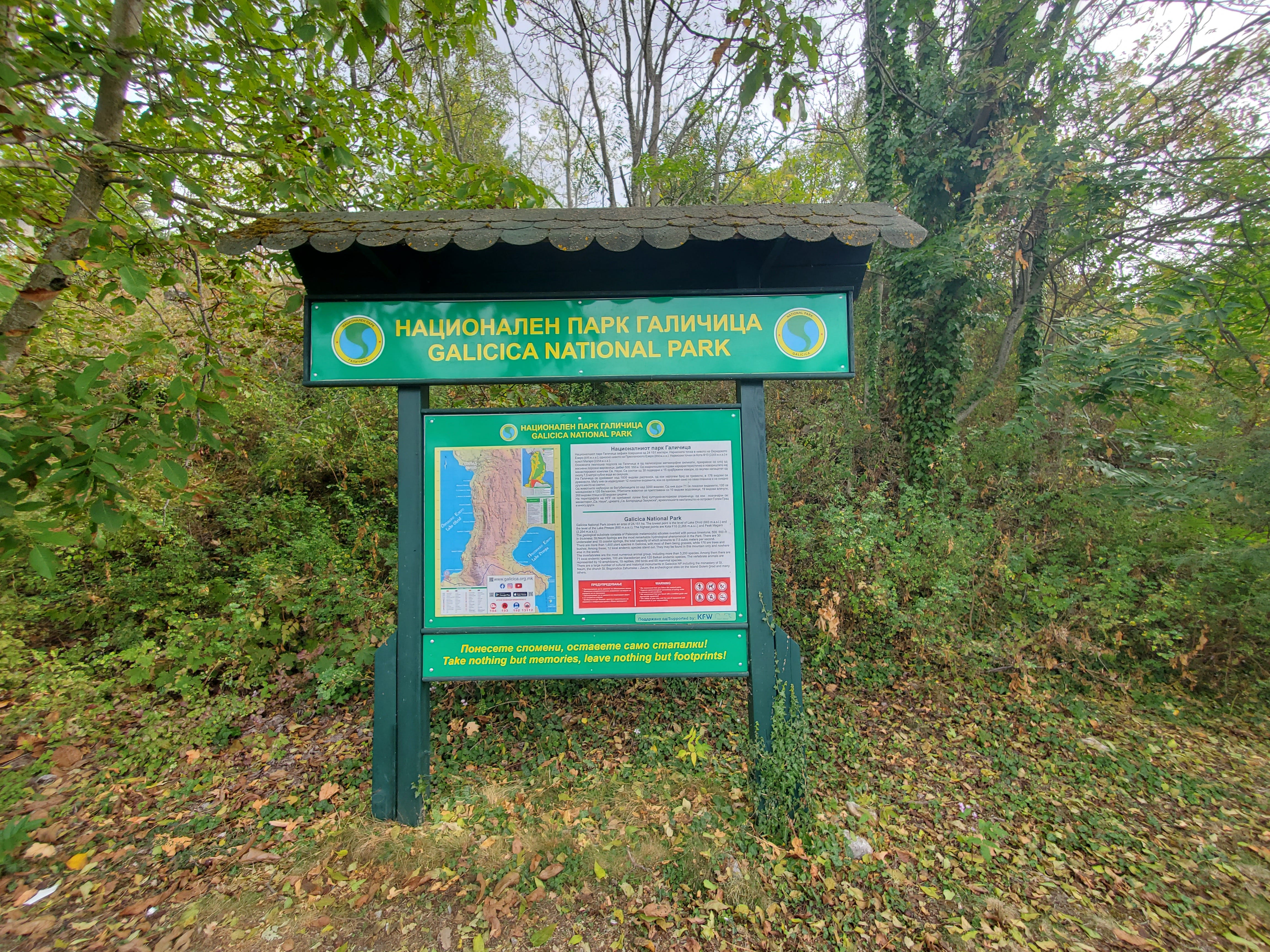
A pit stop at the border bathrooms gave us a brief glimpse of a woods teaming with birds, mostly well out of sight, but we did see two Collared Flycatchers cavorting in the low canopy, whose racket brought in a pair of curious Eurasian Jays. As usual during such a packed itinerary, we had to choose between a hike and a drive, and opted for the latter so as to get to the ancient town of Ohrid as early as possible. An attempt to stop by the lakeside Monastery of Saint Naum, set up by the eponymous Bulgarian saint in 905 AD, ended in failure. Google Maps led us in a sort of dead-end, lacustrine spiral; I backed out and we headed on.
Byzantine Complexity
Getting to Ohrid didn’t take much more than another hour up the east side of the rift valley, but accessing the old town itself was a bit trickier, as Google Maps has trouble distinguishing between streets for cars and alleys for people. A decade prior, having yielded to Google’s urgings in the tortuous maze of Guanajuato, I had rammed a rental car into a wall trying to escape a one-way walking alley before it turned into steps. Ohrid was the first time since that I was driving in similar conditions, so I was a bit gun-shy. On the second or third try, I found the correct sequence of switchbacks uphill out of the maze of the not-so-old city, once I understood that Macedonian streets were typically 1.5 lanes rather than 2 lanes. At the top of the hill, we squeezed through the gates of the old town, surrounded on three sides by massive walls originating during the time of Philip of Macedon, several centuries BCE, and reconstructed in the 10th-11th centuries CE during the First Bulgarian Empire under Tsar Samuel.
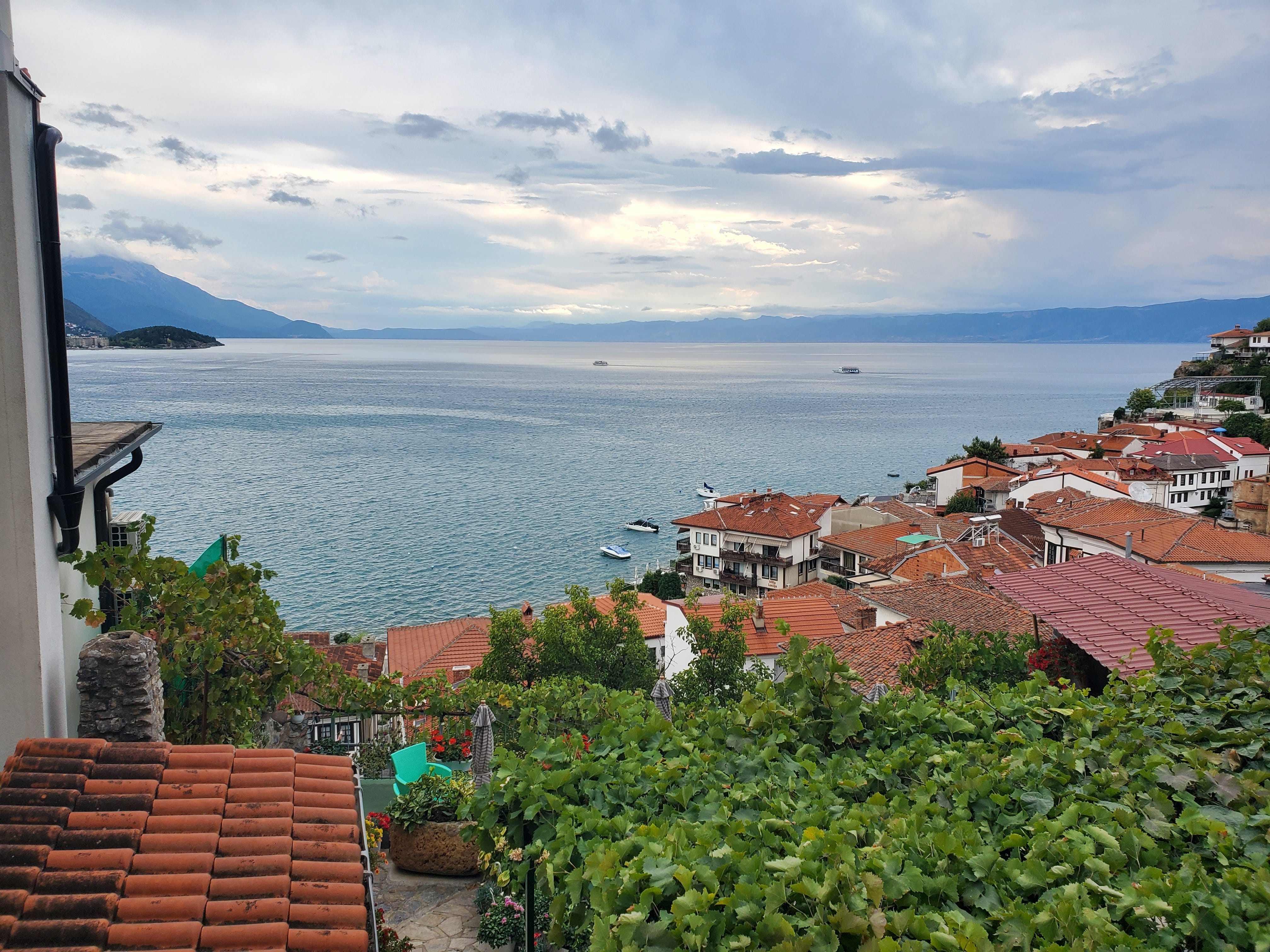
We clattered our way a few streets down until we got close to our lodging, narrowly avoiding getting stuck for the first of many times on the trip. The apartment, as advertised, had a sweeping view of old Ohrid, punctuated with Orthodox churches and a mixture of modern and centuries-old restored dwellings draped in grapevines and flowers.
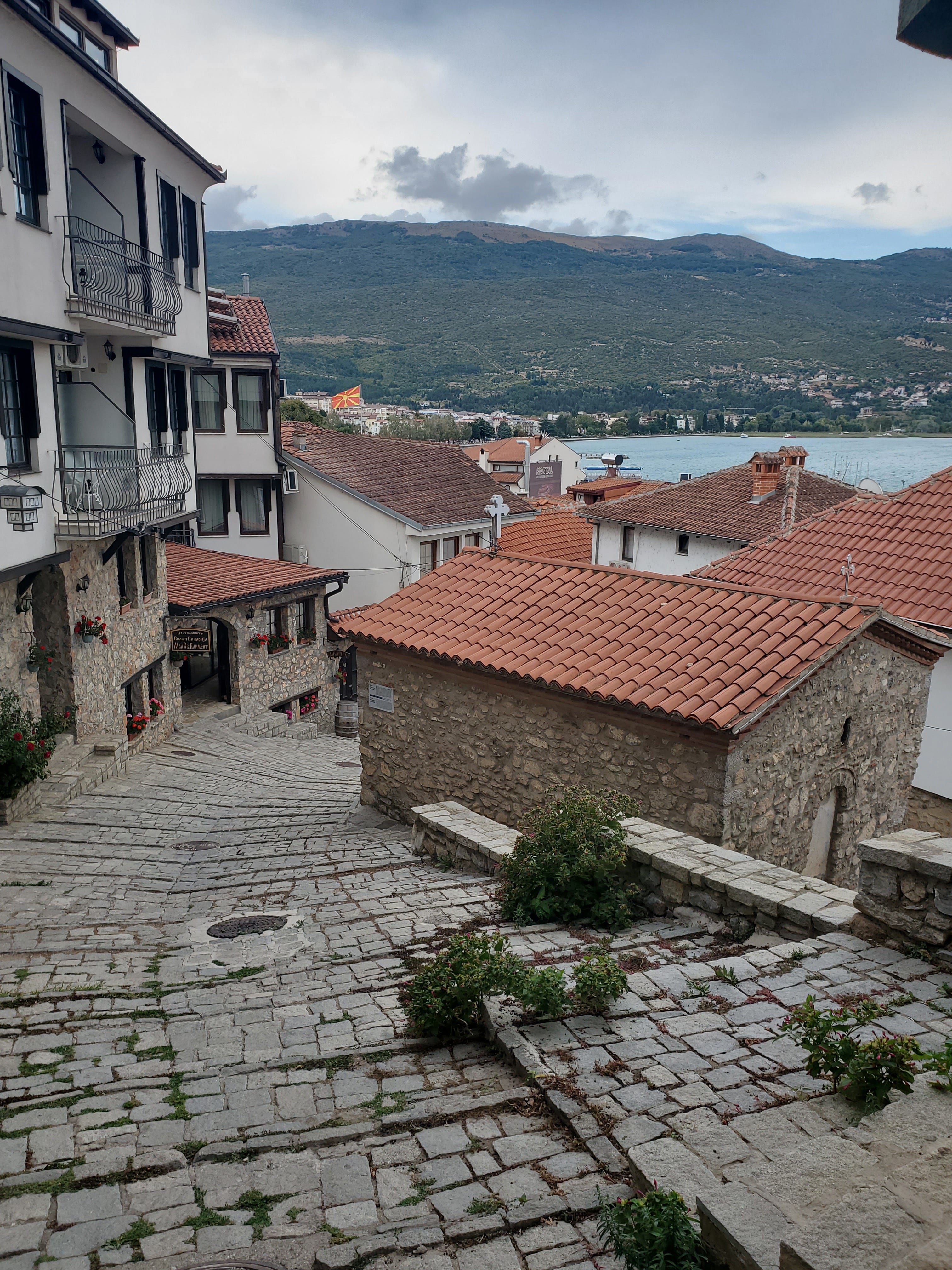


The town itself is vastly older than the Byzantine era, having been settled for at least three millennia in one form or another. However, the most striking historical artifacts are the religious sites from both before and after the Schism of 1054.
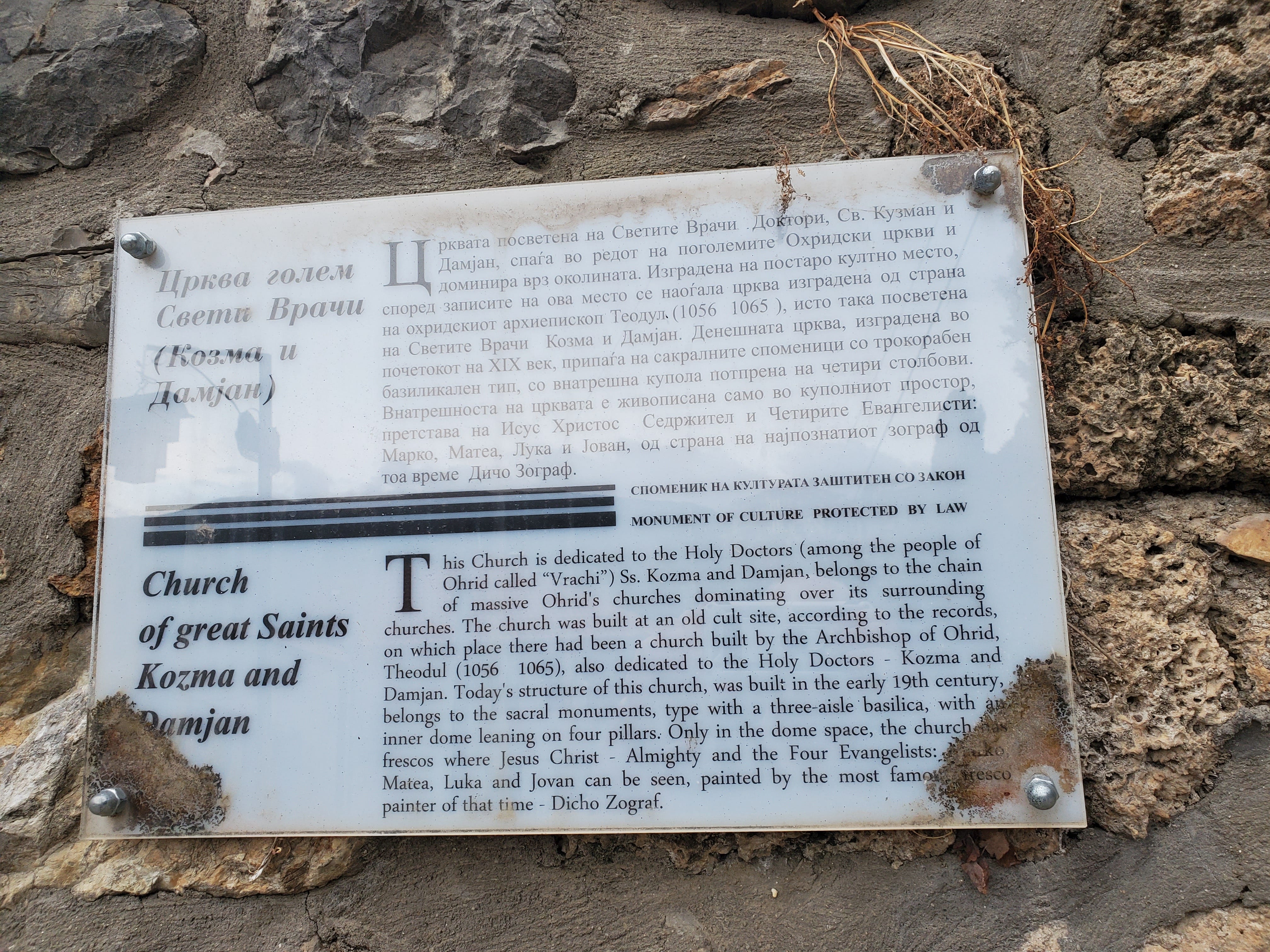
Around the turn of the millennium, Ohrid was already important enough as a cultural center that it became the capital of the First Bulgarian Empire under Tsar Samuel, who for a brief time was thought to be invincible. When he was eventually defeated by the forces of the Byzantine Empire, the Bulgarian Empire was swallowed by the Byzantines, and the regional Bulgarian administrative center was moved to Skopje around 1018 AD.
The Ohrid Literary School had been a famous center of learning since 886, when it was founded by St. Clement of Ohrid, one of the towering figures of this era. This so-called “first Slavic university” taught thousands of students, who learned to read Old Church Slavonic the Glagolitic alphabet until the Cyrillic script was invented.
These are just a few of the myriad reasons contributing to our rental agency’s prohibition on driving into Bulgaria, strangely enough. Bulgaria is one of several countries with deep cultural-historical (and thus, geographical) claims to North Macedonia, with the ebb and flow of religious and political Bulgarian power from the east periodically laying some sort of claim to what are now parts of modern North Macedonia, or at least to people’s souls. A thousand years after Tsar Samuel, the primary issues between the polyglot, multi-ethnic county of North Macedonia and its much larger neighbor to the east is the fact that the Macedonian constitution does not recognize the ~3,500 Bulgarians, who live in a few communities close to the border, as an ethnic minority, thus depriving them of fundamental rights.
As for Ohrid itself, despite its long-time domination by a complex tapestry of Eastern Orthodox administrative overseers (which eventually became the Macedonian Orthodox Church), it has also harbored Muslims and Jews, the former (mostly Albanians) due to centuries of Ottoman domination, the latter post-1492 Sephardi refugees from Spain whose community was largely wiped out during the Holocaust.


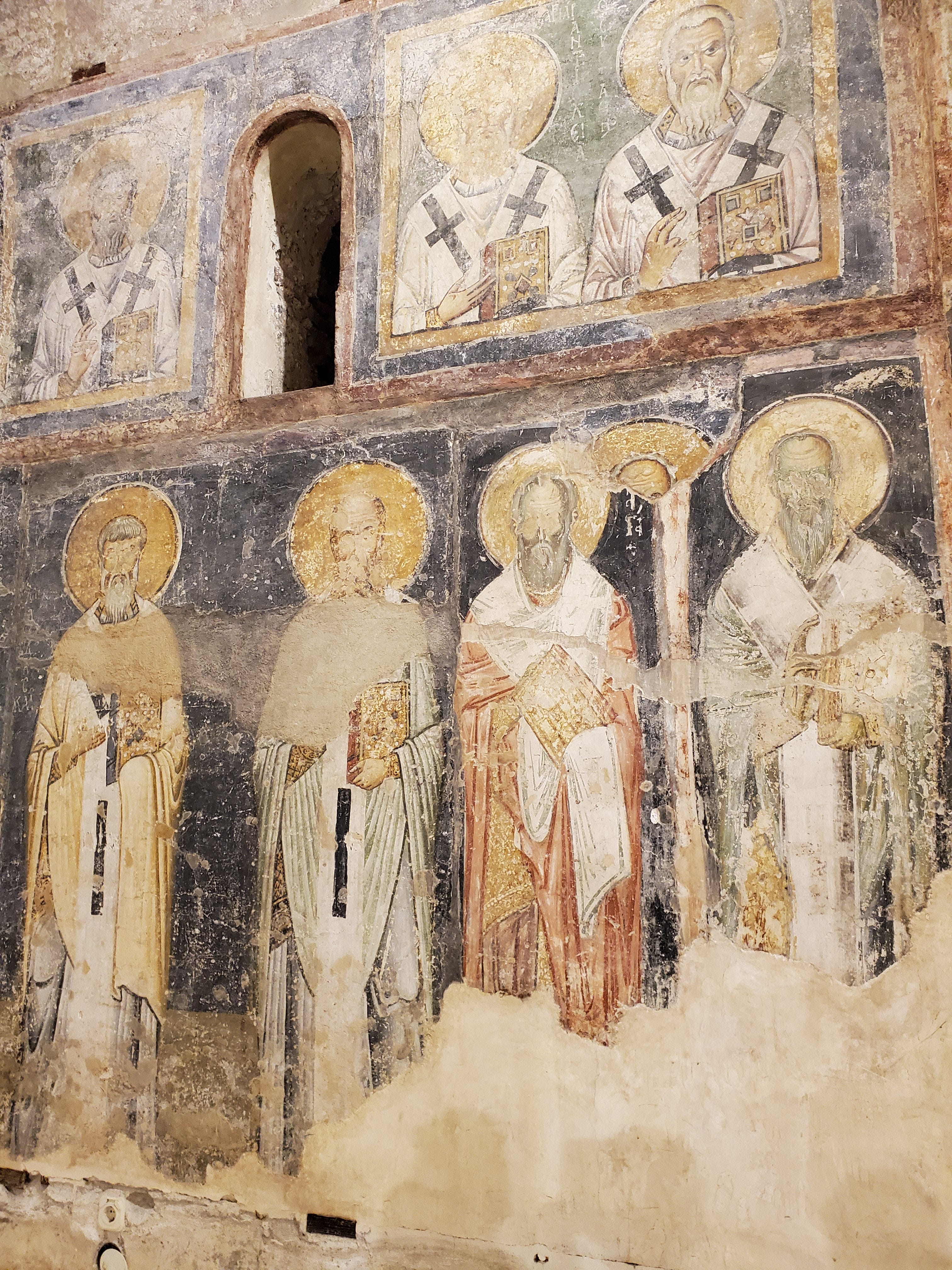
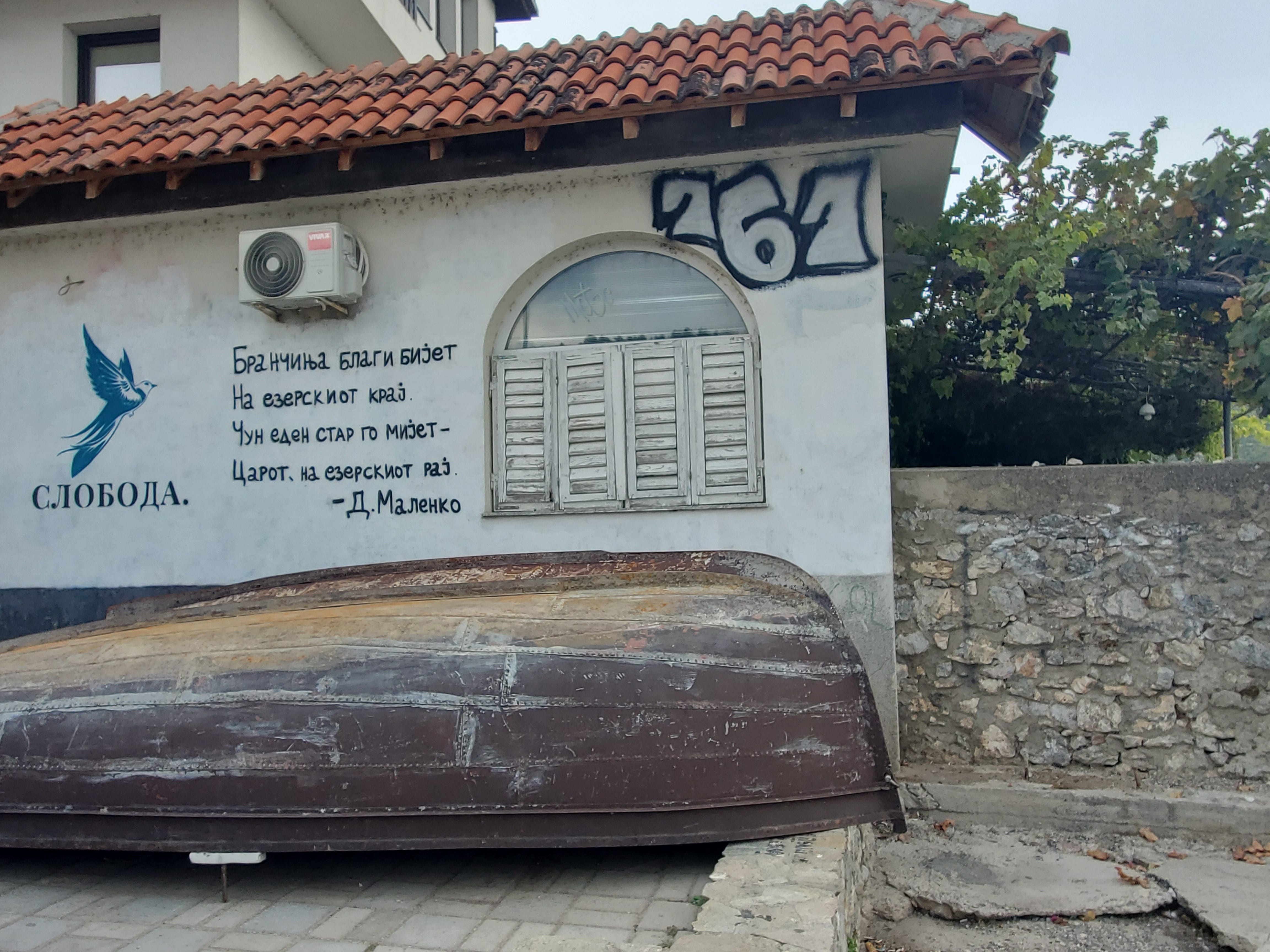
We toured St. Sofia and clambered up and down the maze of cobbled streets and alleys throughout the afternoon and evening as the weather turned to rain. Around eight PM, Jeff and I hiked down to the commercial street to look for alcohol. We were approached by three enthusiastic men, probably in their early 20s, who wondered if we knew where the best bar scene was. We humored them with our scant knowledge gained in the last 20 minutes of rakija-shopping, and they were pleased to learn that Jeff had some connection to Poland, their native country. I was complementary enough of their hometown, Krakow, that one of them launched into a brief spiel (observing that we were Americans, I would guess) about how Poland was the cleanest and safest country in Europe, even though it was the frequent target of invasions. I already knew this line—Poland had assiduously kept out “them” while welcoming 1.5 million (white) Ukrainians—so we vaguely moved into the phase where we commented that our wives were waiting for us back at the apartment, at which point they took the hint and moved on.
The next morning I was up and out well before dawn for a hike in the thick forest that fringed the old walls. At one point, I caught a glimpse of the newer city, where onion domes were interspersed with mosques, what was to become a common sight in the North Macedonian landscape.


The dense, wet forest was alive with birds, including what seemed like a migratory wave. Both Spotted and Red-breasted flycatchers, Wood and Marsh warblers that responding well to pishing, a Long-tailed Tit, a Short-toed Treecreeper, and many others were about: some 30 species in all, including Black-headed Gulls, Eurasian Coots, Pygmy Cormorants, and two species of grebes down in the water.
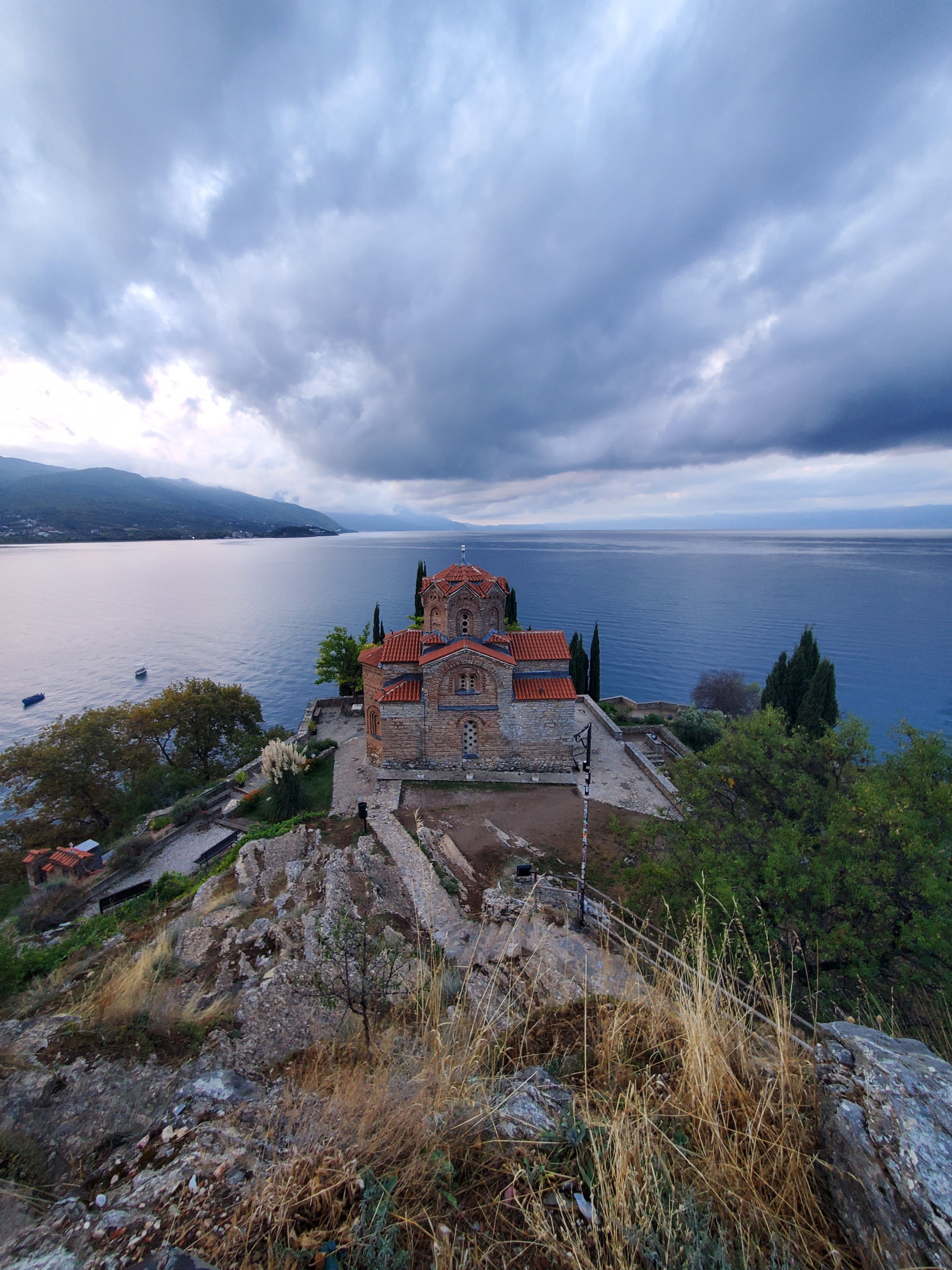
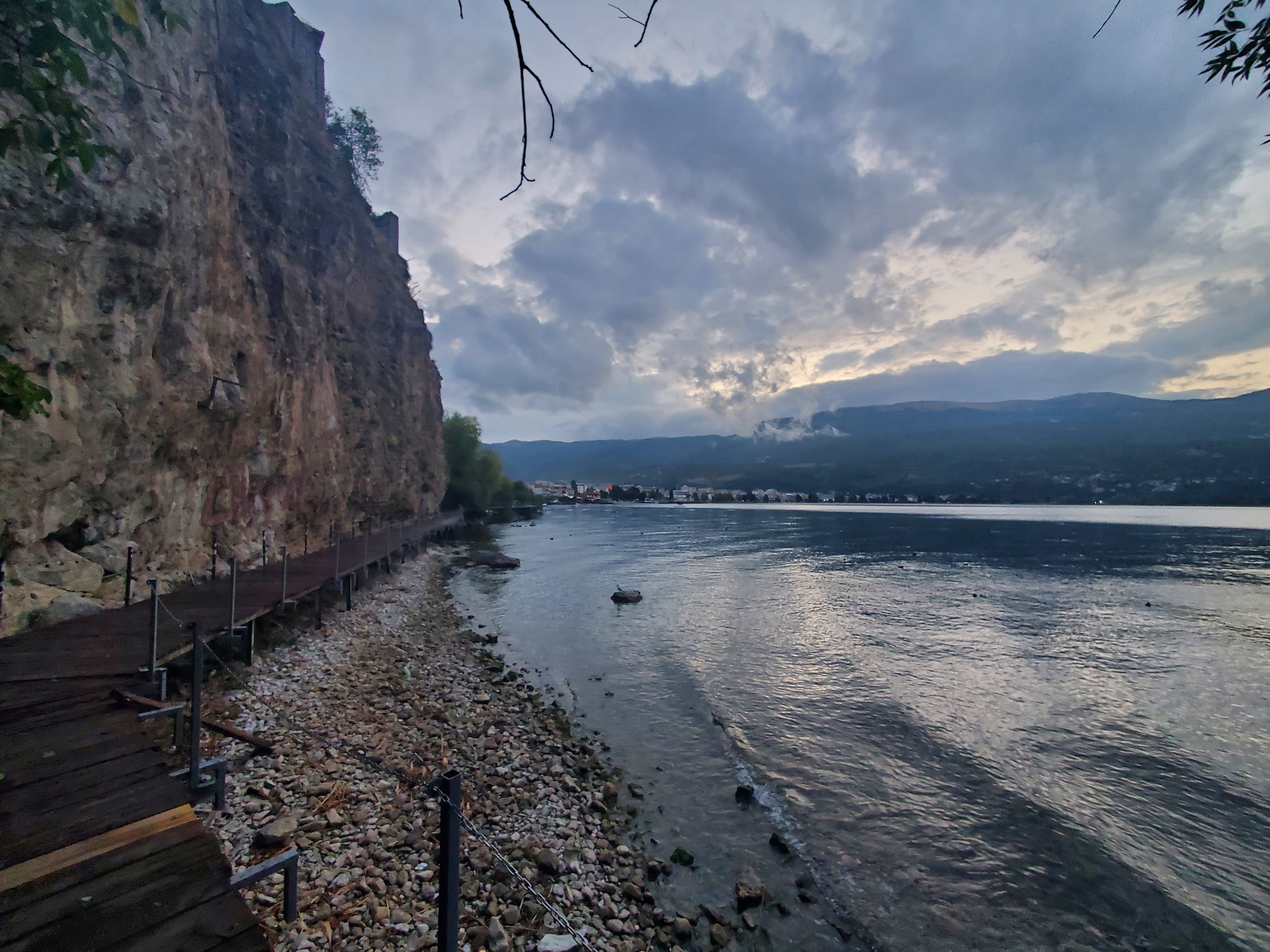
I returned to the apartment and picked up Paola around eight, and we explored another part of the still-slumbering town. The waterfront, such as it was, ran into the lake along a series of cliffs where the Ohrid Boardwalk began, which took us west past a tiny beachto Kaneo and the Church of Saint Jovan the Theologian (Saint John of Patmos). We then wound up past a monastery and a new university and back across town, stopping to marvel at the numerous, well-groomed families of cats, our introduction to Balkan ailurophilia.


Pearl clutching
Our final exploration in Ohrid was back to the shopping area, around 9 AM, as stores and restaurants opened and tour buses disgorged hordes of Germans and Turks from pull-offs at the eastern edge of old town, along the water. We first found the smoke-free interior of a cafe for a smoke-free Macedonian breakfast and traditional coffee, and then roamed about looking for pearls.
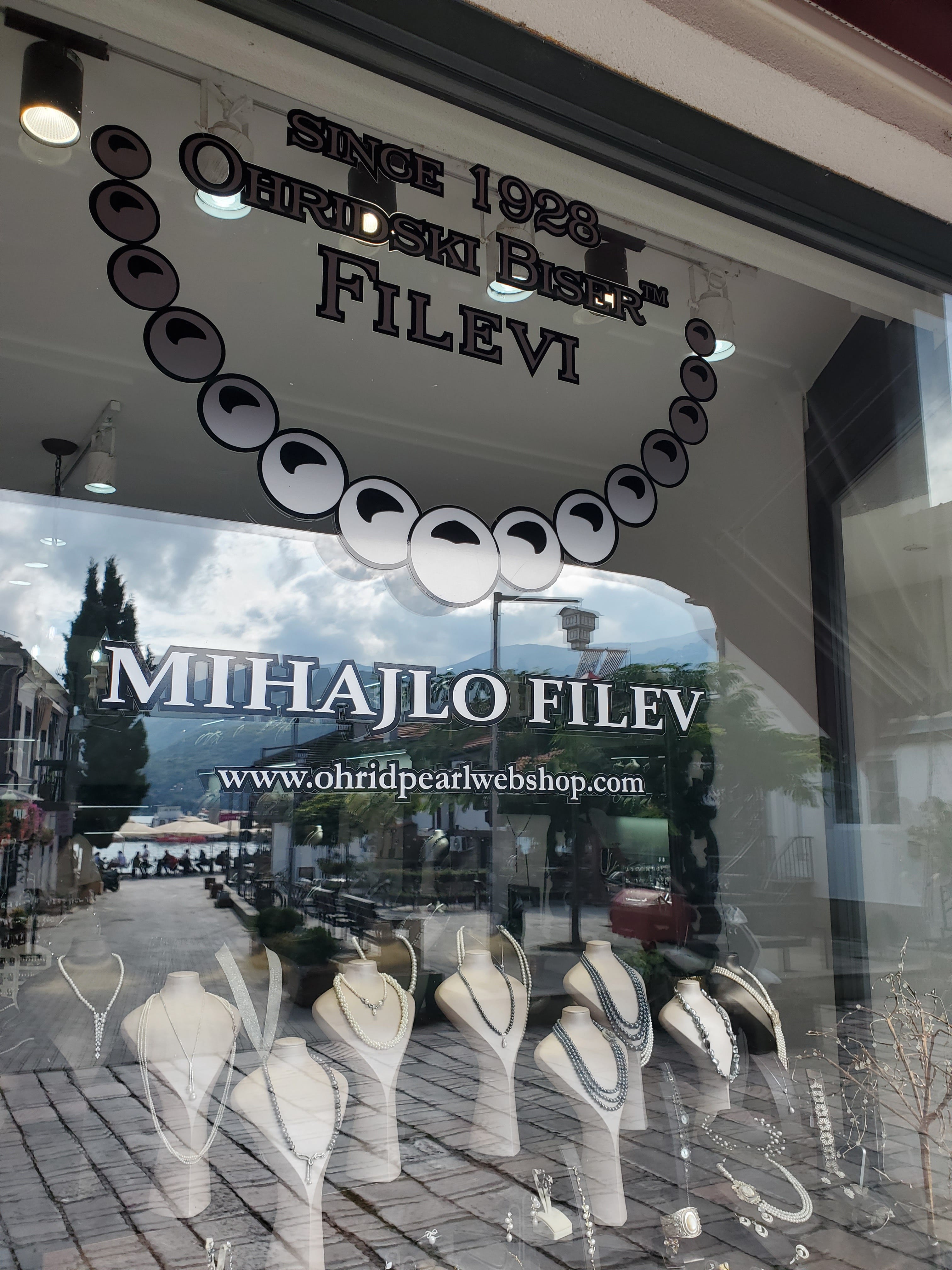
We eventually happened on the iconic shop of Mihajlo Filev, one of the two dominant Ohrid pearl families in town. The most sought-after commodity in a 3,000-year-old town, it turns out, is quite recent, having commenced only in 1928.

The Filevs, along with another Ohrid family, were the beneficiaries of a method introduced by a Russian immigrant. The pearls are made from ground-up nacre (shells) shaped into balls, and then coated with multiple layers of an emulsion from the pulverized iridescent scales of the plasica, a native Lake Ohrid fish. The method remains top-secret (though plenty of other stores sell imitations) and though the pearls are a fraction of the cost of naturally-occurring ones, they purportedly last forever. They have become a leading source of pride and national cultural icon in Macedonia and are regularly acquired by royalty.
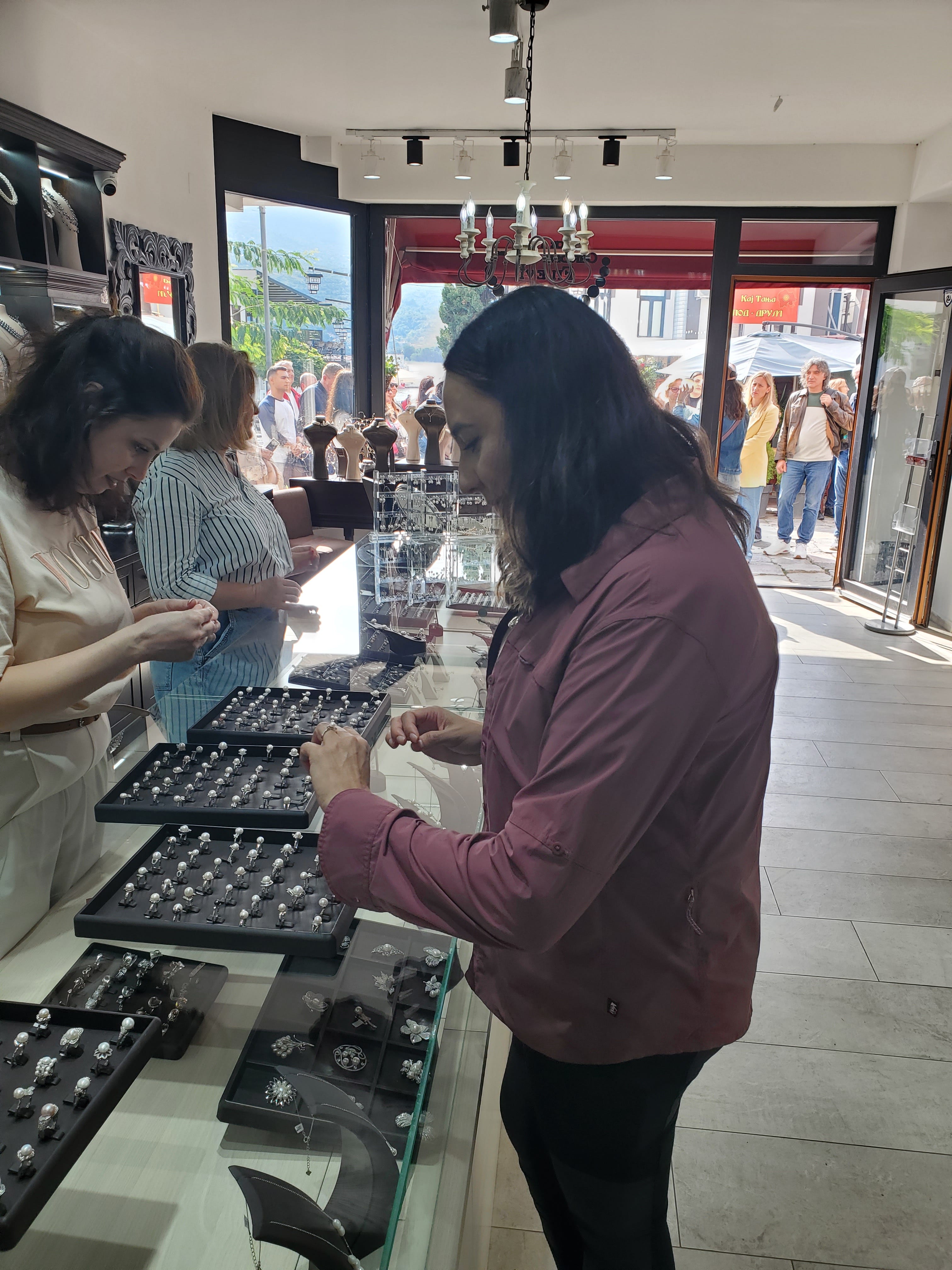
We acquired ours, and then hit the road, with Skopje in the sights by mid-afternoon.
Postscript: One of my primary fascinations involving Ohrid was a completely invisible part of the historical landscape. Lurking behind the prominently restored frescoes and facades of millennial Bulgarian Orthodoxy was the Bogomil heresy, which had been as strong in the religious-literary center of Ohrid in the 900s as anywhere else, originating somewhere in this region in the person of Bogomil. His followers, the Bogomils, were Gnostics whose reputedly antinomian beliefs and practices threatened to overwhelm Christianity and were eventually massacred and wiped from the Earth. This, however, was not before their ideas had swept westward as far as Provence, where they were taken up by the good Christians of Albi, who famously became the Cathars. These, much more familiar in Western history and pseudo-historic legend than the Bogomils, were wiped out by the Albigensian crusade, if anything more brutal than the crusades the Roman church inflicted on the Middle East.
NEXT:
PREVIOUS: