Misfits and Vagabonds

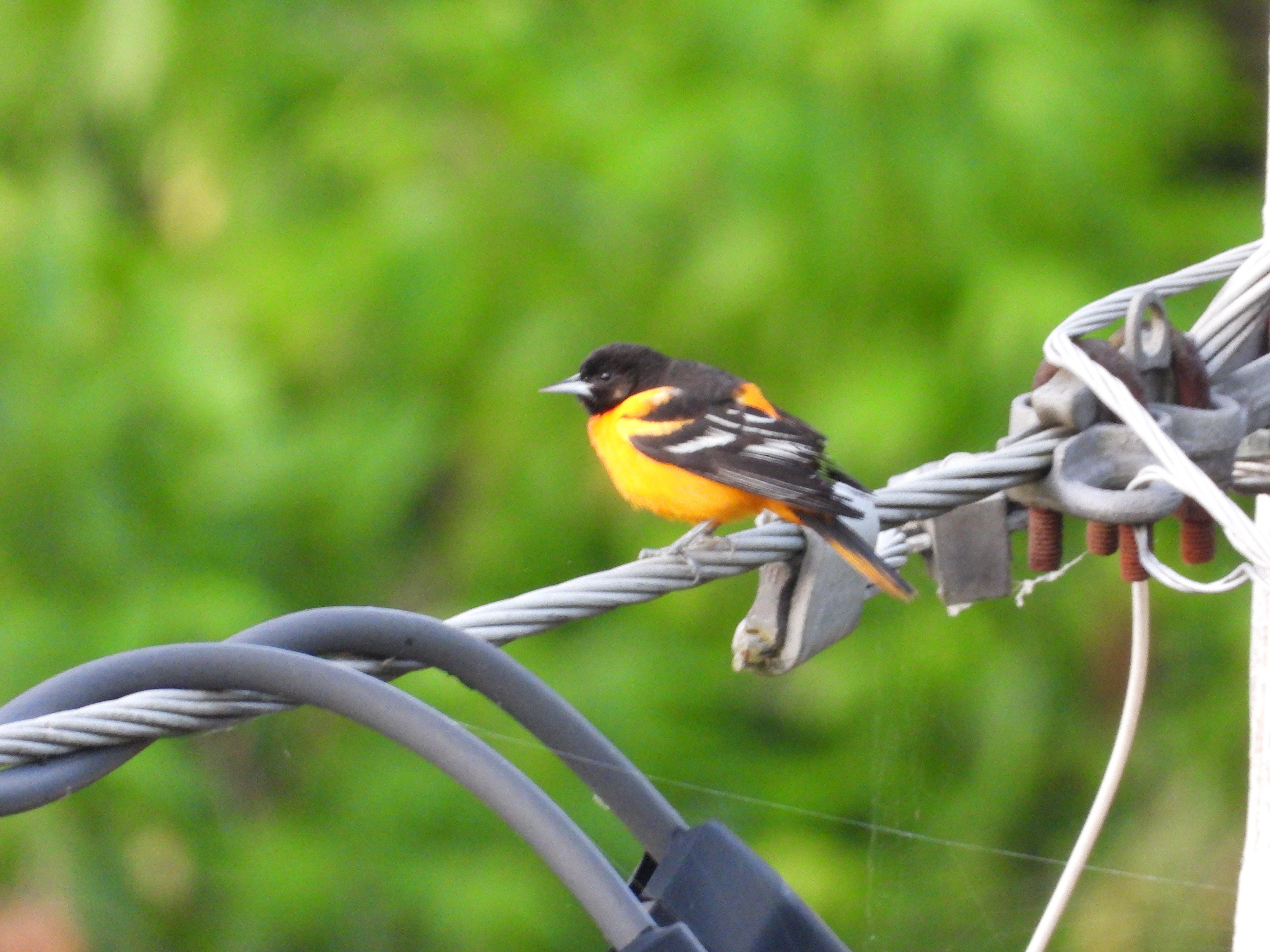
On Monday, the first of June, while most respectable birds are pairing and nesting, Cedar Waxwings are still zooming about in flocks. This morning I see over 30 of them keening along the crest of Sapsucker Ridge. In the nearest sycamores along the river, still not quite fully leafed out, a Baltimore Oriole male is hopping about and singing intermittently, seeming agitated. Another songster appears briefly: a yearling Orchard Oriole, singing and calling, out of place. The Baltimore heads over to an unusual post on the electric poles and wires, and the Orchard hangs about for a bit, then disappears. Was it a late migrant from last night’s small wave, or simply a male who couldn’t find a mate or defend a territory?
And then, the rare occurrence of a local Warbling Vireo staying in the open long enough for me to snap a few photos from the balcony.


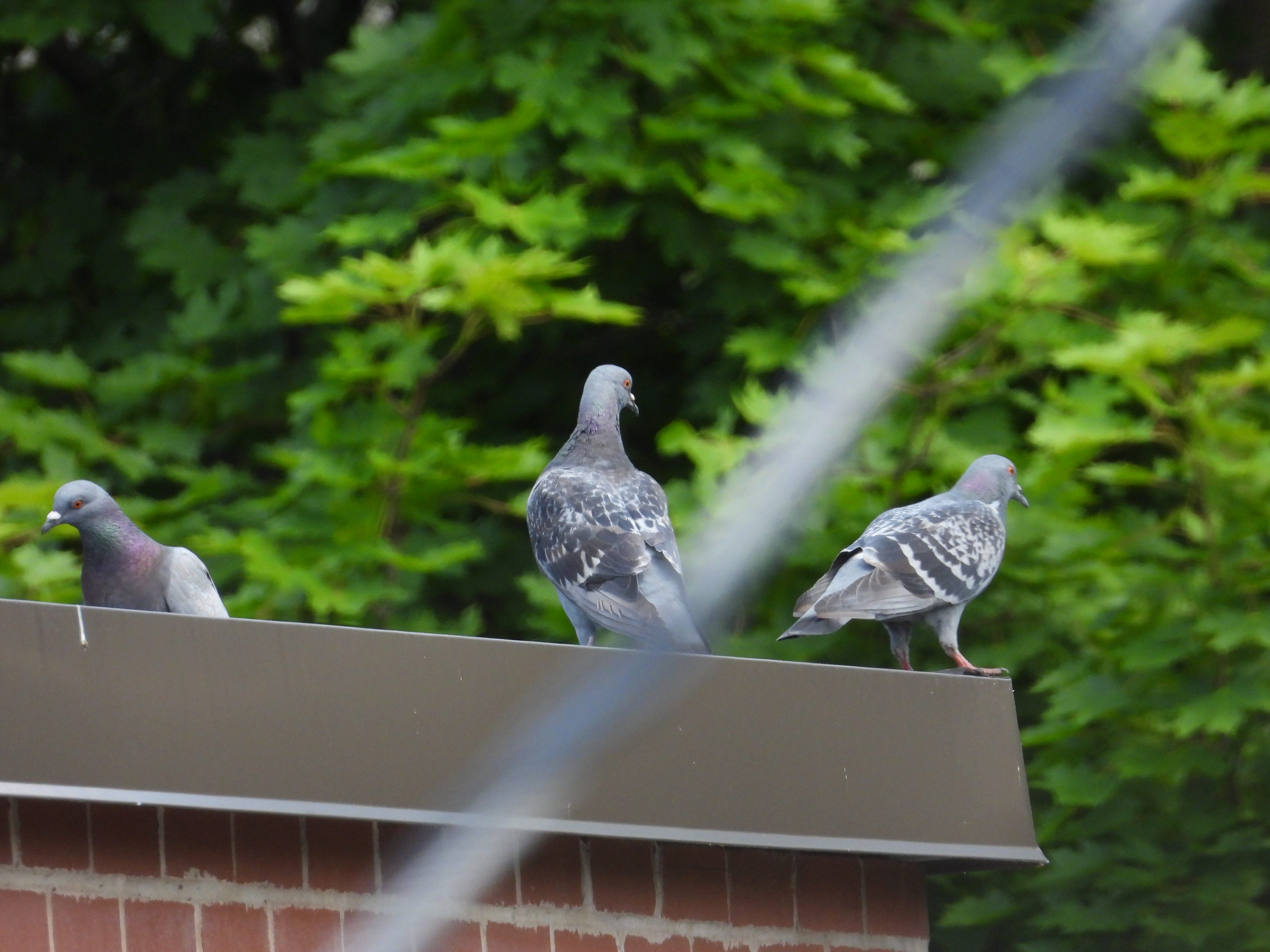
The afternoon brings a trio of hesitant Rock Pigeon squabs out of their eaves and to the edge of the roof, jostling and making all sorts of strange noises, then finally flying off with remarkable ease to the roof of the brick building across the lot. Another odd sight: a Common Grackle appears in the sky above the river, soaring up to meet and then attack a Red-tailed Hawk, which makes little effort to resist. The silhouetted grackle circles against the cumulus and blue sky, looking and acting so much like a sharp-shin that I start to question my own ID. It dives, hawk-like, back east over the ridge, diamond-shaped tail on display.
The first Belted Kingfisher in weeks calls from downriver, a pair of Black Vultures transits the towers, and a Fish Crow passes over heading downriver, calling.
Early June stragglers
Fifty thousand birds transit Blair County during the night, a respectable total for this late in the season. The garage antenna picks up a Grasshopper Sparrow and a Spotted Sandpiper among them, species that have been on the move since April. In the depths of Big Tree Ravine along my dawn circuit, a stopover Swainson’s Thrush sings, still 50 or more miles from the nearest breeding grounds. A Hermit Thrush hops about the dark branches in the spruce grove; every year, I wonder whether the handful of June hermits are secretly nesting, but I think instead they’re just migrant stragglers, or perhaps, like the oriole, roaming about locally in search of a place for a family.
In a few days, the June hotspot list is at 91. A goal this month is to break the all-time June record of 105. In addition to documenting the presumed nesters and local visitors (species like Killdeer, Black Vulture, and Osprey that nest in the nearby valleys but visit us or at least fly over), the total should include late spring departures and migrants, and perhaps a few more like the Hermit Thrush, wanderers from the higher mountains.
Meanwhile, grackles continue on the offensive against nest raiders. At one point during the week, a loudly scolding male grackle chases a silent and not-much-larger Fish Crow across the parking lot.
Behavioral quirks
June 5 dawns clear, and chaotic Mallard ducklings splash around in the confluence, which can barely be seen now through the greenery. A Tufted Titmouse lands on the top of an electric pole in the parking lot, singing constantly and hopping around searching for something. Odd behavior I’ve not seen before—perhaps a confused new parent? A bit later, an Eastern Phoebe lands on a wire in the parking lot and also sings, strange for downtown where they tend to stick to the foliage and stream. Nine waxwings buzz about, still not down to their nuclear families.
Last night was another migrant pulse. The microphone picked up a Chipping Sparrow, an Indigo Bunting, and a Hermit Thrush. (I have a mental picture of these late-comers tarrying too long in some Southern forest or field, detained by an abundant food source or perhaps just disoriented and confused.) And the Green Herons continue through as well, though at this point it’s impossible to know if their occasional night-time squerches aren’t issued by locals crossing from valley to valley.

On the 6th, the three squabs are again at the edge of the roof , bothering an exasperated-looking parent. They’re pecking at the parent’s head and neck and mounting him/her repeatedly, while making loud begging noises. Pepe, from behind the porch railing, stares at them transfixed for around half an hour, with a look of what can only be described as utter amazement on his face. I’ve trained him well—he no longer leaps across to the balcony in vain pursuit, but seems content to watch the burgeoning activity on the ground, wires, roofs, trees, and sky, salivating only a little, perhaps.
The 7th starts in the 60s, humid after yesterday’s storm, and the dawn clouds and breeze are just right. For the first time ever, I hear the sound of a Common Merganser in flight and Merlin IDs it instantly, a series of grunts from a female flying right over me in hot pursuit of a male Mallard; they’ve left some spot on the upper Bald Eagle Creek and are heading upriver on the Little Juniata. Throughout the hour and a half I’m out, 43 other species reveal themselves, basically almost everything that’s around, something of an anomaly—perhaps explained by the constant to and fro of normally secretive species involved in feeding hatchlings or coaching fledglings?
Later in the day, I watch a grackle chasing a Blue Jay, and in the evening, four noisy Common Ravens, the whole family from under the interstate bridge, return from the north side of town, three together and one slightly detained. It looks like, for now, they’re still using their nesting spot or nearby perches as a nocturnal roost.
Warbler Mountain
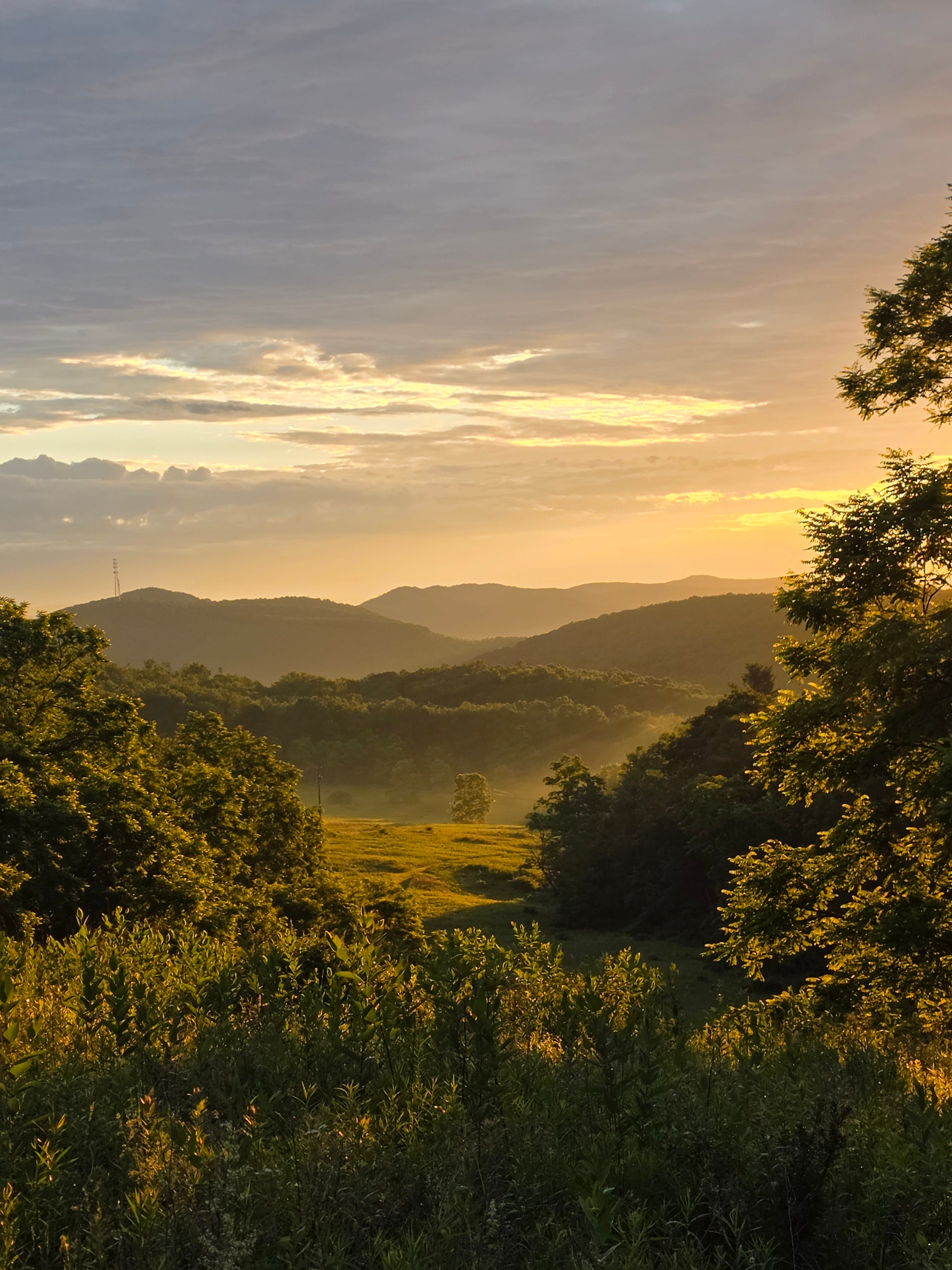
At 2 AM on Tuesday the 8th, the last Grasshopper Sparrow of the spring goes over, followed a few seconds later by a loudly quacking Mallard with heavy wingbeats. At dawn, I hear a Black-throated Blue Warbler from the top of the powerline, which rounds out the breeding and trying-to-breed warbler population at 15. This is a slight boost from most years thanks to the persistence of the Kentucky Warbler along Greenbriar and the unprecedented establishment of at least three (count ‘em, THREE!) Chestnut-sided Warbler territories along the powerline right-of-way.
As usual, the commoner deeps woods warblers seem to be doing fine numbers-wise this breeding season, though perhaps there’s a slight drop in Black-and-whites, Black-throated Greens, and Ceruleans. Redstarts and Worm-eatings are definitely clogging the trees and bushes, and Blackburnians and Hoodeds are doing great as well. Another steep increase is among the Northern Yellow Warblers, which saw a big decline the last few years but a recovery this year. I’m guessing a half-dozen pairs are nesting along the north end of the hotspot in the riparian forest, emitting a tremendous variety of songs. Last year, I didn’t find evidence of a single breeding pair.
Go-devil’s demise
On the ninth, grackles are commuting at dawn and dusk in what I presume are nuclear family groups. At dawn they generally transit from the west, over town or the ridges, and through the Gap. In the evening after eight they straggle back, though I think there is back and forth movement throughout the day as well. Surprisingly, European Starlings are also still commuting. At dawn yesterday, when I was up on the powerline, I watched 77 in a couple flocks follow the year-round flight path from valley roosts, heading straight toward Tyrone or its outlying nearby villages. I had previously had the impression that commuting stopped this time of year with families being raised, so this continued movement is something of a mystery.
Meanwhile, Canada Goose activity seems to be peaking. At 6 AM today, a V of 48, not silent but not too loud, emerges from the Gap and floats overhead; a lone straggler struggles to catch up about a minute later.
And then the bugs. As summer humidity kicks in, the feed up above becomes good enough to attract low-flying Chimney Swifts from town; they almost skim the field weeds, and weave about the bug-clouded spruce tips. In town, I watch a female House Sparrow hopping about the rotting old metal 10th Street bridge over Bald Eagle Creek, struggling with a winged insect almost half its size. It’s a dead male dobsonfly with fearsome pincers; as I approach, the bird flushes with most of the dobsonfly in its beak, but the insect is so heavy the bird drops right onto the busy street. Narrowly avoiding being run over by an approaching vehicle, the sparrow manages to heft the dobsonfly again and take it to a safer spot to continue the evisceration.
The wind-down
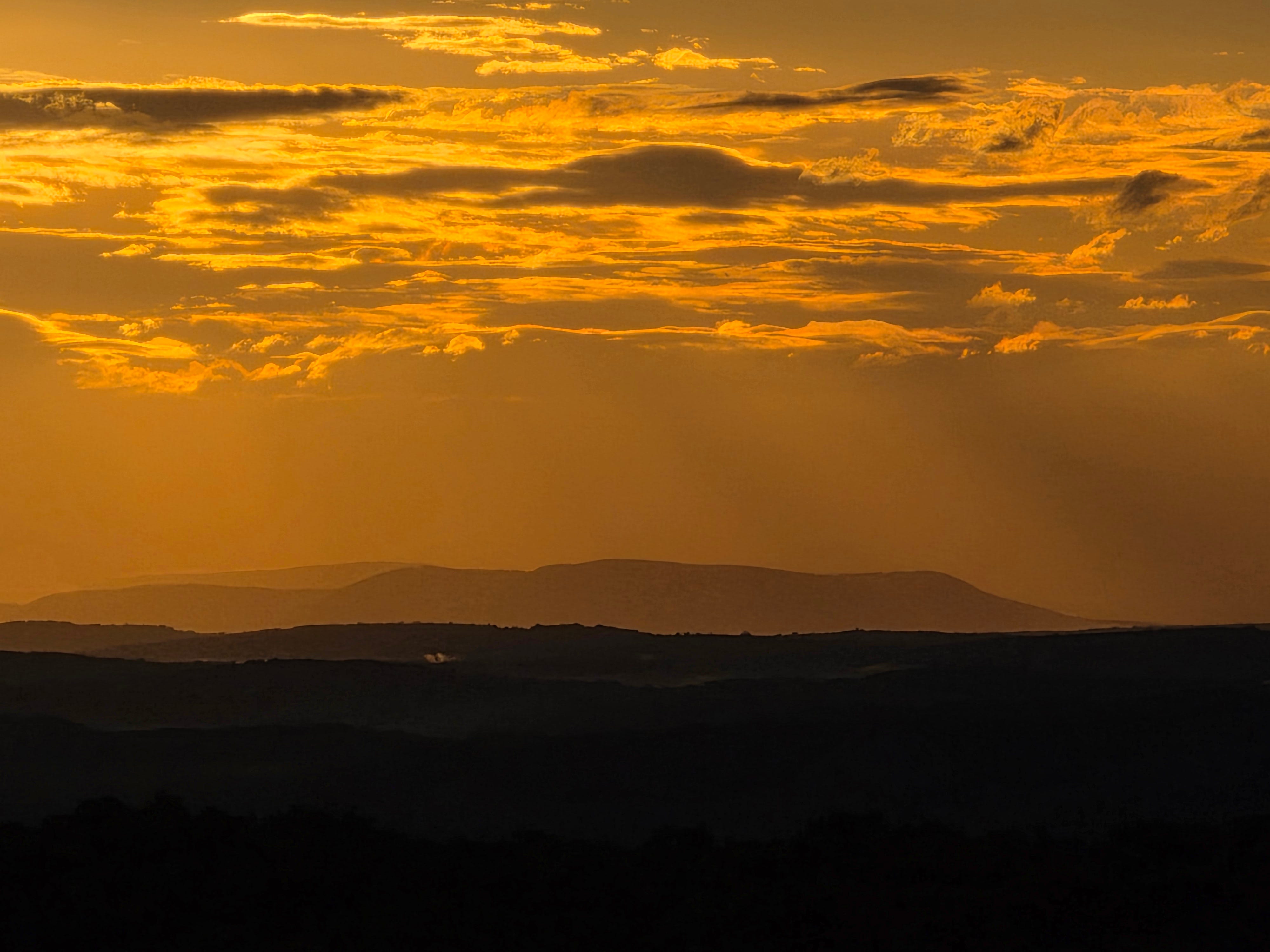
Every few nights, a slight southerly breeze brings more migrants, but every time this happens, there are less—a few hundred here, a few thousand there—and finally, on the 15th, Birdcast shuts down until August 1. A full sample of the night of the ninth/tenth reveals a pretty full lineup of local nocturnal vocalizations: Northern Cardinal, Eastern Towhee, Eastern Wood-Pewee, Ovenbird, Barred Owl, both cuckoos, and the inimitable Field Sparrow. At 1:15 AM, a Common Nighthawk calls, either a later migrant or one of the (Altoona?) locals on the hunt. Later, a small group of thrushes straggles through - the season’s last Gray-cheeked at 3:44 AM, a Veery at 3:47, and several dozen Swainson’s. By 4 AM, who knows how many Purple Martins from Sinking Valley are already hunting over the field.
On June 12 at 10:04 PM, the antenna picks up the nocturnal flight call of a Wood Thrush. Is this a late migrant, or something else?
Mid-month brings an extraordinarily chilly morning in the low 40s, and with it, a Purple Finch singing from a tree up on Sapsucker Ridge around 6 AM. I speculate that this is a male from not far west of here, where the species breeds in the mountains a thousand feet higher. It’s a species we’ve never had in June or July here, so I think it’s just passing through, looking for a new territory after a failed attempt somewhere more appropriate.
Driving back down the Hollow, I stop to listen for the putatively nesting Kentucky Warbler a few hundred yards away upon Sapsucker, and there it is, fainter now through the thick greenery, and hard to hear over the three Ovenbirds in the vicinity. This ends up being the last time anyone hears it this season.
A few days later, as I’m driving down the Hollow again, I come across two bulky shaped flapping clumsily around mid-level tree branches. These are the Barred Owl fledglings everyone’s been seeing, and they’re highly agitated. They’re doing the rising whistles that sound to me like Highland Guans from Central America, and the function is clear: threat alert. Small birds are everywhere, also agitated, triggered by the owls, with White-breasted Nuthatches the most vocal.
In the afternoon, I’m treated to the sight of two adult Bald Eagles perched on the shorter Bald Eagle Mt tower, while Turkey Vultures jostle about the taller structure. This is just after a rare June Osprey skimmed the ridge, moving between feeding areas on its daily circuit from wherever it’s nesting.
I start a checklist at 9 PM to see what is still about: the last Chimney Swifts, a Gray Catbird winding down, a Song Sparrow still singing. And robins, of course, until well past 9:15.
Later, around 11 PM, a Green Heron passes over the antenna. Then at 2:22 AM, what I presume is the very last of the season’s Swainson’s Thrushes calls once, on a southeast wind.
Welcome to the Worm-eating Capital of the World
For the first time ever, the Pennsylvania Society for Ornithology holds its annual conference/birding festival in Blair County. Over the long weekend of the 19th-21st, Plummer’s Hollow is besieged with birders, definitely a good thing. Like the masochist I am, I have volunteered to lead three field trips. The Friday afternoon one is for arrivals to the area on their way to the conference venue in Altoona. Luckily, with this crowd I don’t have to manage expectations. They already know that this is the one time of year when pretty much nothing unusual is expected, and they’re not here to twitch.
Somehow, the weather remains breezy and cool, keeping the bug horde at bay. With so many sharp eyes, multiple Acadian Flycatcher nests are detected, including one hanging right over the road. Crack birders spot Blackburnian Warbler families roaming about the canopy, a Northern Flicker at a nest hole in a snag by the road, and a Worm-eating Warbler acting suspiciously like it’s near a nest. This somewhat drab warbler is what many are here for; it’s even on the conference logo.
In the evening, I sip a ‘Creamy Nuthatch’, a blue (!) cocktail the conference bartender apparently invented for the occasion (I’m still unclear on the connection between the drink and the bird). This keeps me going through the blessedly short business meeting, and then there’s a talk from a young teen birder out of Pittsburgh, once again blowing away the stereotype of who birders are and how old they are (not that, after Listers, there’s much left of the old public image).
Our Saturday field trip commences at 4:30 AM, what seems to me like a good and normal start time. The steadily dwindling number of attendees has stabilized at five, suckers for a somewhat punishing trek straight up the knife-edge for the dawn chorus, then along Grosbeak Trail for the dwindling but still impressive tropical bonanza. One birder, a newer convert out of the Philly area, is getting lifers left and right, so it’s quite a boost for the rest of us to watch someone thrilled by their first-ever Scarlet Tanager, first-ever Hooded Warbler, first-ever Blue-headed Vireo. This reminds me of those tropical tours I’ve led where it’s a mixture of jaded folks (they’ve already seen everything in Costa Rica) and first-timers losing it over the commonest wirebirds.
Aberration
At the halfway point, when we reach the spruce grove, we hear a song that sounds something like a Chestnut-sided Warbler, but in the wrong habitat. The bird is in the thick of the conifers and won’t come out, but then starts to sound like a redstart. I follow the bird around the bend and finally, thanks to a few pishes, it pops into view briefly: of all things, a Magnolia Warbler!
The first time this species has ever appeared here in June or July, this male in breeding plumage should be at his nest a thousand feet higher up in the mountains. Like the Purple Finch, he could very well be a failed breeder; maybe there just weren’t enough good territories up there. After all, an unusually high number of Magnolias came through this spring, and were most common right here in the spruce grove. I wouldn’t be at all surprised if one came back in the vain hope of attracting a mate. I can’t shake the feeling that his aberrant song—close, but not a match to any reference songs—might have been part of his problem. With a song like that, what chance would he have of competing successfully for a mate? And how, in the first place, did he learn the ‘wrong’ song?
He’s gone the next day, and the next; a one-day wonder, as they say in the business.
Another, much-less-unexpected species also shows up for its first June appearance. Someone on Saturday thinks they spot an Eastern Kingbird in the field, from a distance, but I write it off as a phoebe. However, on the last hike, Sunday morning at a more respectable hour, a birder spots two of them. This could be a pair from Sinking Valley, where the species is quite common, scoping out some new habitat; they’re gone by Monday.
Migration morphs to summer wandering
While the diurnal misfits are clearly not arriving migrants, it’s a different story with the handful still going over at night. On the 21st at 11:12 PM, the microphone picks up another Wood Thrush, this time with three calls - the first distant, the second close, the third distant, indicating a bird on the move (this species also frequently emits the flight call from perches).
A little over an hour later, at 12:18 AM, a Black-crowned Night Heron goes over, first for the year and at an unusually late date. Another mystery. An hour after that, a Veery. Again, is this a northbound straggler, or a local flying between the higher mountains where it breeds, trying to find a better spot?
Balcony mornings in late June
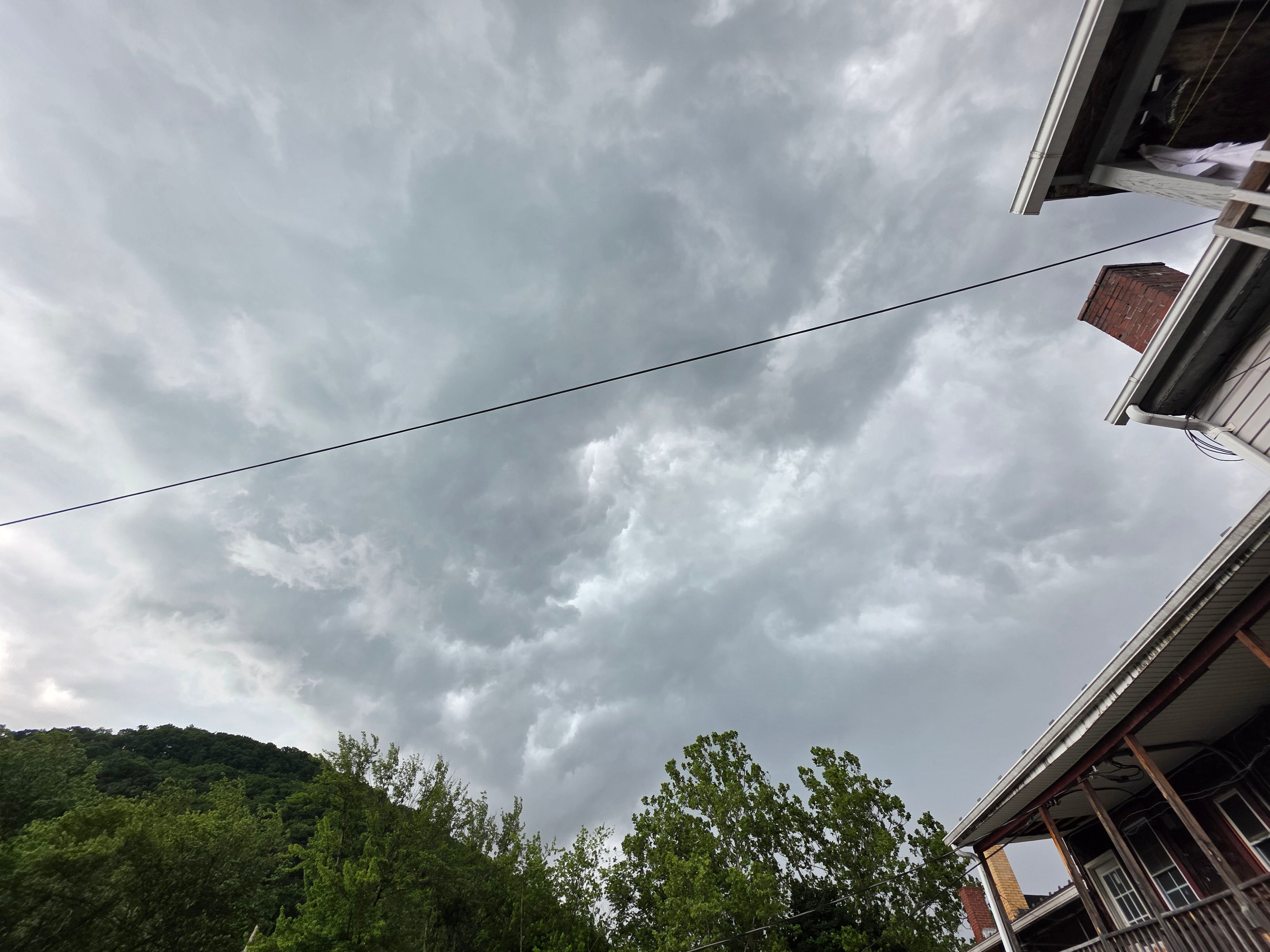
June 23 is the first opportunity in days I’ve had to see what’s detectable from the balcony. After torrential rains, there are heavy clouds and a weird smell, not the usual cloying soap odors from the laundry downstairs. It’s 59 degrees, and the clouds keep the dark around longer, good for the half-dozen large and small bats still flitting about at 5:52 AM. It’s hard to tell what else has woken up over the louder-than-ever clamor of the catbirds.
The Rock Pigeon family has departed the eaves, and the reason is soon apparent. A year-high count of 125 commute east in small groups from a big roost in the heart of downtown, triple the number from a few weeks ago. Grackles and starlings continue to move about in family groups, the starlings beginning to emit their odd rasping calls that end up in chants and finally mini-murmurations.
At 6:24 AM, I do a double-take: an Acadian Flycatcher sings loudly from the creek just over by the old bridge. This one’s not a mimic, but the real thing, and the first time I can remember getting one from my balcony. Though they pop up occasionally along the river, they tend to be restricted to the Hollow a half-mile away.
At 6:55 AM, the first break, a few seconds of bird silence after two straight hours of song, before the vireos, robins, catbirds, and the rest start back up.
Just at seven, what looks like the usual Blue Jay flaps by on its way toward Burger King, but I notice white patches on its wings. Another very unusual out-of-towner, a Northern Mockingbird. This almost vindicates Merlin, which thinks it has one every day when the catbird starts up. But maybe it isn’t always hallucinating.
I was wrong about the last Swainson’s Thrush. At 1:30 AM on the 23rd, one goes over, six days later than the previous record. The next night, a suspicious ZEEP call with a nice harmonic is picked up at 12:47 AM. It most closely matches Magnolia Warbler but could also be a Kentucky Warbler; I envision our failed male of the latter species, or the aberrant singer of the former.
Later in the morning of the 23rd, the first Belted Kingfisher in weeks rattles from downriver. I have to think that none nest close this year, as they have been extremely scarce since early May. And then, at 2 PM, what is probably the same Osprey from the other day is back, this time perched for a while on the shorter tower before soaring off out of sight eastward, behind Bald Eagle Mountain in the direction of the lower Little Juniata.
After days of rain and early fog, I try out the balcony again on the 28th, and notice a marked drop in songs compared to only a week ago. The early singers are now only Song Sparrows, robins, catbirds, and a faint cardinal, and is that a mockingbird over by the train station? It’s impossible to tell.
Never-ending migration
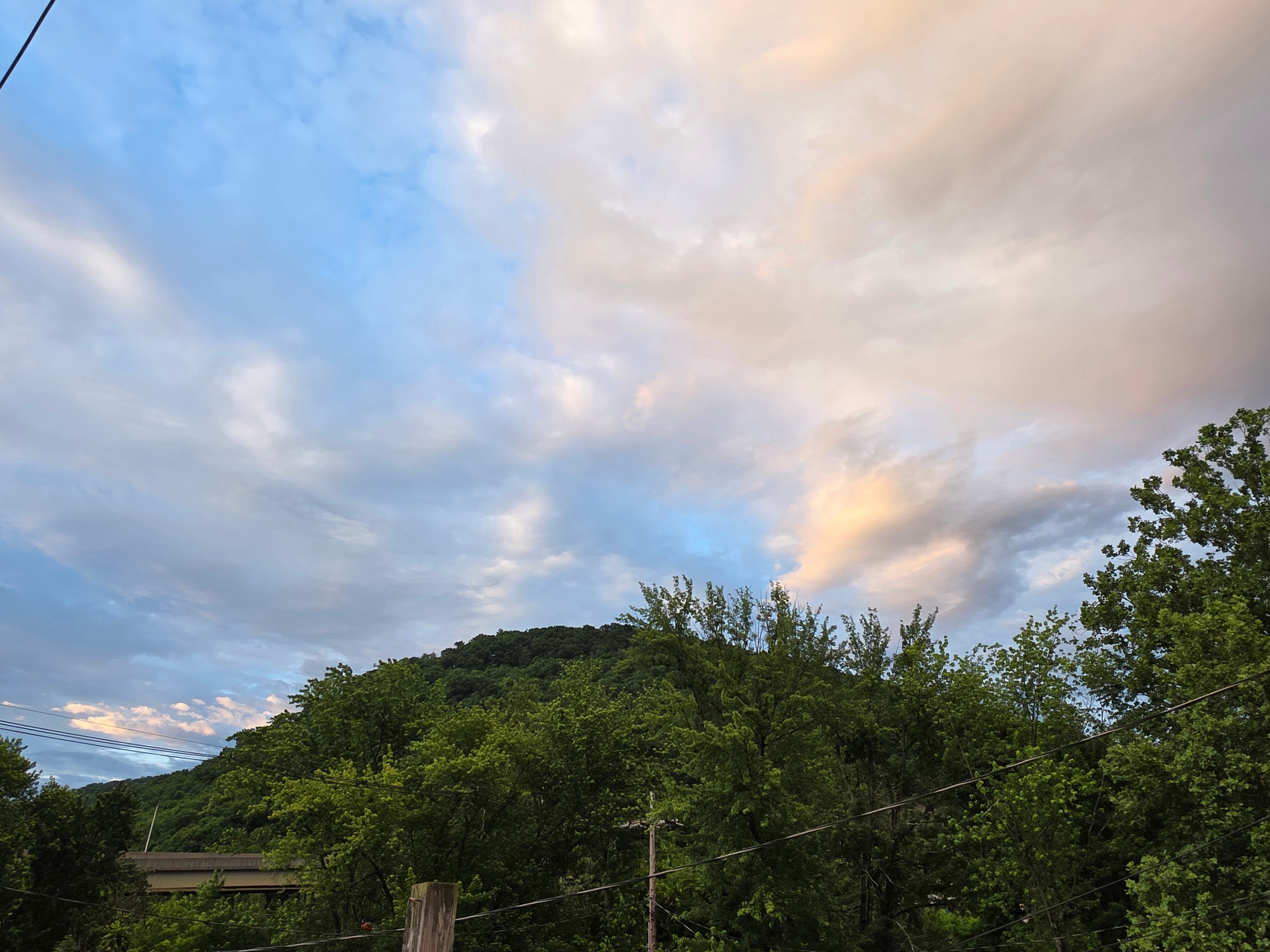
I’m going to give up on my Swainson’s Thrush pronouncements. At 11:38 PM on the 28th, another one goes over, now the second ever we’ve recorded in the last ten days of June. At this point, we seem to have gotten beyond northbound stragglers and are solidly in the realm of mystery. There are no populations to the south of us, so either this one is heading north, or it has been vanquished on breeding grounds and is exploring other options. In a week or two or two, more like this will appear.
The June nights end with a few more slight surprises. Just before midnight on the 29th, an Indigo Bunting NFC, and a few minutes later, a Wood Thrush, again. A bit later, the first nighttime Chipping Sparrow song of the season, so loud the antenna goes all staticky; it’s singing from a nearby perch at the fine hour of 12:51 AM.
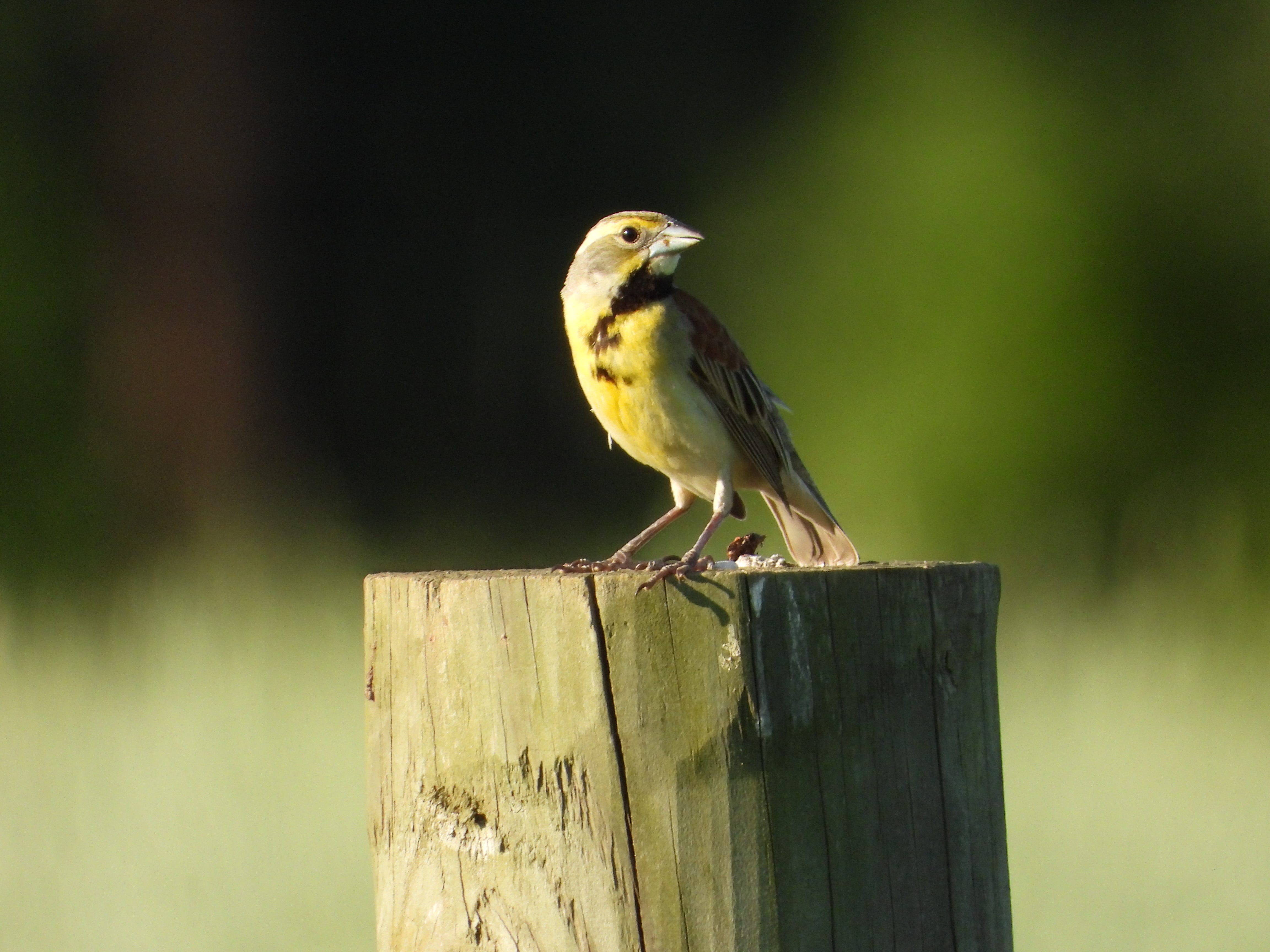
At the very end, Merlin says that a low buzz on the night of the 30th is a Dickcissel, but it’s a bit too low and not quite right. Merlin’s got a case, though; a local Amish farmer from Sinking Valley called me around dinner yesterday to alert me to a male Dickcissel in his field, and there it was, singing its heart out, as out-of-range as you can get, so much so that it was the first-ever record from on the ground in our county.
June ends with 108 species, an all-time record, and the number three location in the state for 2026. Also a record are the 84 checklists submitted by 34 eBirders, thanks to the birding festival tours and the intrepid local Friends of Plummer’s Hollow. For the year, the night heron brings us to 195 species, with 70 eBirders, a large increase over past years.