King or Clapper

Reset
On Saturday, May 2nd the rain has stopped and it’s clear, with the forecast nothing but chill. Time to compensate for April.
I stick to the balcony today and let the three Cup teams have the run of the Hollow. Half a dozen local Common Ravens are gamboling over the Point of Sapsucker Ridge— families, already? A hidden Rose-breasted Grosbeak squeaks from trees at the confluence, and an Ovenbird sings down below, unusual visitors.
On Sunday, I learn that the three teams who visited Plummer’s Hollow all won their respective divisions in the Cup. The continuing Kentucky Warbler seemed to be the main draw, easily found by all.
The tracks are first, and of all things, a Prairie Warbler sings somewhere back in the privet jungle. I hear it at first light, and later around 7. A Peregrine Falcon, first I’ve seen this year, flies up into the wind and courses along the crest of Bald Eagle Mountain, half blocked from my sight by a huge train, then disappears northward.
A little later, I’m up at the narrow neck, scrunching patchy frost on the grass in First Field tractor ruts. Brilliant sunlight has activated the warblers along the Sapsucker Ridge canopy, including the first Tennessee Warbler, finally. The spruce tips are humming with Red-breasted Nuthatches (quite the year for them), Cape May Warblers, and more Yellow-rumped Warblers than I’ve seen in half a decade. Golden-crowned Kinglets are also still here; I wonder if they’ll breed this year, after skipping 2025. The Blue-winged Warbler is still singing in the field—another scarcity that seems common all across the county this season.
Back down at the bottom, I pause and back up off the bridge, then approach on foot to be surrounded by whizzing swallows, sometimes within inches of my face, upriver and down, high and low. All the local species but Cliffs are here, even a handful of large, dark Purple Martins in the downstream bend area.
On a cold Monday, a Swainson’s Thrush calls along the tracks at dawn, while Dave spots the first Ruby-throated Hummingbird of the year off his porch, ten days later than its arrival last year. Later in the day, scanning the tape, I see that several Canada Warblers went over in the night.
At night the breeze finally pivots around to the south, bringing the first and probably only Wilson’s Snipe of the year, while the parade of Grasshopper Sparrows continues, beginning at 9:20 PM. There is still just a trickle of Swainson’s Thrushes among the continuing waves of Veeries and ever-growing Rose-breasted Grosbeak swarm. Another Sora for the season gives its mournful flight cry, and American Bittern season continues. A confusing mixture of Ovenbird and Vesper Sparrow flight calls includes at least one harmonized Mourning Warbler NFC, first for the year in the state.
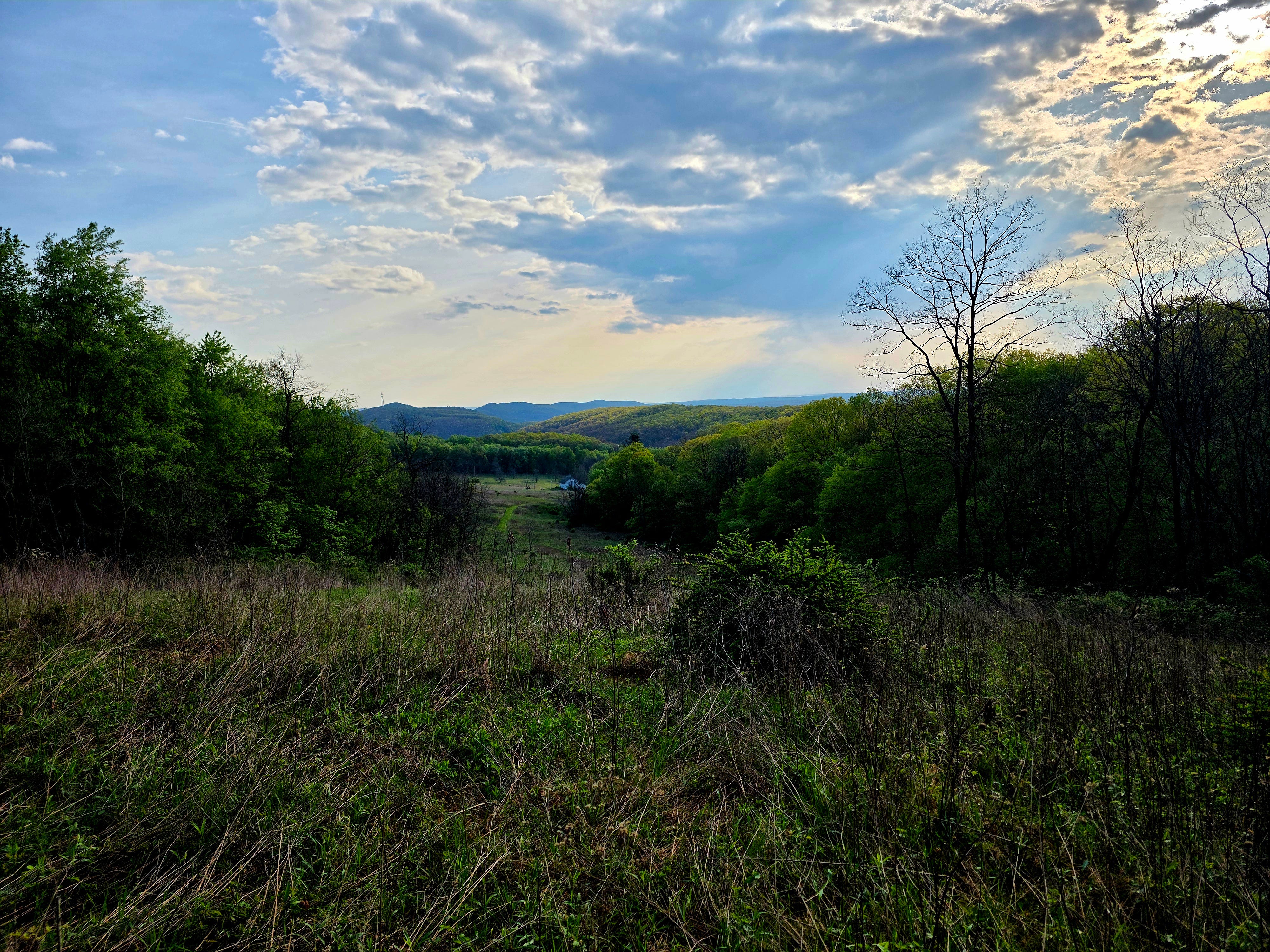
The next day, people are still coming to get their FOY Kentucky Warbler for the county, testament to a growing cohort of hard-core local birders engaging in friendly competition. Along the edge of First Field just down from the spruce grove, Mike K., today’s visitor, and I, also have the unusual experience of listening to a Golden-winged Warbler sing from one bush while the continuing Blue-winged Warbler sings from another. I can’t imagine this combo has played Plummer’s Hollow in several decades.
On Wednesday night, despite the intermittent showers, the southerly breeze brings more firsts over: Solitary Sandpiper at 12:33 AM, and a Bobolink, loud and clear, at 4:48 AM, just before the dawn rush. I wish there were a way we could entice this species to stop over. And again, more Grasshopper Sparrows.
At dawn, I trek up the knife-edge to Grosbeak Trail; in the half-light, an Eastern Wood-Pewee sings mournfully from the steepest reaches of Railroad hollow. A tree close at hand bursts with activity—tanagers, grosbeaks, a Baltimore Oriole, and a female Orchard Oriole clamber about, probing whatever today’s delicacy is. Farther along, the first Least Flycatcher chebecs from the canopy.
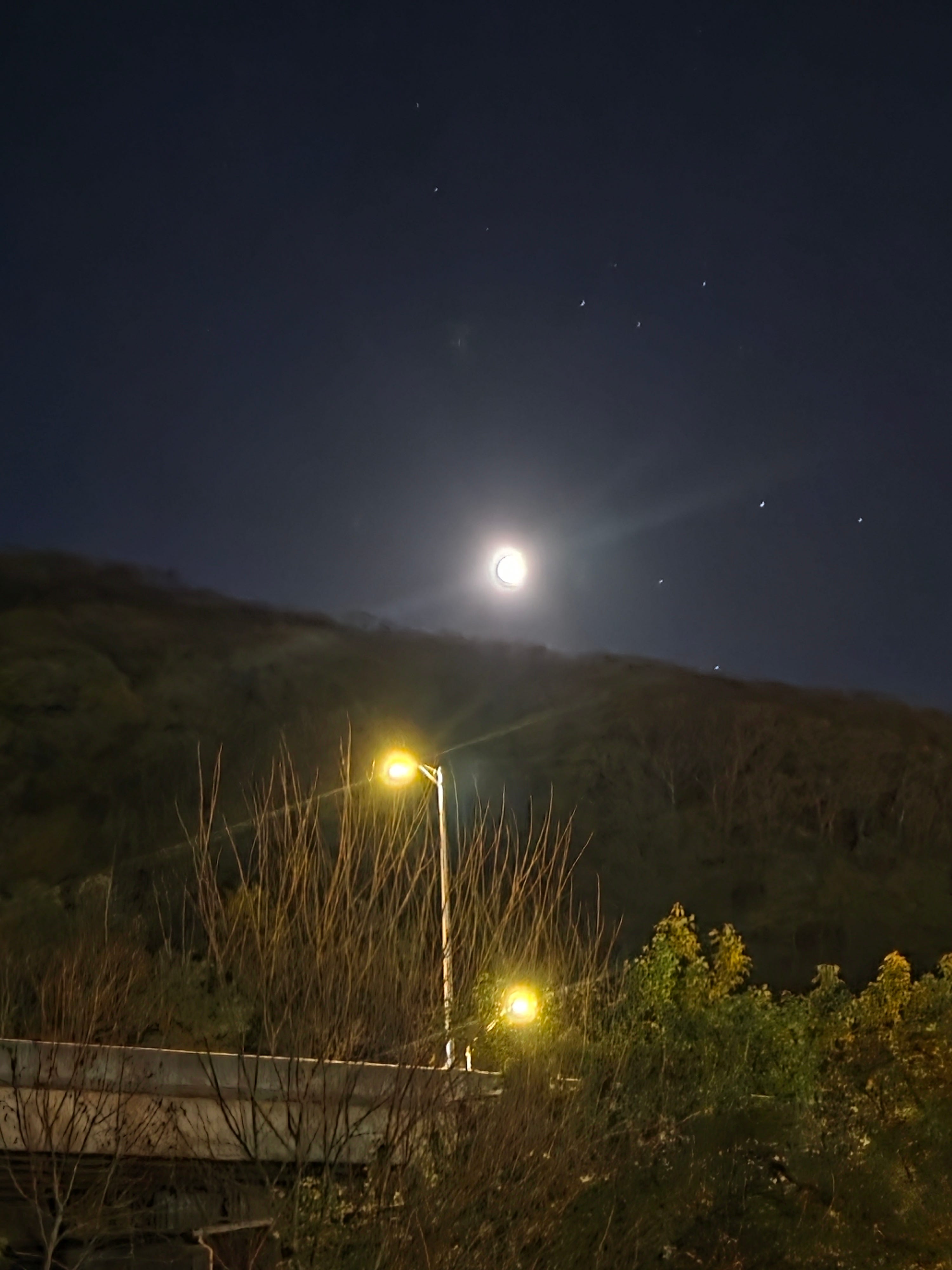
On the 7th, the first Wood Thrush of the morning flutes at 5:20 AM, followed by a Louisiana Waterthrush, an Ovenbird, and a buzzy Northern Parula, still in the twilight zone. Up top, the list grows to 46 species by 6 AM, 50 by 6:10, 60 by 6:23, and 70 by 7:09, topping out at 88 before work. This signals that 100+ should be attainable on the weekend—not on predicted-to-be-gloomy Global Big Day on Saturday, but the hopefully more amenable Sunday.
Today, the high ceiling of glowing red cirrus is ideal for spotting large birds far away. One, at first shaped like an approaching jet, resolves itself into an unhasty Great Blue Heron that lifted off a roost five or mile away and eventually flies over Brush Mountain toward some feeding spot in Bald Eagle Valley. Minutes later, two more, silhouetted against the crimson, head east, two to three miles to the north of me.
Among the migrant madness, I discern a White-eyed Vireo and a White-crowned Sparrow, though never glimpse either of them. A second Kentucky Warbler sings on and on below the spruce grove at the same time birders are recording the O.G. over on Greenbriar. Nashville Warblers are here in modest numbers—nothing like their typical fall showing but still respectable for the fast-moving spring migration. Ten or eleven Cedar Waxwings whir about in tight formation, keening in the treetops in their favorite spots along both sides of First Field, and even at one point in the yard walnuts. While the other spring flocking species—robins, blackbirds, cowbirds, grackles—have all paired up and gotten down to nesting, waxwings, one of the last species to start breeding, are still in winter flock mode.
Most of the warblers today are high up among the black cherry flowers, grabbing insects. One rather tame and curious individual is just generic looking enough to be confusing, and turns out to be a rarely seen (at least by me) first-year female Pine Warbler. She comes all the way over to the black locusts to check me out, calling insistently.
The best news of the day is from some returning post-Cup birders, who, while searching for the KEWA, find a pair of Philadelphia Vireos. The scarce species attracts more birders over the next couple days, with middling success. Speaking of attracting birders, May 2026 has already seen 25 of them in Plummer’s Hollow, more than we’ve ever had before. Maybe I can finally start looking toward retirement, or at least from these mad migrant sprints…
On Friday I hike back up to First Field at dawn, and turn up a Golden-winged Warbler in the spruce grove. Two Wild Turkeys strut out in front of me and then amble casually away. Most excitingly, the pair of Tree Swallows that took up residence in the field’s new swale Eric constructed (becoming a pond during only the rainiest of weather) are carrying nesting materials into the nearest “bluebird” box. It’s been decades since this species nested here, and because Eric has put up several new boxes all about the field, there shouldn’t be competition for space. Eastern Bluebirds are already in another one; hopefully, they’ll weather the ever-growing cowbird invasion, snakes, and the rest. I’m more sanguine about the swallows, as they have quite the reputation for aggressive box-protection.
Walking back down through the deep hollow, I hear pips and pizzas from least two Acadian Flycatchers, another late species that only returned yesterday. A Canada Warbler sings loudly in the bushes near the gate, and a Solitary Sandpiper peeps along the river somewhere.
The biggest weekend
Saturday morning, rainy and cold, isn’t great for a Big Day, so I stick to the balcony, where I watch a female hummer—finally!—avoid me and take the stealth route to the back feeders, around the other side of the fire-escape stairs. Young ravens scream in the background.
The weather gets nicer in the afternoon so I head up the field to see what’s around. A Broad-winged Hawk circles up out of the canopy where it’s nesting over by Greenbriar, while a Cooper’s Hawk courses off toward the Gap. No Sharp-shinned this year that I can tell, thouh. After the rain, a few rarities have put down in the field: a Vesper Sparrow near the garage and a Savannah Sparrow up by the spruce. A Swamp Sparrow moves nervously about the old apple tree.
The tape reveals that last night’s sky was filled with Least Sandpipers; some put down at a local flooded field. Yet another Sora went over, and at least two Virginia Rails. Among the (finally) many Swainson’s Thrushes, there are a handful of the first Gray-cheeked Thrushes and even some Hermit Thrushes still passing through. Several Bobolinks headed north, and the first Least Bittern screeched once in flight.
In the evening, I’m on the balcony when a Red-bellied Woodpecker undulates from the tallest poplar to my right over to the tallest on my left. Not an uncommon species by any means, but it’s the first time in four years I’ve seen one from the balcony! A few minutes later, what might be a breeding Osprey coast in from the north, slightly in front of Bald Eagle Mountain, and then disappears through the Gap.
Unbeknownst to me, among the late-night showers, Sunday, my private big day, begins with some common sandpipers, a couple American Bitterns, and yet another Bobolink.
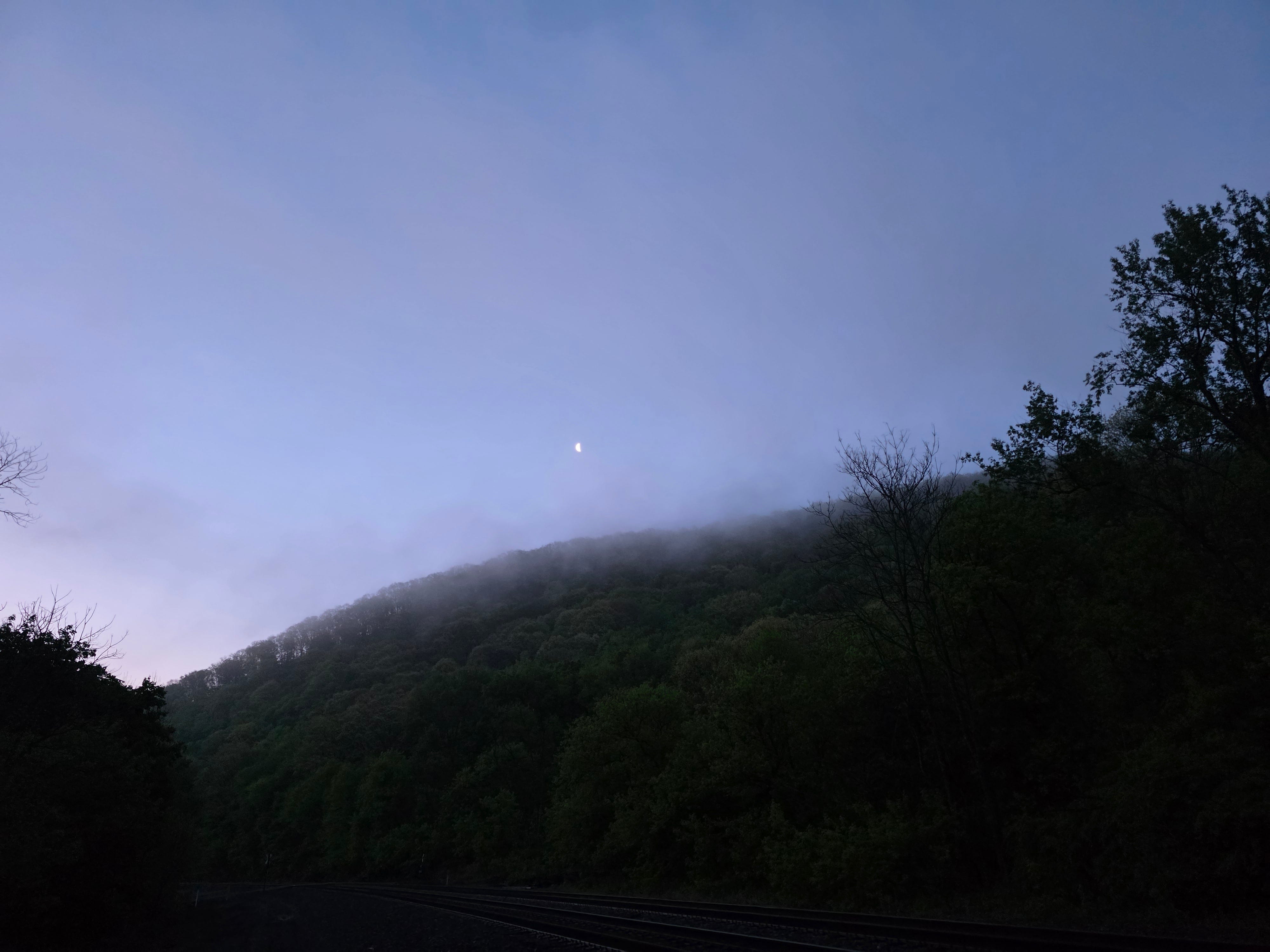
I head out into the clammy street and hear what might be a zeep warbler and a distant yellowlegs. It’s mostly clear, and a perfect day to get everything, provided the route and timing are just right. At 5:37 AM, an Eastern Screech-Owl, rarely heard in May, toots softly from terra nullius.
My route is timed to intercept the deep woods dawn chorus up the knife-edge and along Grosbeak Trail, to Greenbriar and Bird Count, getting to the upper edge of First Field while birds are still active, as far as the Spruce Grove, then back around the powerline view of Sinking Valley (mockingbird overlook) and back down the road through the Hollow.
Least Flycatchers are common today, and up in the highest reaches of Big Tree Ravine, a Mourning Warbler sings among a surprising amount of redstart noise. At the Greenbriar/Bird Count confluence, a confused-looking, drenched Lincoln’s Sparrow tumbles about in the witch hazels while the Kentucky Warbler begins another day’s hard work of singing its rollicking tune non-stop. Least Flycatchers chebec here and there, more than I’ve heard in recent years.
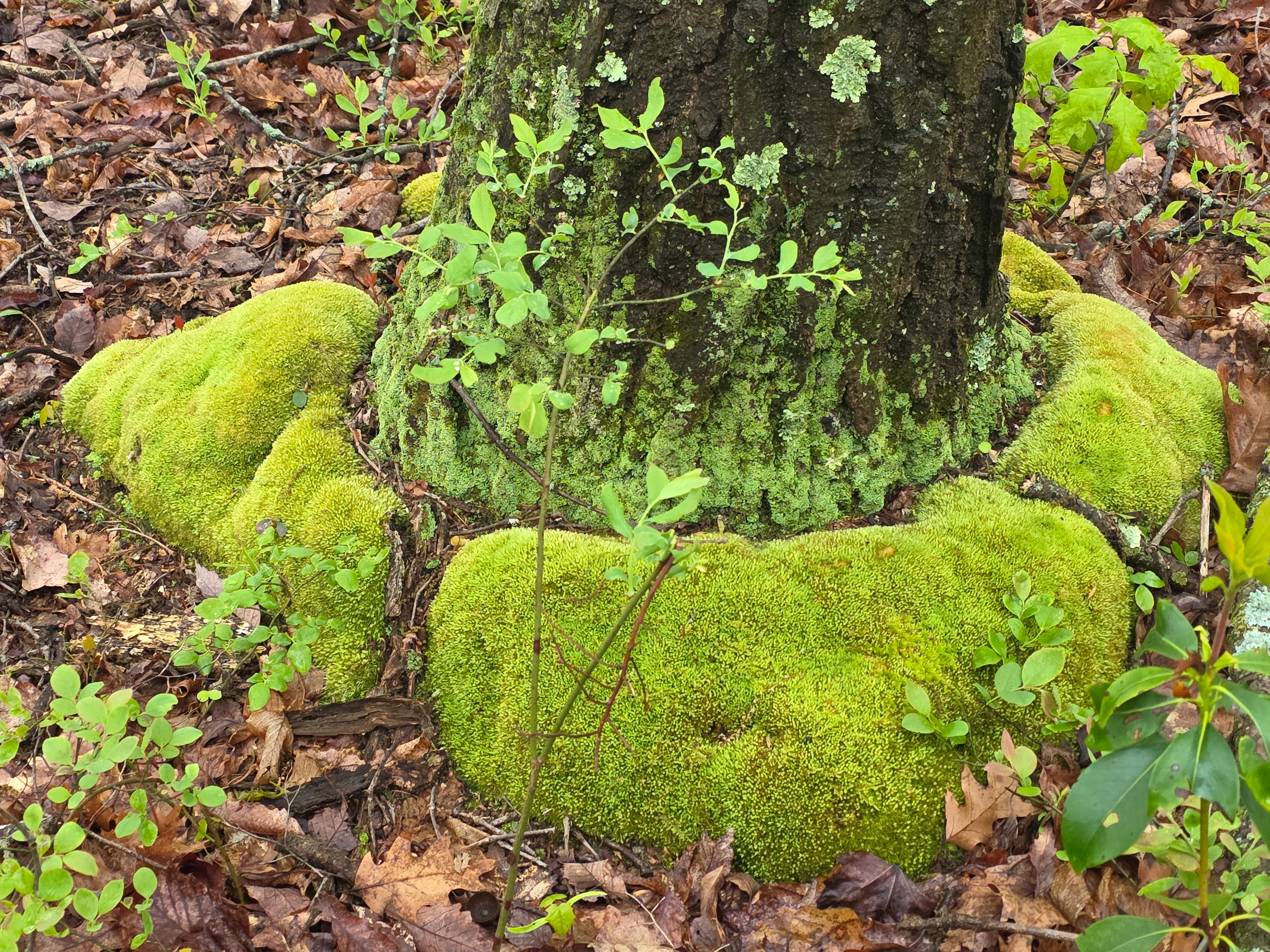
The list hits 90 species before 9 AM, so 100 are guaranteed, as the common valley species are still missing. The spruce grove is teeming with budworm warblers—gorgeous Cape May Warblers in small groups, and a couple Bay-breasted Warblers at close hand. I don’t have time to do a proper census, but it seems like Red-breasted Nuthatches are still numerous (I stop at 5).
The species count reaches 100 at 10:15, the earliest I’ve been able to hit this number in any of my annual century counts. With a Fish Crow back in town close to noon, it tops out at 108, the highest ever for a morning in the hotspot, while the weekend count, including NFCs, is 126, the usual number for my annual biggest weekend of the year. By far the most impressive part of this diversity is the 29 warbler species, with all the realistically possible species accounted for except Palm and Yellow-throated, which aren’t really around much by this point in May. Even the first Blackpoll Warbler dutifully appears, in the spruce, not surprisingly.
An all-time high count of 85 American Redstarts, including many singing females, leaves my head spinning. White-throated Sparrows (44) and Eastern Towhees (58) are still here in respectable numbers, while Gray Catbirds (19) are peaking, along with Wood Thrushes (49), Scarlet Tanagers (37), and Yellow-rumped Warblers (17). Most other warblers hit their seasonal highs, with 22 Black-throated Greens and ten Magnolias, among many others. A lone female Purple Finch sings from the edge of the deciduous woods behind the spruce grove, I would think the last of the season.
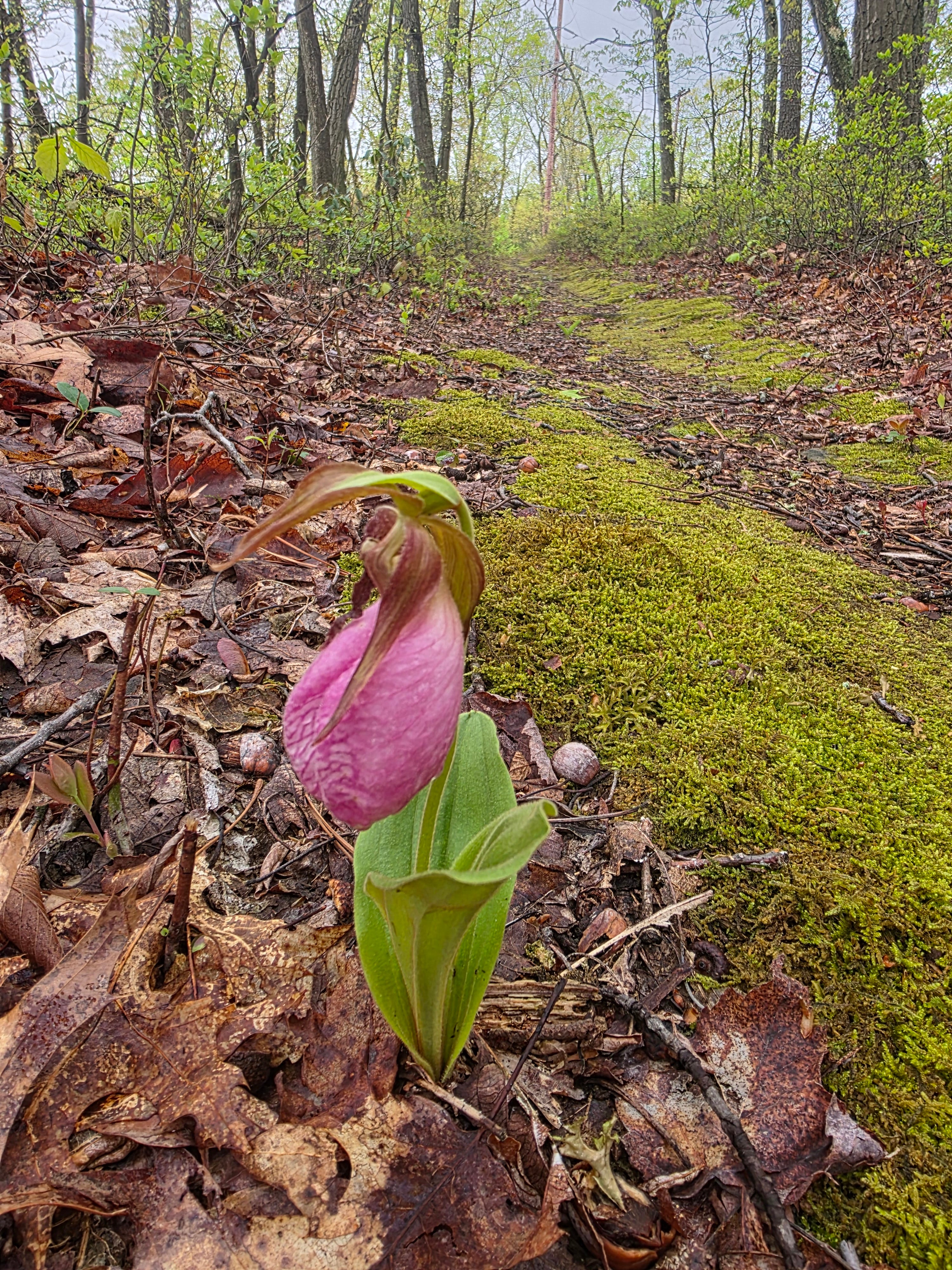
I’m exhausted and birded out, but I do a quick list at 8:30 PM just in case a nighthawk happens by (it doesn’t). The crystal-clear evening is in the 50s, and the local catbird goes on until 8:44. Robin Point is 8:45, and after that it’s all and only them for a few more minutes, though the chorus still doesn’t go past 9 PM.
The next day, in recovery, I bundle up for 37 degrees on the balcony. A Least Flycatcher chebecs non-stop for half an hour, an unusual duration for a species I almost never hear at this location. If it’s a big year for them, I’d love for a pair to take up residence somewhere in the hotspot; it’s been decades.
Like yesterday at the bridge, I hear the welcome sound of a Northern Waterthrush, another species I wish would breed here.
Of sparrows and cheese balls
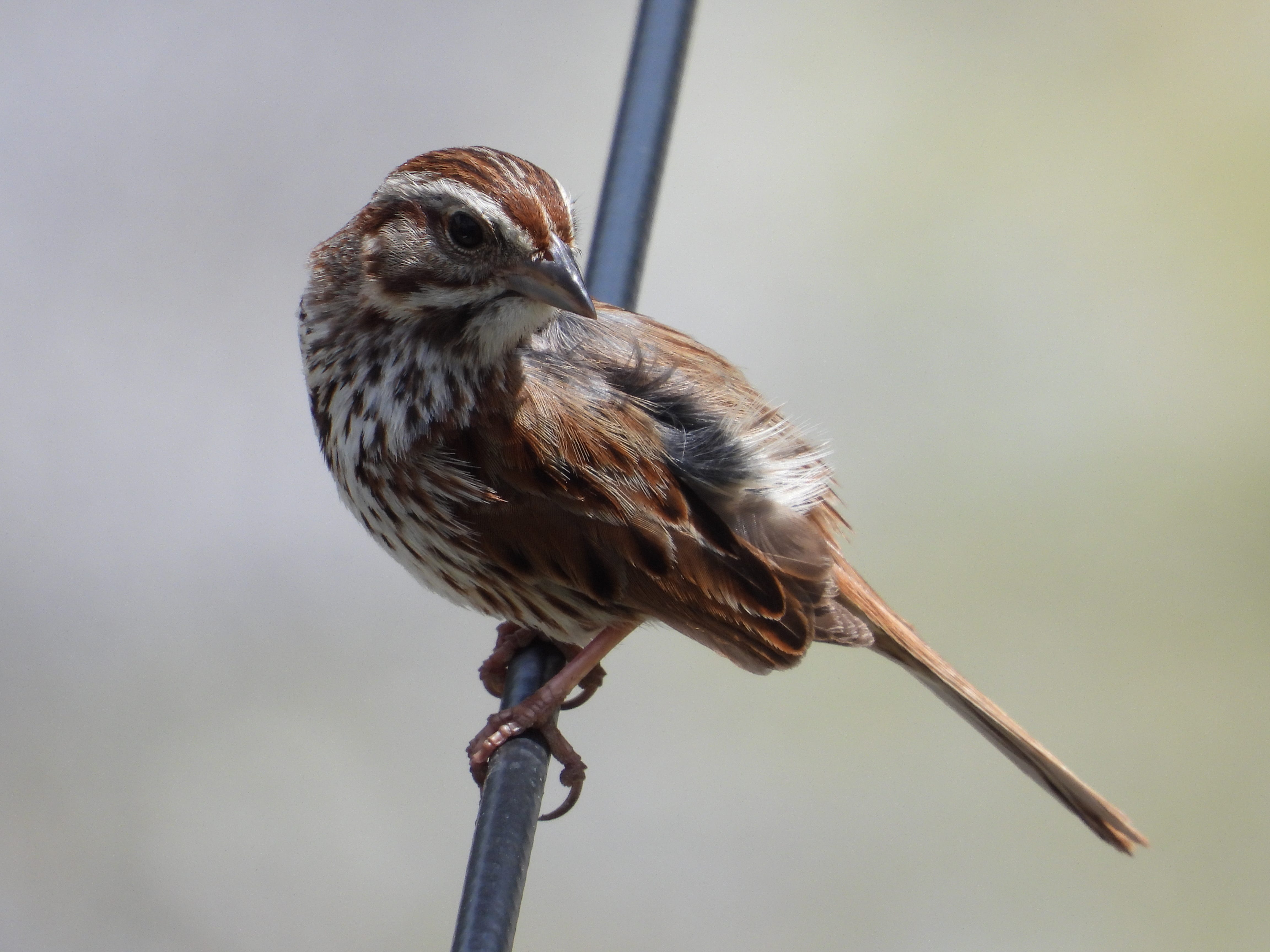
Monday afternoon I tap at my work laptop on the porch for several hours, accompanied by a lazy cat who loves to follow the sounds and actions of the spring birds and bugs. At one point Pepe is riveted by the surprised visage of a Song Sparrow poking through the railing, one of a pair nesting across the parking lot who have formed an addiction to the rice grains embedded in the fake grass on our porch and, most likely, the disintegrating Cheetos scattered to the winds by the child from upstairs? The hungry sparrows are visibly annoyed by our feline, and their scolding brings a pair of House Sparrows and then House Finches as well to perch on the railings. Pepe doesn’t really react; he’s been yelled at too many times for bird-jumping (never successfully, needless to say), so he just crouches and seethes.


By the next day, a balcony morning, it’s down to freezing again, with nothing new. In the evening, the wind shifts to the south, and I wake up during the night to check the Birdcast. 1 million. 2 million. 3 million. By the time I head out to the garage for the recording, the number has surpassed 4 million transiting over Blair County, with up to 160,000 at a time in our airspace.
KIRA-CLRA
There’s not much evidence of the massive numbers that passed over the woods and fields of May 12-13; these were transients, locals moving out, and maybe some quiet arrivals, but no storms arrived in time to force them into a fallout. A couple hints that the last spring arrivals are within grasp, however: a Willow Flycatcher calling at dawn, while a Common Nighthawk flaps silently over the amphitheatre. I suppose it’s doing some hunting after a long, northerly push; I often see this species still moving north at this hour (like raptors, nighthawks seem to follow ridgetops rather than cut across them perpendicularly like most other species).
A slow day at work gives me time to go through the recordings, and they’re not a disappointment. An Eastern Kingbird and an Alder Flycatcher are both new, and among the flocks of Spotted Sandpipers and others, a Semipalmated Plover calls. Both bittern species go over, but the best of the night is a new bird for the hotspot:
The clattering screech is a large rail, unassignable to species, but definitely either a King Rail or a Clapper Rail. One of the former has been a local draw at a lake in Centre County this season, and much more likely to be our flyover, but the latter, a denizen of Atlantic coastal salt marshes, is occasionally found dead this far inland (including on the Penn State campus in State College in Sept 2023). It’s an exciting addition for the hotspot either way, even though we it doesn’t count as a new species.
What’s up, what’s down, what’s left
2026 seems to be back to normal species numbers after last year’s spike, when we hit 200 by mid-May. With these most recent spring arrivals, the hotspot tally stands at 189, so absent any extraordinary shorebird NFCs, it’s gonna be a long slog to the second century mark sometime in the fall. Only missing for the spring are a handful of common shorebirds via NFC, plus Olive-sided and Yellow-bellied flycatchers, the latter showing up live and on recordings, and also pretty common in the fall; the former never appears on tape, and though it was common last year, it will be hit or miss in 2026. Ah yes, and the Yellow-bellied Chat—none came back to the field this year, but last year we had a pair in June up on the powerline, so there’s still time. The others to come include a guaranteed Connecticut Warbler in September and enough missed and scarce species to very likely make it past the threshold: interesting southbound or dispersing waterbirds among the July NFCs, an errant Double-crested Cormorant, a Snow Bunting and even a Lapland Longspur in November,a Dickcissel pretty much any time, and a few waterfowl in the late fall to round it out, ideally ending with some non-Canadian geese. That’s the plan, anyway.
Despite the lower cumulative species number this year, quantities of individuals seems to be up or at least level for many more than I expected. Factoring in time spent, warblers were magnificent, with the first year of multiple Prairies, Golden-wingeds, and Blue-wingeds that I can remember being the standouts in a season that didn’t even miss Orange-crowned, which we usually have to wait until the fall for. The only warbler that seems to be a bit down is Worm-eating, as we don’t appear to have had a 20+ day in the Hollow, though numbers are still in the low teens, which is respectable.
Speaking about waiting for fall, after a couple year drought, Lincoln’s Sparrows made a spring appearance again, with multiple records. Philadelphia Vireo, another fall regular (which was missed in 2025 due to the Balkans trip) have also been detected on several occasions, though last year’s paucity most likely had to do more with lack of effort and birders than an actual dip in numbers.
Swallows are mostly down again, with Cliffs virtually gone, Banks as rare as ever, and Purple Martin mostly absent, though they’ll no doubt show up later when Sinking Valley breeding is wrapping up. Barns have held steady, while Northern Rough-wings have been abundant.
Herons have been way down this year, at least by day—no Green Heron, at least yet, is a morning flyover and Great Blues have been scarcer than usual. Among the other common water birds, a most surprising near-disappearance is the Belted Kingfisher, which has had the slimmest migration in the years I’ve been monitoring the river.
And finally, the failed geese
May 15th: a long, rapid, pre-work hike for Yellow-bellied Flycatchers (not yet) where I see my own first Philly of the year up close, hear another Mourning Warbler, and chase but don’t catch a singing Yellow-throated Warbler while the KEWA goes on in the background. Blackpolls are also around, and Tennessees in numbers, but the real highlight of the morning for me is multiple small flocks of Canada Geese going over. They’re low and coming from the Sinking Valley direction, but not necessarily locals. Instead, they’re likely roving gangs of young males who didn’t manage to find mates and have joined up to plunder the land instead. I wouldn’t be surprised if other anomalous appearances of supposedly sedentary, nesting species I detect via NFC from now into June also fit this failure-to-breed category; geese are just the most obvious. Otherwise, the northward migration is still in full force, with several million-bird nights to come, and the last Swainson’s Thrushes, I would guess, a month away.
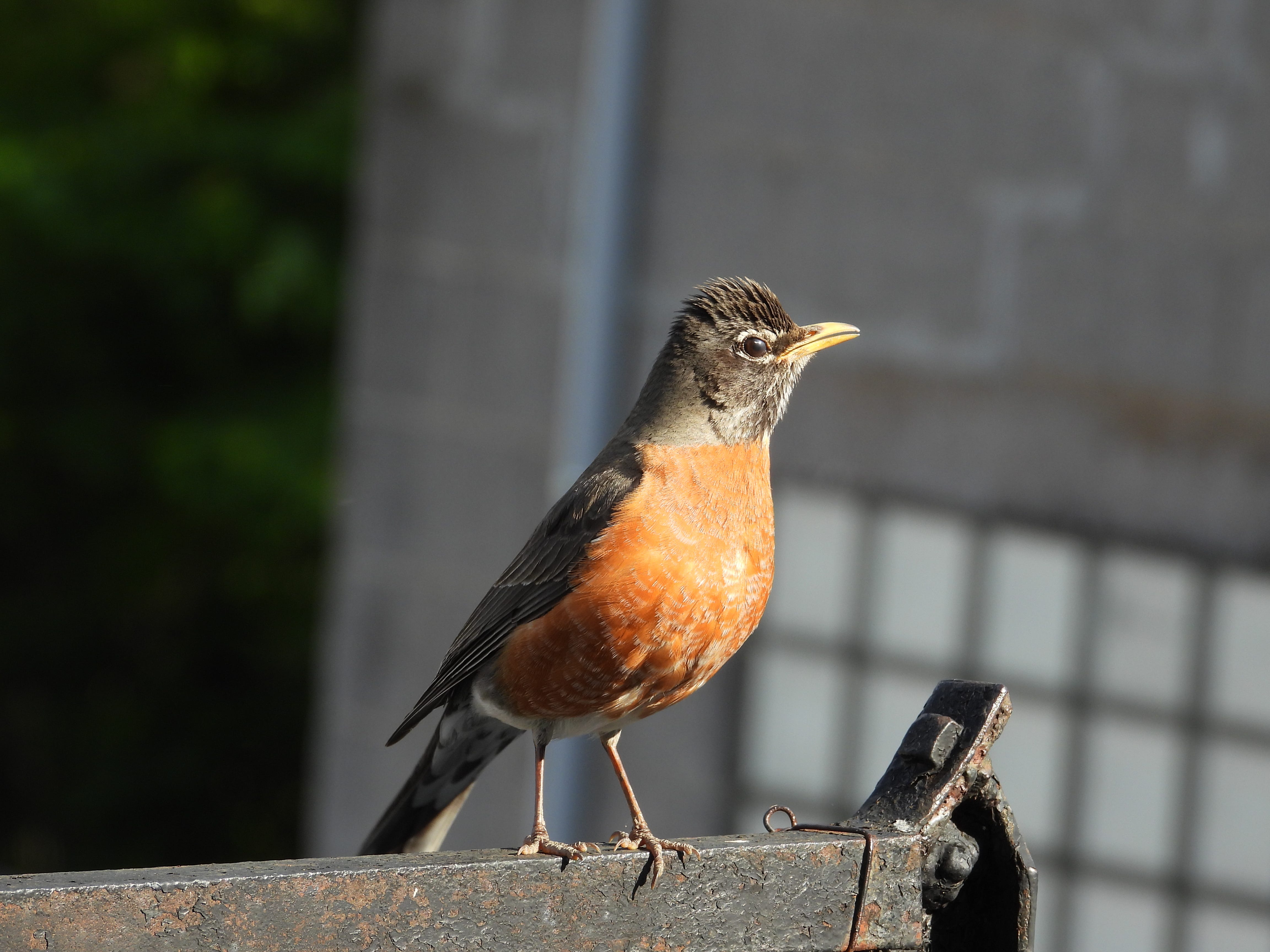
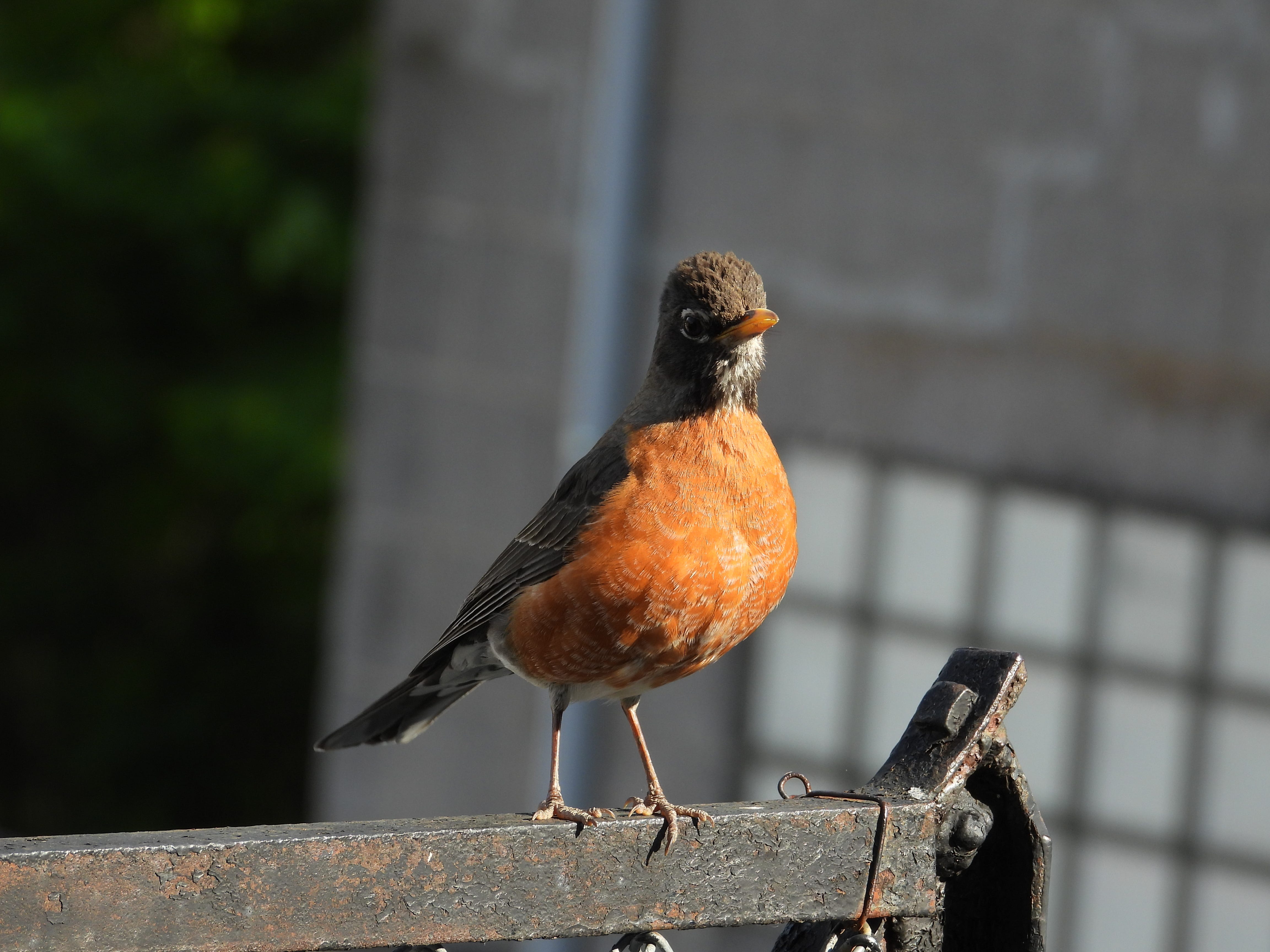
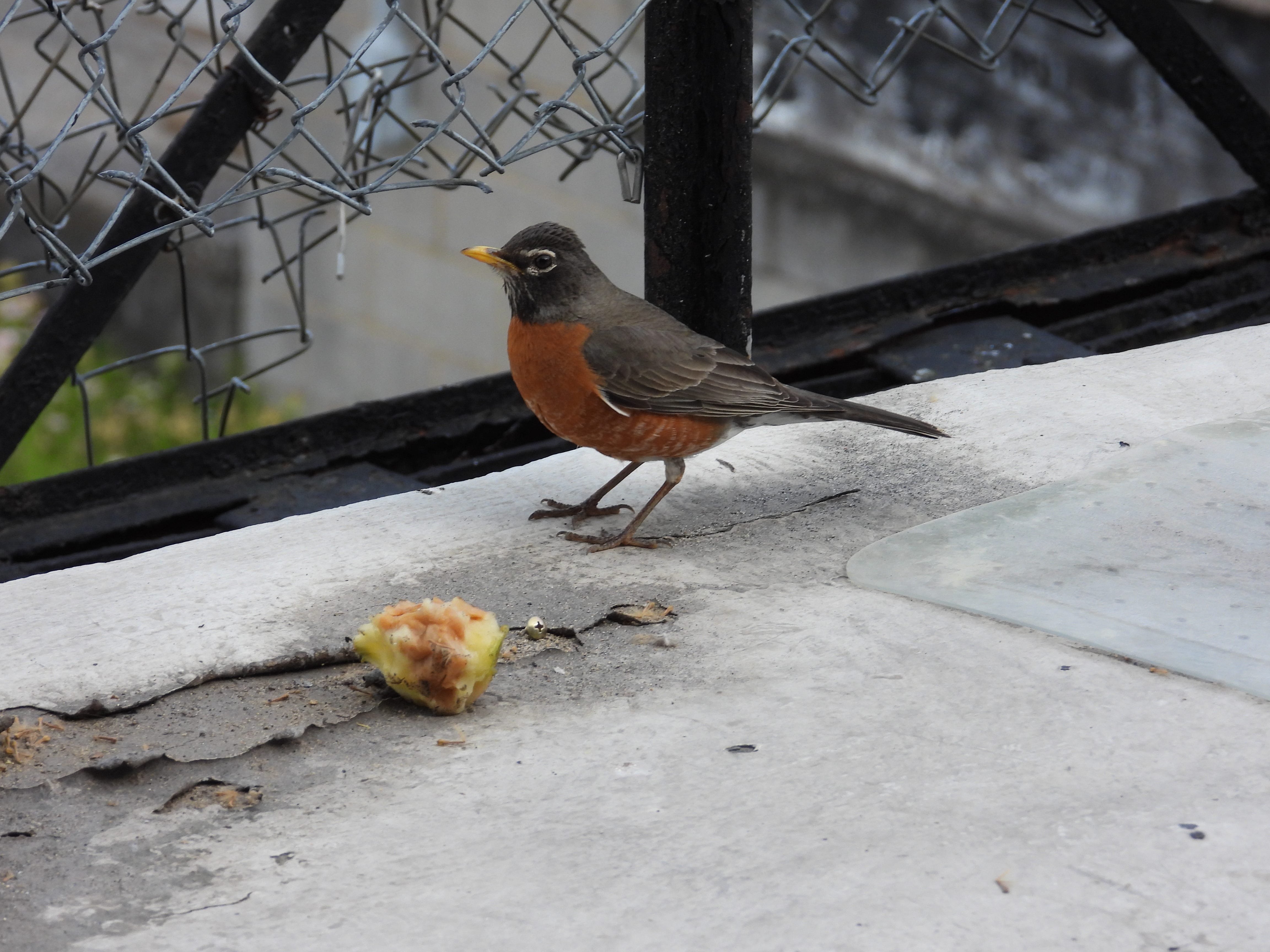
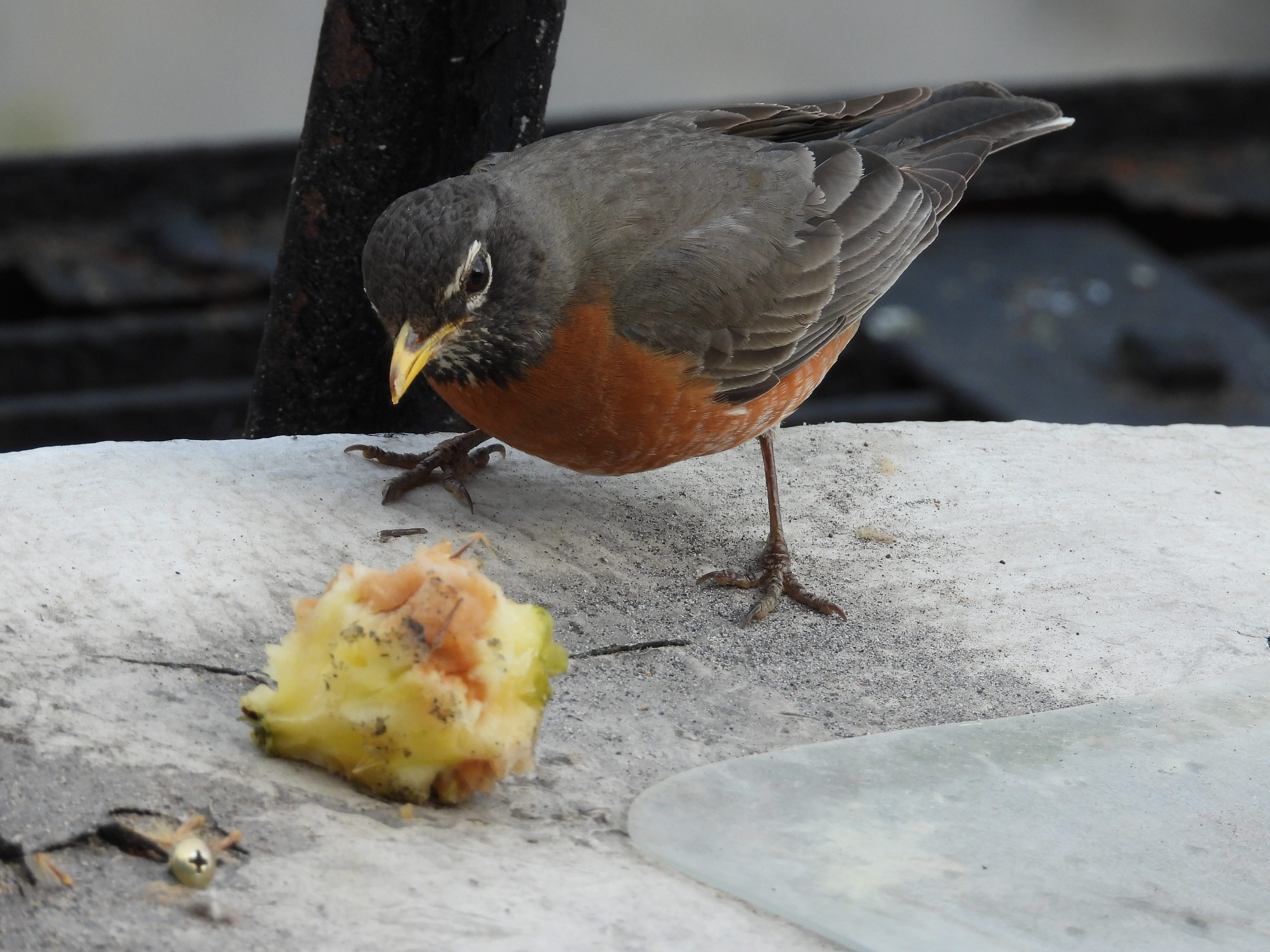
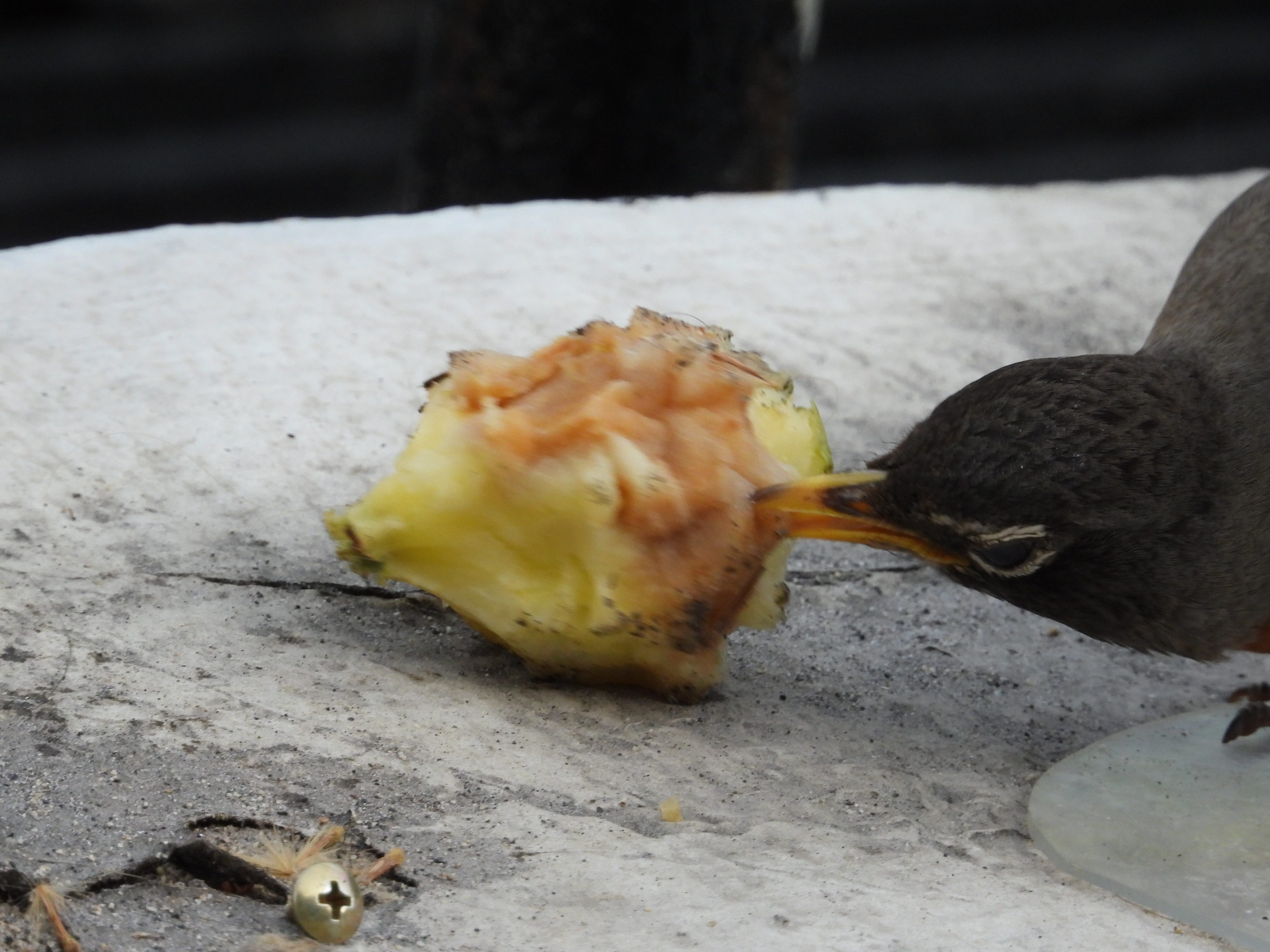
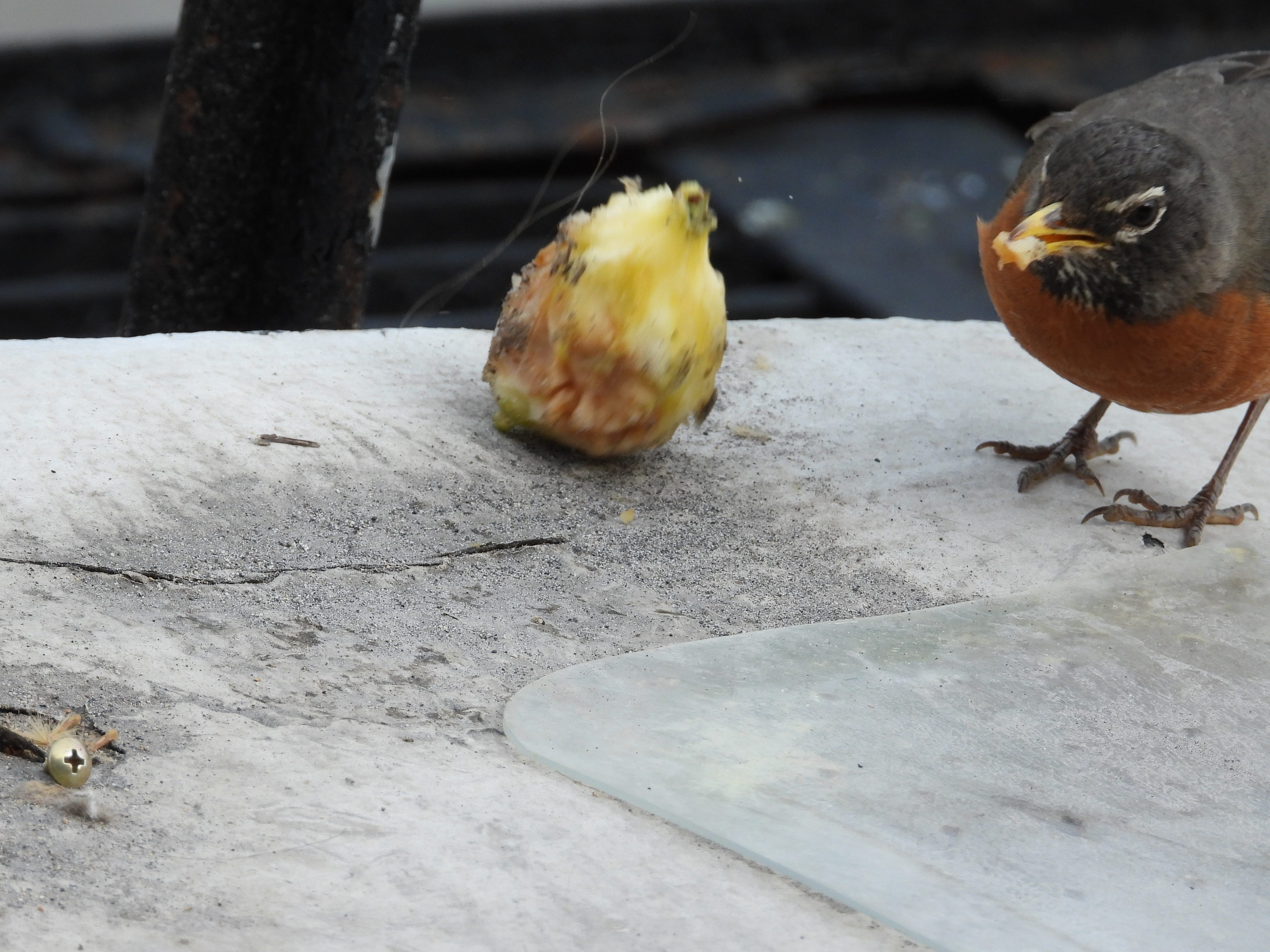
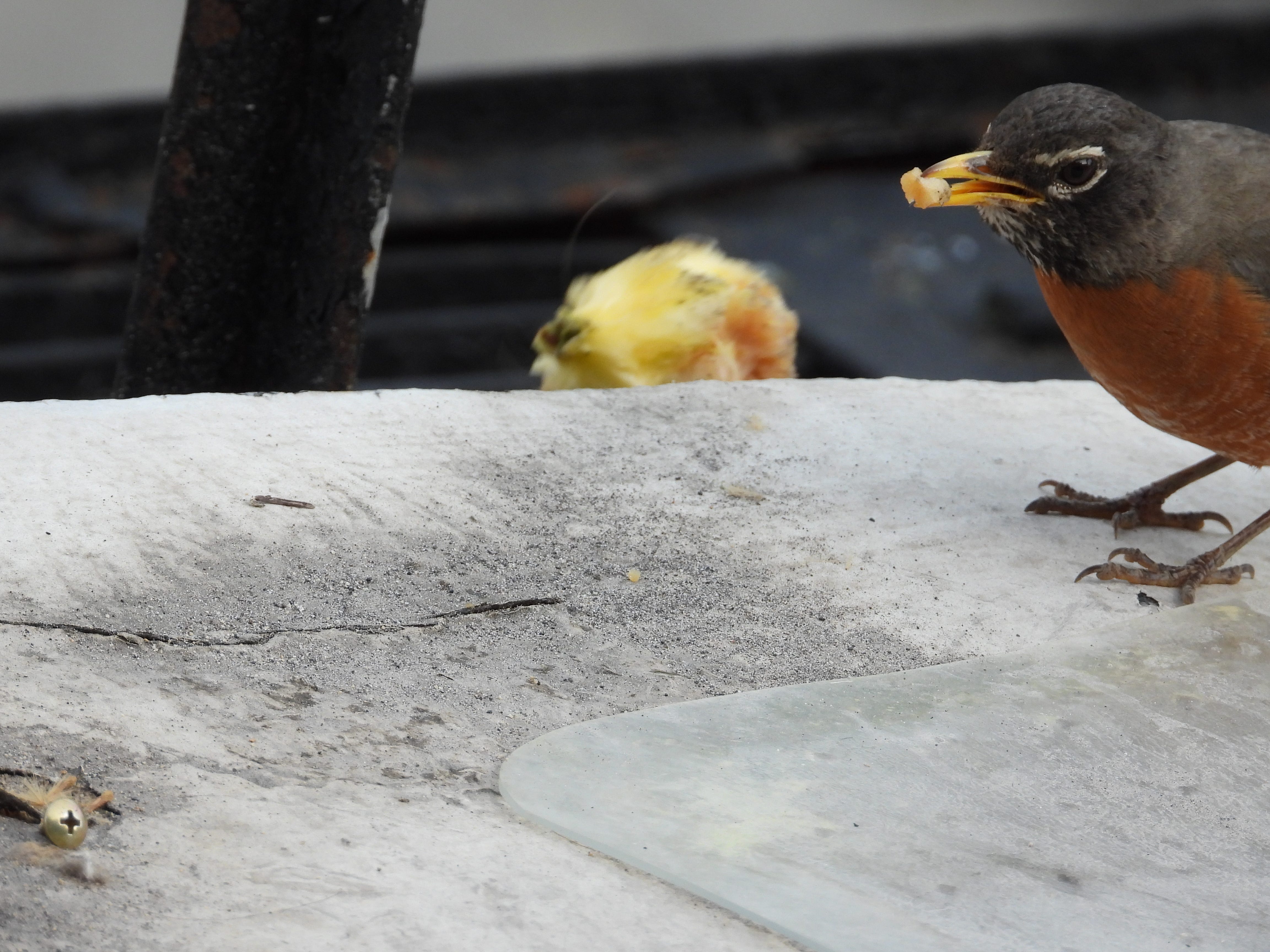
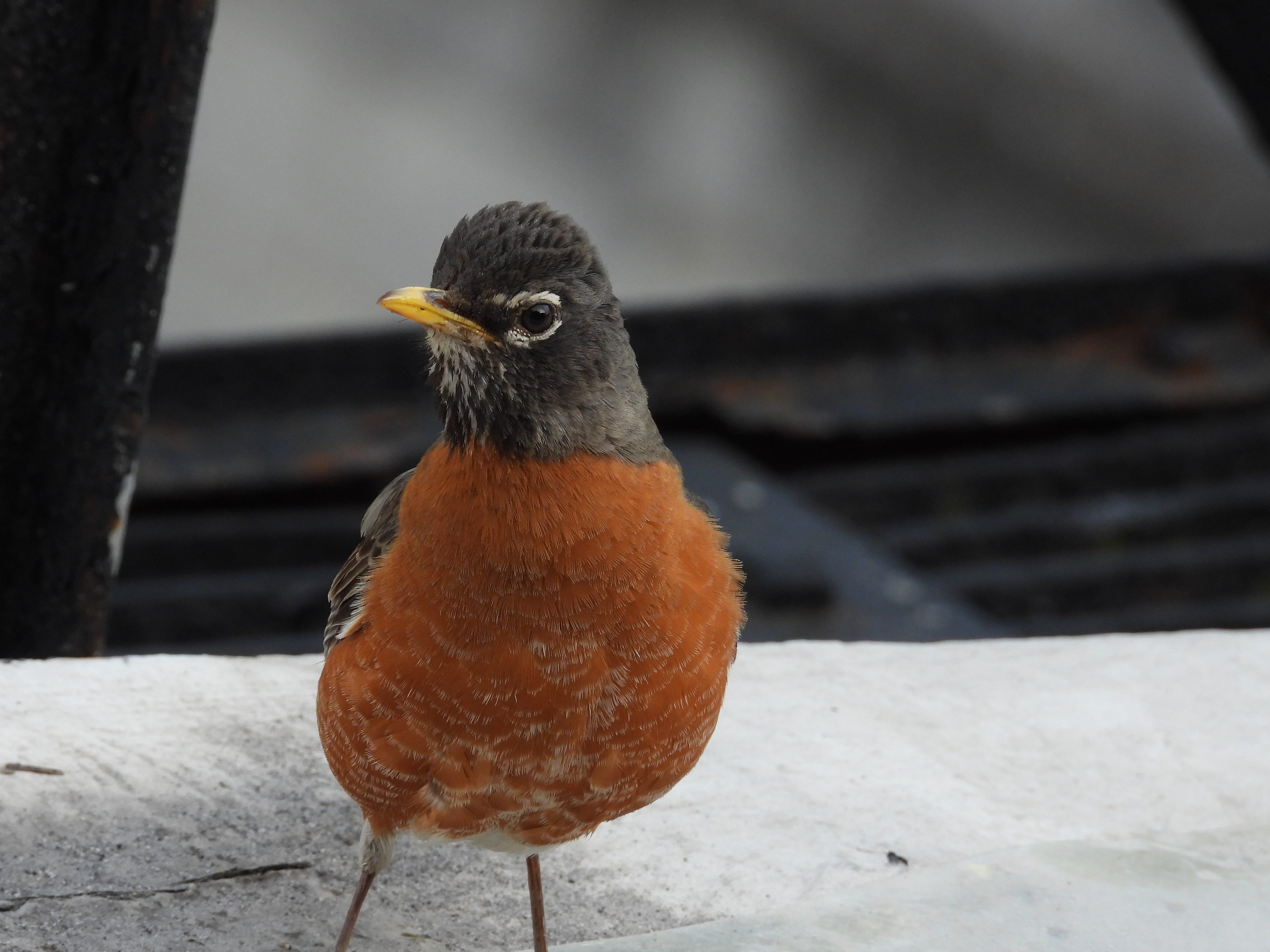
Postscript: Robin vs. Apple Core