Coo

As March winds down, the balcony and other backside elements on our block of old, downtown buildings are invaded by curious, probing European Starlings, House Sparrows, House Finches, and American Robins. The nooks and cracks and crannies make perfectly protected spots to cram in their junk for messy nests, in competition with bats large and small, and soon, Chimney Swifts. I’m no doubt much fonder of this coming-alive of decrepit old walls and eaves and roofs than your average urban dweller; anyway, I’d be happy if birds took over our cities altogether. Hearing people complain about the mess and the noise is music to my ears—I’d rather that than the howls and screams and vomiting of desperate addicts, now a regular feature of the block’s front side along Pennsylvania Avenue, day and night, as they come and go from the laundromat, bus stops, and shelters, occasionally taking a wrong turn up the front stairs.
The balcony is a respite from all that—for reasons I can’t discern, none of the front-side insanity reaches the random jumble of tanks, rubbish bins, and cars below me; the peskiest folks I see back here are foul-mouthed junior fishermen on their way to the confluence, one of Tyrone’s primo holes.
On the morning of the 24th, a Rock Pigeon suddenly dives down from nowhere and alights on the flaky roof next door—an oddity, as they rarely set foot here, preferring their haunts in the old brick junkyard buildings and downtown. I get to enjoy the 365-day aerial ballet of life-mated pairs and swirling flocks from afar, uplifting enough, but one has never spent enough time right here for Merlin to know of its presence.
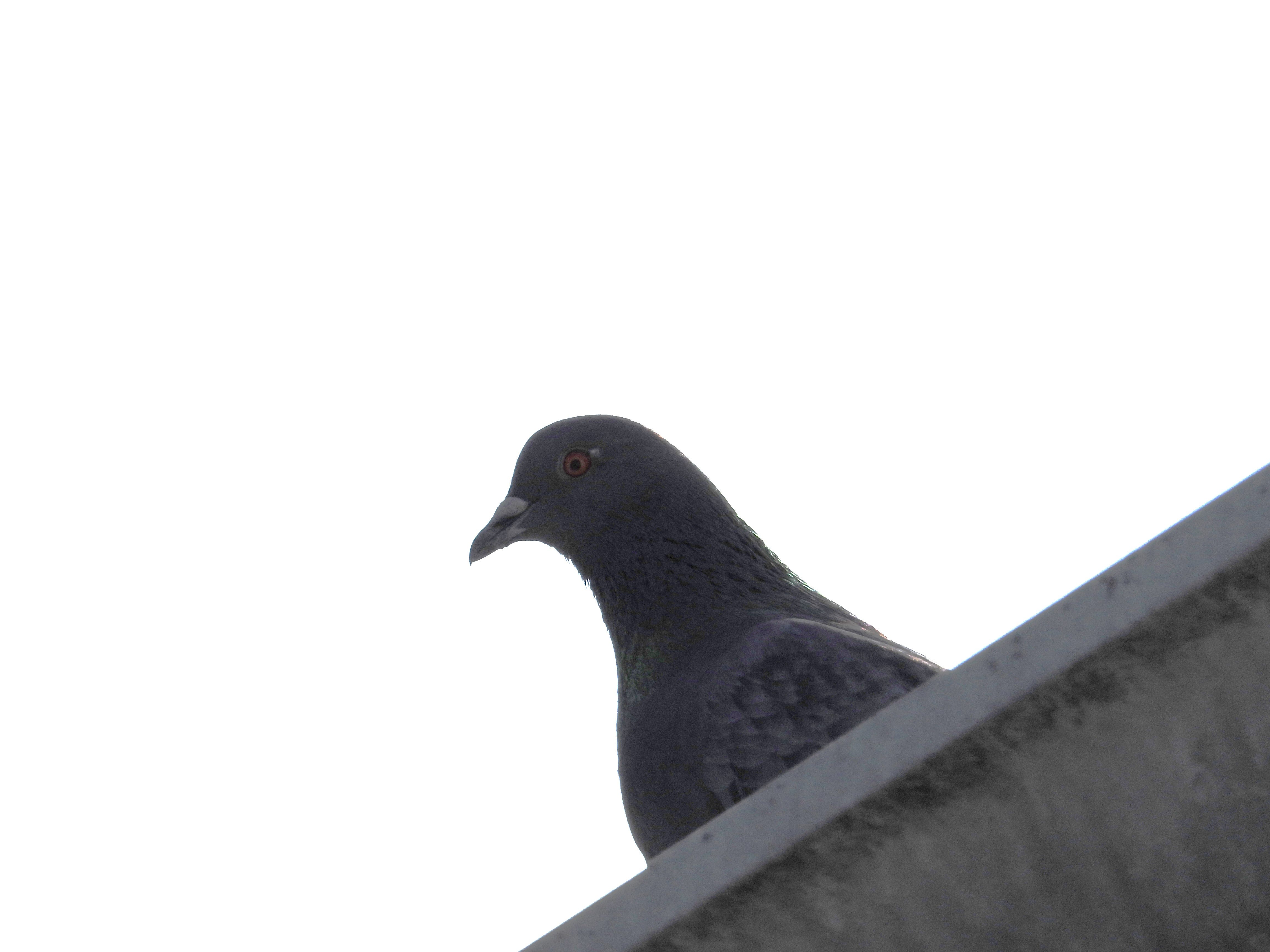
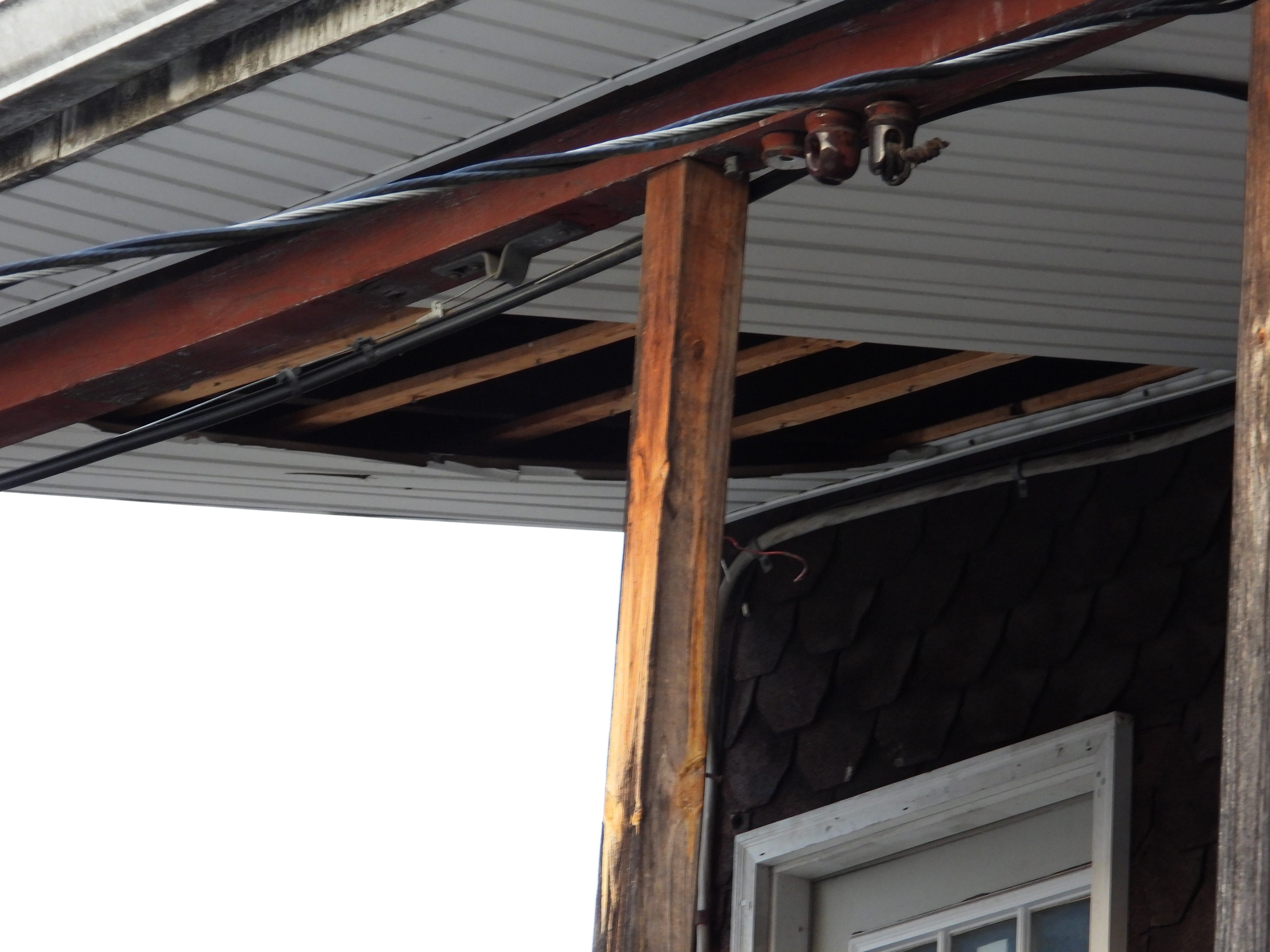
This particular pigeon struts decisively to the edge of the eave and drops down underneath, where several ceiling strips of an abandoned third-floor apartment are missing. It flaps and flutters up into them and disappears, and then I can hear it clattering as it eases its way back underneath, closer to me. Silence, and then the sound of deep cooing that Merlin easily understands.
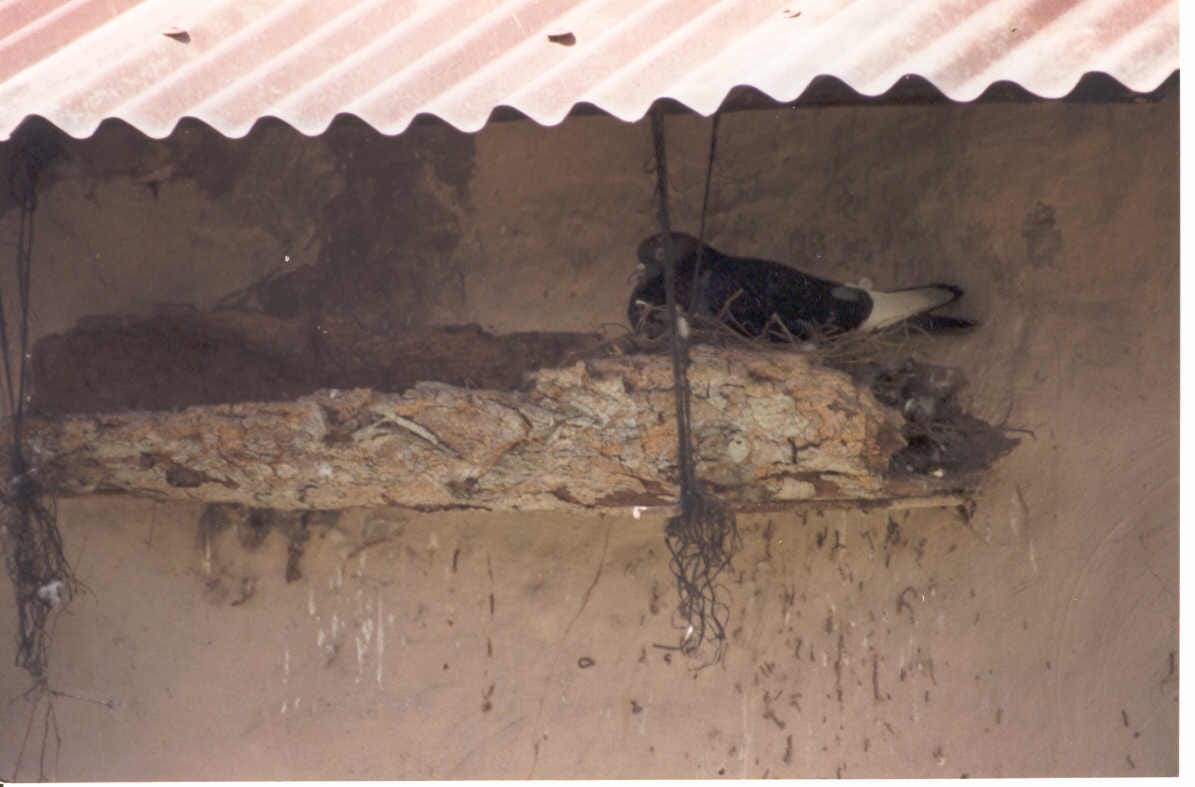
This soothing sound signals surely one of the oldest and most fundamental connections between humanity and the worlds of birds. Appropriately cruel for me, as the planet spirals deeper into a seemingly unstoppable war I’ve spent my adult life anticipating, I’m blessed by the most ancient symbol of peace. I looked this up—Rock Doves, who have aggressively colonized urban spaces across the planet, are more closely associated with peace than any other creature. They are also the ultimate symbols of good luck and blessing upon the household. In rural Honduras, where I did my Master’s thesis on the relationship between people and birds back in the nineties, I noted how some families still hang long, curved bark strips from their eaves in hopes of attracting Rock Pigeons to nest and bring good Catholic fortune to their abodes. This pattern repeats across cultures and religions worldwide.
Early Ospreys
The rest of the last week sees hurried preparations for our annual trip to Mexico (I’ll miss the first third of diurnal April, though critical NFC data will continue to accrue). When last we spoke, I was telling you about the anticipated heat of March 22nd. Indeed, by the afternoon, it was 80 in the shade, warm enough to bring three Ospreys floating above Sapsucker Ridge, the earliest record ever for the hotspot. Eric alerted me from a ridgetop spot almost two miles south, and by the time I reached the balcony I saw one, presumable of this trio, heading southwest over the Hollow. I didn’t see the other two, but I think they might all have been new arrivals to the area rather than passage migrants. The ridgeline migrant Ospreys I see in early April are usually heading straight northeast without stopping, whereas these had been circling, and the one I saw came from the east. One had already been reported at Canoe Lake a few days prior, where they tend to nest, so I wonder if the early birds grab the best lacustrine territories first, and then exploring the surrounding terrain.
Eventually, the mercury that day hit 90 in the back porch shade.
Why do mergansers circle?
Unwilling to let the weekend die, I go for a Monday morning hike in the cooling, 40-degree air before work to grab the NFC recordings. As I walk back down the Hollow not long after seven, and I can hear the wispy calls and songs of Golden-crowned Kinglets waking up in all directions: peak kinglet is nigh!
The temperature drops throughout the day into the thirties, and a few flakes fall. This is surely one of the greatest one-day temperature swings we’ve ever had.
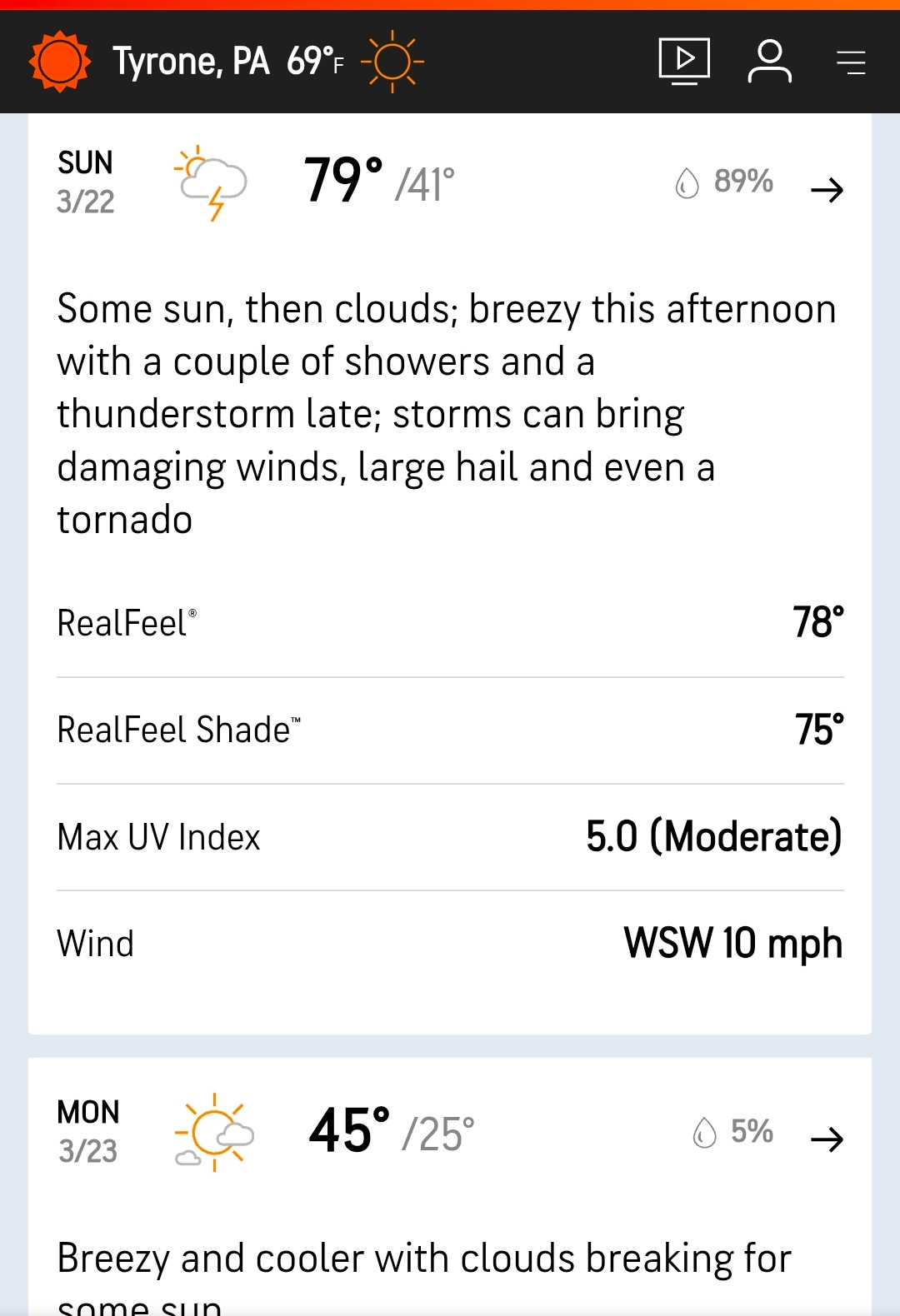
By the 24th, it’s all the way down to 23 and clear. Killdeer call from Interstate fields to the north and parking lots to the south, presumably setting up territories. American Crows are strangely missing; usually, their eastward commute over to Brush Mountain is a sure thing.
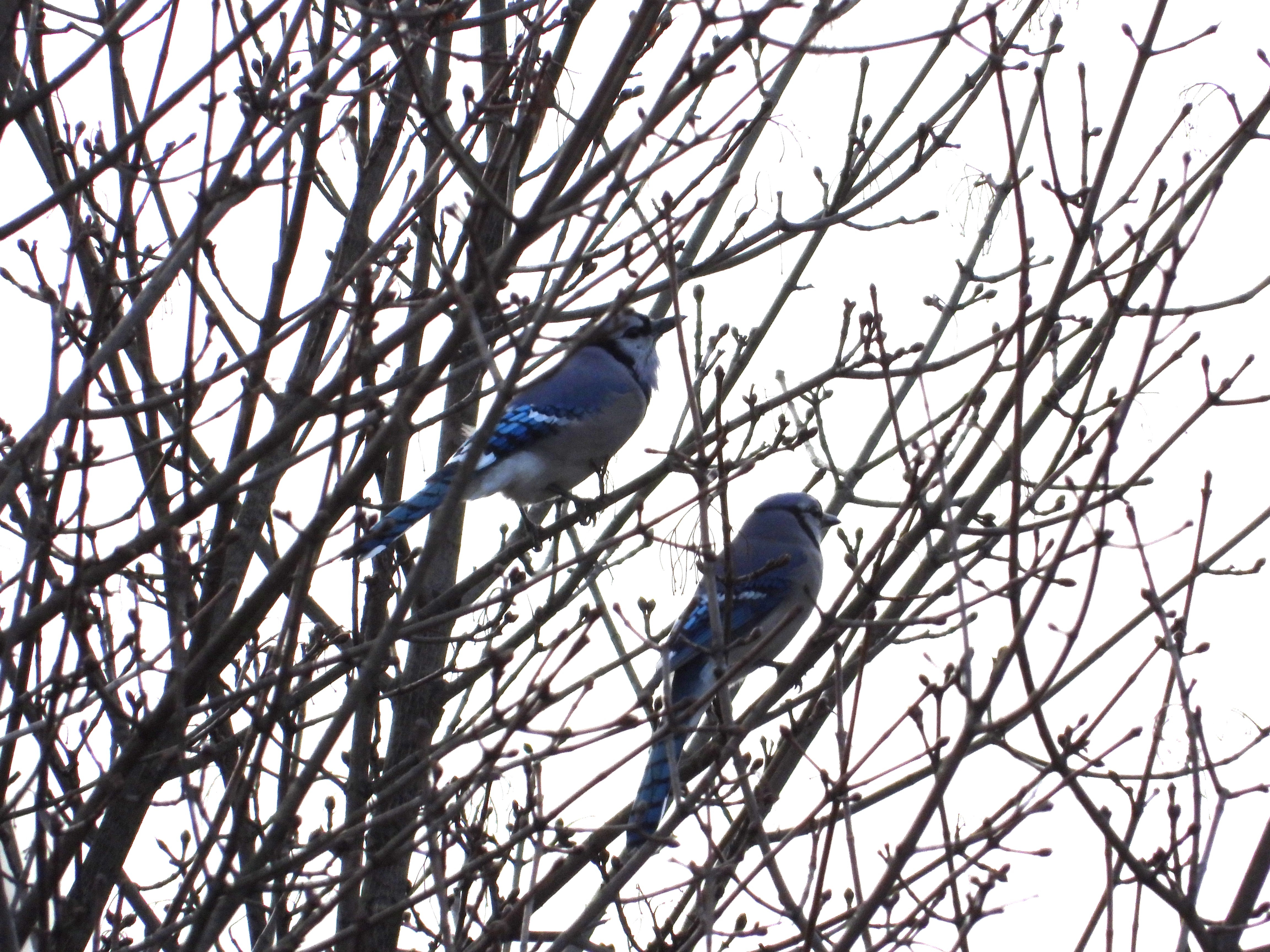
On the 25th, dawn is a bit warmer, but still just below freezing. For the first time in a week, no Tufted Titmouse calls, but at least a single crow flies over (no Fish Crows, though—they seem to have abandoned Tyrone this year). The first-of-year (FOY) Eastern Meadowlark sings from over by the train station, and then a flight of Common Raven outsiders powers over high, in pairs, from the west to Plummer’s Hollow. A Belted Kingfisher rattlsd from somewhere down the muddy, flooded spring river, and suddenly, five rowdy Blue Jays peregrinate across my field of view, jumping and flapping through the trees down Bald Eagle Creek and then departing raucously for Thomastown.
The next day it’s even warmer, 42, and mostly clear—supposedly, it’s going to hit the 70s today again. No crows once again, and no extra ravens, just the increasingly agitated pair nesting under I-99. I see one come and go with large hunks of bread scavenged from the streets and wonder what type of malnutrition this particularly family is suffering from. Today, I find a prime source: an overflowing dumpster outside my gym, aftermath of some big feed, uneaten pizza husks and other delicacies scattered across the street in a messy, human way.
Despite some warmer nights this week, NFCs are still pretty unimpressive. Even the heavy-flow dates across the county (according to Birdcast) bring little, probably because the hundreds of thousands crossing over are too high up for the antenna to hear. We need a lower cloud ceiling. Nevertheless, on the night of the 25th-26th, two 2026 FOYs register—a peeping Green-winged Teal and a rasping Great Egret, at the start of the night, during lift-off. Later, we get only unidentifiable wing-whistles and scattered sparrows, Field and Chipping mostly now; no White-throateds yet, while Songs are scarce and American Trees are already gone from the spectrum. A single Golden-crowned Kinglet makes its way across the sky a couple of hours before dawn.
The antenna registers dusk as a steadily decreasing chorus of Field Sparrows (not yet signing through the night), Song Sparrows, and Northern Cardinals, with American Woodcocks starting up by 7:50 PM, and all falling silent by 8. Woodcocks begin again by not long after 6 AM, as do the first cardinals and Song Sparrows.
A violent round of storms seeps through from the northwest on the night of the 26th, into the 27th, but by dawn the rain has stopped even though the low clouds are still roiling in the breeze. Around 6:15, sirens seem to converge on town from all directions, then fade. The temperature is 46, and the first Turkey Vultures are flapping over town toward Bald Eagle Mountain already in the 6:52 AM gloom—things could get interesting! I gradually realize that semis are backing up on the interstate to get off the highway, and a line of vehicles is stopped as far as the eye can see in the northbound lane, while the streets are clogged with desperate commuters from the Tyrone exit. The sirens from earlier are explained by late-breaking news of a major collision.
The detached world of local commuting and long-distance-migrant departing birds proceeds oblivious to all this. The bigger concern among birds is the raging river, pushing waterfowl out and making it difficult for them to set back down again. As the sky grows lighter, I pick out a Ring-billed Gull circling thousands of feet overhead, among a crowd of vultures. While fixated on that, I see a diminutive duck streaking at a slight angle across my field of vision; following it, I can make out the field marks of a Hooded Merganser, the first I’ve seen this year, and a sign that my new high-power binoculars were a worthy purchase. To my amazement, instead of heading off in one direction, the duck circles, or better put, spirals, five times in broad loops, seemingly searching for a direction to head. It finally decides on east and disappears, nearly into the clouds.
I remember seeing this same type of movement after storms last April from a Red-breasted Merganser. The spiraling behavior isn’t widely reported, but seems to be a tactic mergansers use to gain altitude above mountainous terrain, an extension of the broad circles ducks may make after leaving a lake surface to get above the tree line. I wonder if the multiple circles are simply the most aerodynamic strategy to get to a height where they can survey their route, or if they are also slipping into an airflow. Certainly, my online sources remind me, waterfowl are never looking for thermals.
After that, the parade continues. A Great Blue Heron flaps slowly over the point, also very high, and then a Cooper’s Hawk goes across in breakfast mode, followed by a Red-tailed Hawk hovering to hunt. Once again, a windy dawn is the best type of dawn for balcony birding.
The race to one hundred
The last Saturday of March, the 28th, starts out in the mid-20s, too cold to have brought new migrants to the area. The hotspot list for 2026 is still in the mid nineties, so it’ll be a tough stretch to make the century mark before Mexico. Today’s hike is the first one of the year that starts the day along Greenbriar Trail, in the heart of Fox Sparrow country. And, indeed, their glorious songs are among the modest 7 AM chorus, along with three Winter Wrens at the same time, from all around me. Just as it’s light enough to see, a Barred Owl flies away from me upslope, and then a Red-tailed Hawk arrives from somewhere else and lands in a tree about 30 feet away. The rest of the hike is unsurprising, except for the passage of a Horned Lark, first this year, at the powerline, where a stiff breeze is buffeting valley birds over the top of the ridge. Odd that we have never once seen this species land in our own field.
Sunday morning is sunny and still just below freezing, with a mid-level ceiling and that certain bird-friendly look associated with a promised warm-up in the afternoon. First off, an American Kestrel flies over the balcony heading north to hunt—it is, surprisingly, the first I’ve seen this year. At the same time as Friday, 7 AM, a single Great Blue Heron soars high over the point and veers south, just as it did two days again. Today, however, no vultures are out early, while the starlings keep me on my toes (and Merlin deeply confused) as they bleat out a dozen species. One insists on doing a mix of Tree Swallow and woodcock, while others stick to the more familiar meadowlarks, killdeer, and Ruby-crowned Kinglets. I’m interrupted from this by a familiar chip: the year’s first Yellow-rumped Warbler flits down the line of Bald Eagle Creek and lands on a budding twig at the confluence. Little does it know it marks the very beginning of our annual Warbler Season.
Finally, at the late hour of 7:48 AM, the day’s first Turkey Vulture flaps lazily over town.
In the afternoon, a strange sight. In the promised sixties warmth and sunlight after 3:30, the typical small flock of circling vultures in the Gap suddenly pivots, and one by one in rapid succession each flies as quickly as a vulture can northwestward, right over the rooftops. As the last one is obscured by my building, a young Bald Eagle appears from nowhere, diving and either frolicking with or attacking the vultures, then zooms off in the same direction. Next, two ravens appear and do the same thing—not their slow, survey-the-terrain-for-scraps flight, but a headlong rush toward, what? A feeding frenzy at some dumpster? I can’t thing of what else other than food would create this odd spectacle. Far above, another raven circles as high as some archaic conception of heaven, many thousands of feet up and just below the ceiling.
Tuesday, the last day of the grimmest month in modern history, sees glimmers of hope. I interrupt the doom-scrolling to do a quick hike before work to grab the last of the NFCs. At 5 AM it’s in the upper sixties and humid, like a summer night. El Niño, we are told, is back.
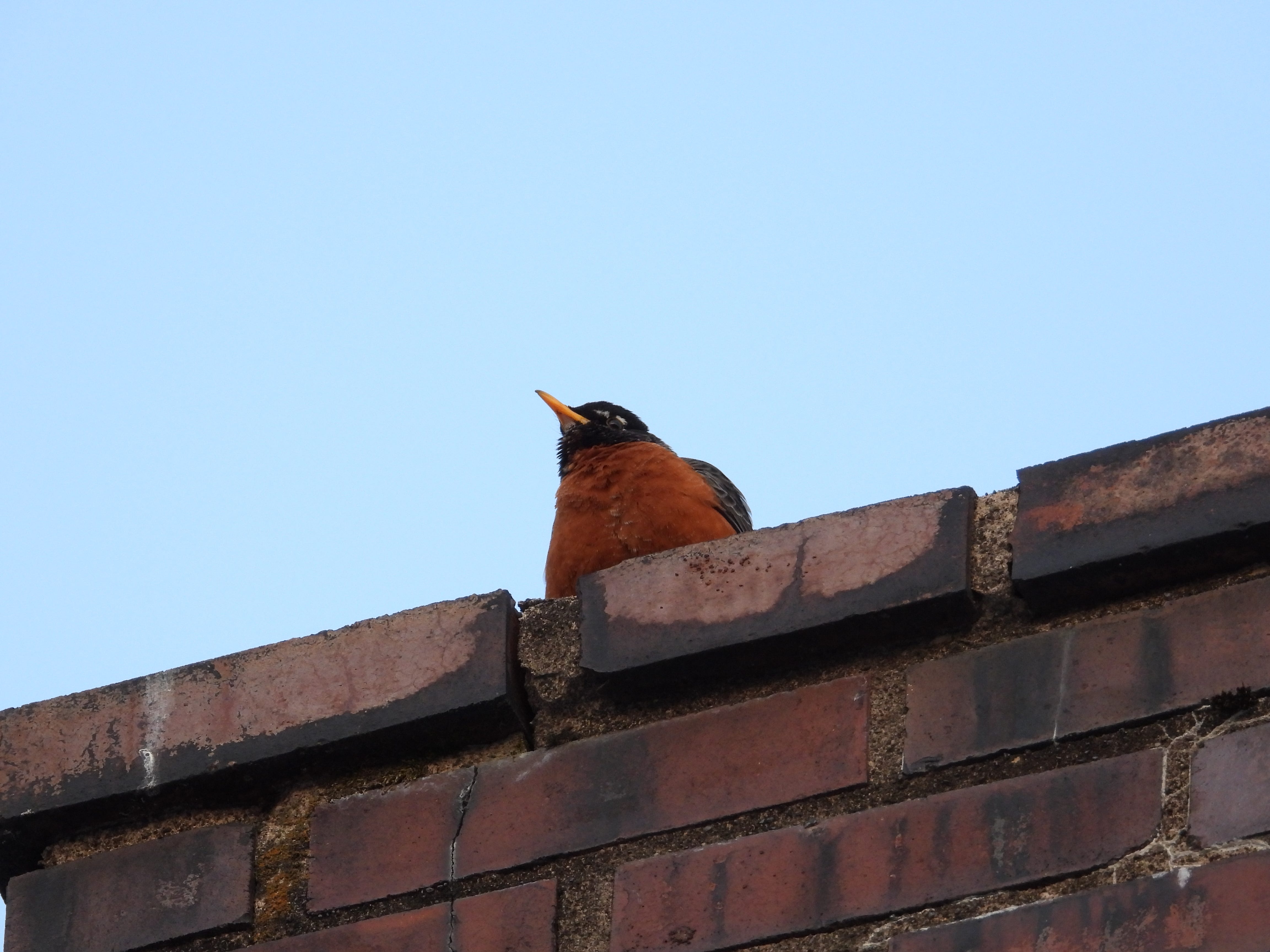
At the field, I wait for the long download-to-USB as the bird world wakes up. First one woodcock, then another, whizzes silently by me at about 20 feet above the dead goldenrod; both disappear into the brush at the edge of the dark field. I think they’re already, perhaps, a mated pair. A little later, a pair of Wood Ducks goes over, also silently, in the near-oppressive stillness. Then, a breeze springs up over Sapsucker, and as it turns light (alas, even though a few hesitant notes of a Brown Thrasher register, no squeaky arguments yet from a Ruby-crowned Kinglet) the breeze turns briefly to a gale. It’s just in time for the arrival of dozens of Brown-headed Cowbirds and robins. The cowbirds, which are still roosting in the valleys somewhere, alight in singles, pairs, and trios across the treetops, while the robins all spiral down to a single tree. Both are raucous, the cowbirds already gurgling into a day of amorous endeavor, and the robins, up here at least, still flocking for food. Starlings stream over, ignoring our woods, intent on Tyrone.
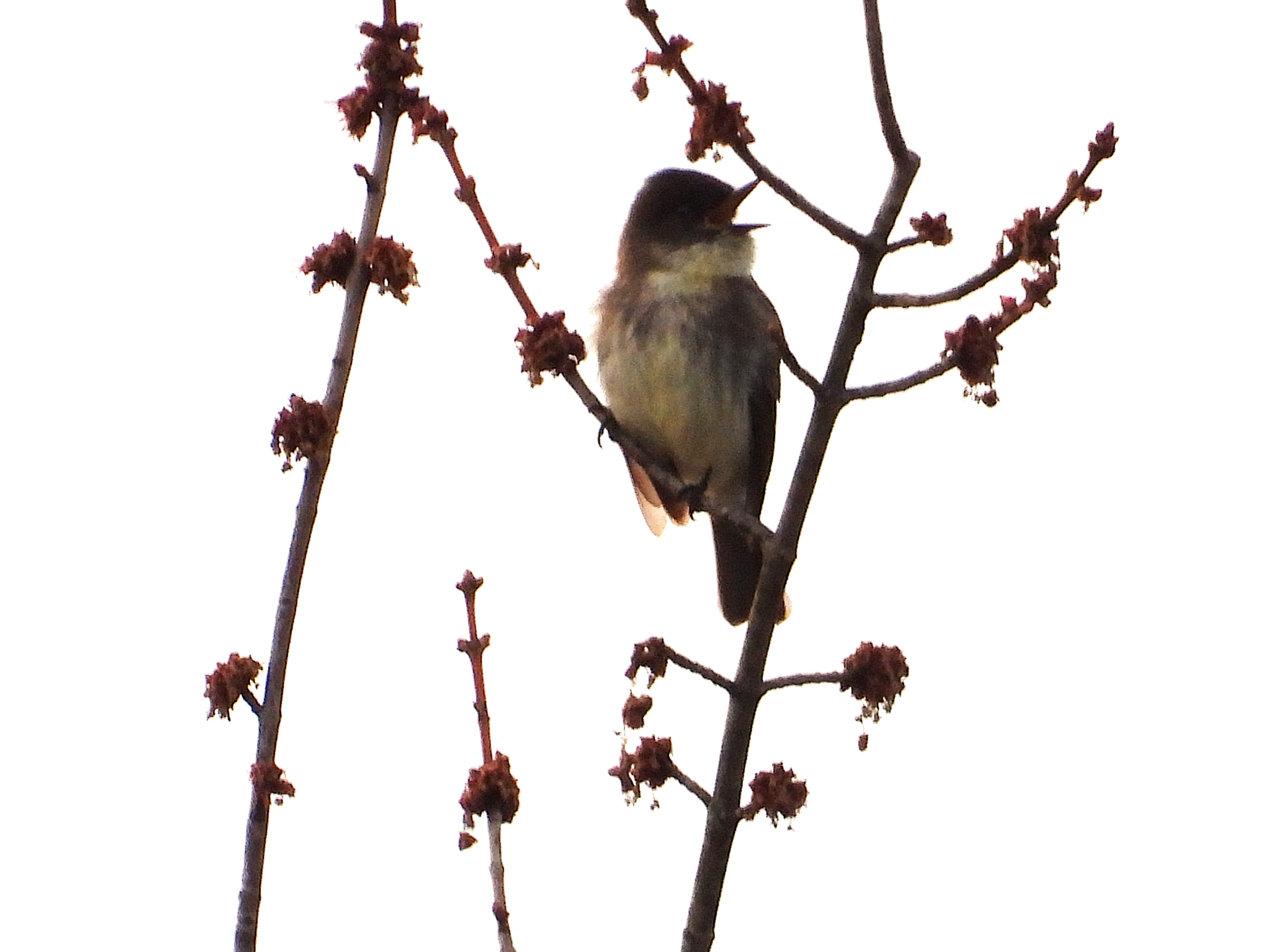
On the way back down I hit Greenbriar again, but nothing new. As the bottom of the mountain approaches, the insistent calls and song of an Eastern Phoebe are all that is left of the dawn chorus. I get this funny feeling that a waterthrush is about to sound off—it’s a really warm morning, this is the best territory we have, and they almost always arrive on a hot day at this time. Seconds later, loud chips and then a single burst of Louisiana Waterthrush song! A great sign, number 95, and an almost sure thing that a vireo is next, though it won’t sound off until much later in the day. And so it happens. Reports come in of the first vireos popping up around the area, so I check Eric’s PUC recordings online, and at 2 PM, there’s that first Blue-headed Vireo song in the first place one usually turns up, not far from his house on a knoll that could be the best territory in the hotspot.
I keep going out to the balcony to scan for Broad-winged Hawks, swallows, and other potential arrivals, but nothing turns up. The 2026 list makes it to 98 with a few nice arrivals via NFCs from the last couple of nights: the kiddicks of a Virginia Rail, and two seets from a Grasshopper Sparrow. With that I’m off to a saner place.